
Corporate Event Venues in Washington DC: Meetings, Conferences & Offsites
TL;DR
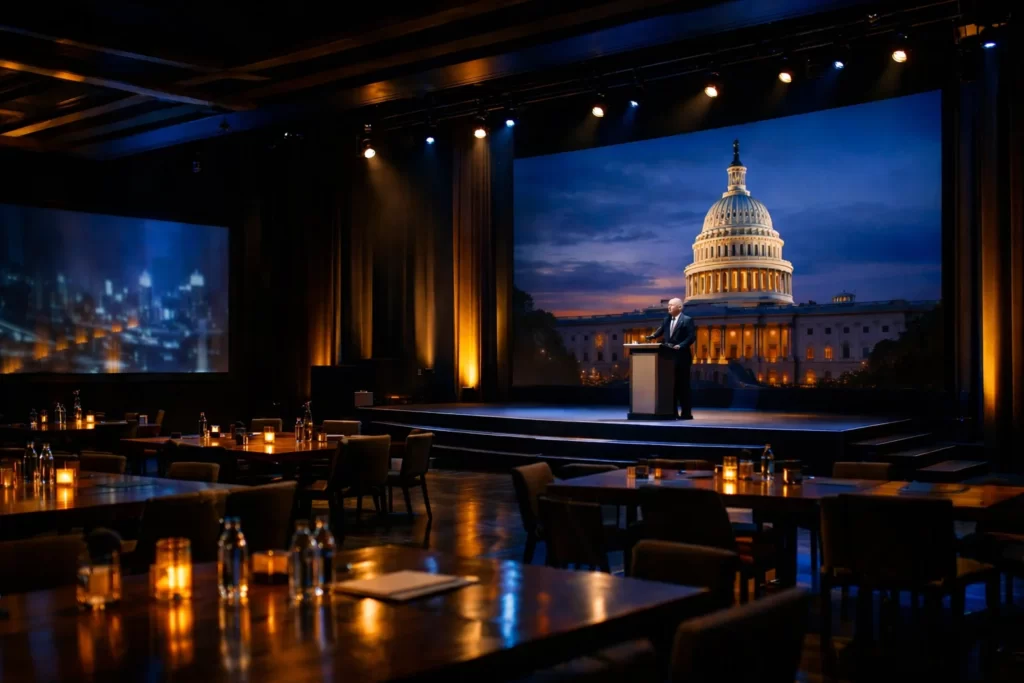
Washington, DC is one of the most complex cities in the U.S. for hosting corporate events. Between federal schedules, seasonal demand spikes, limited parking, and a wide range of venue types, choosing the right corporate event venue requires more than visual appeal.
This guide helps companies identify corporate event venues in Washington DC that actually fit their meeting size, audience, and business objectives — from executive offsites and board meetings to large conferences and multi-day programs.
Below, you’ll find a practical breakdown of venue types, neighborhoods, capacity planning, booking timelines, and requirements that matter most for successful corporate events in DC.
What types of corporate event venues exist in Washington DC?
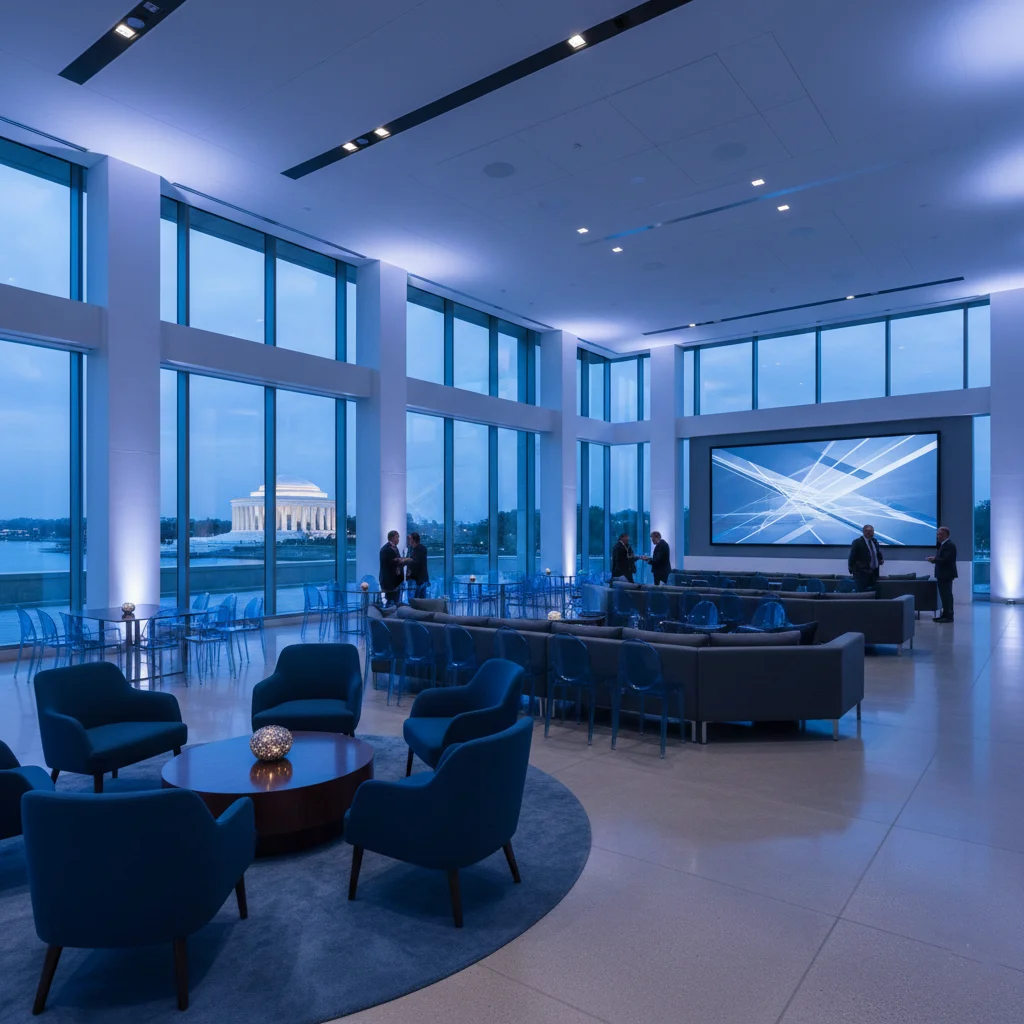
Washington DC’s corporate venue ecosystem is broader than most cities, largely due to its mix of government, nonprofit, tech, policy, and international organizations.
The main venue categories include:
- Hotel ballrooms & conference suites – Ideal for formal conferences, board meetings, and multi-day events
- Historic & converted spaces – Best for brand-forward events, retreats, and product launches
- Museums & art galleries – Used for client entertainment, awards, and executive networking
- Rooftop venues – Popular for receptions, team celebrations, and networking events
- Modern industrial spaces – Favored by startups, tech teams, and creative offsites
- Co-working & hybrid spaces – Designed for small meetings, workshops, and training sessions
- Convention centers – Required for large-scale, multi-track conferences
Each category serves a specific business goal, which is why successful planners never start with “best venues”—they start with use case.
Many teams struggle early on because they skip the fundamentals of how to choose the right venue for their specific event format.
Washington DC Corporate Event Venue Types
| Venue Type | Best For | Typical Capacity | Key Advantage |
|---|---|---|---|
| Hotel Ballrooms | Large conferences | 100–700+ | Full-service, reliable |
| Historic Spaces | Brand & culture events | 50–300 | Character & prestige |
| Museums/Galleries | Client entertainment | 50–500+ | High-impact experience |
| Rooftops | Networking & celebrations | 30–200 | Memorable atmosphere |
| Industrial Spaces | Tech & creative teams | 25–400 | Flexibility |
| Co-working Spaces | Meetings & workshops | 5–100 | Speed & affordability |
| Convention Centers | Major conferences | 500–5,000+ | Scale & infrastructure |
Which Washington DC neighborhoods work best for corporate events?
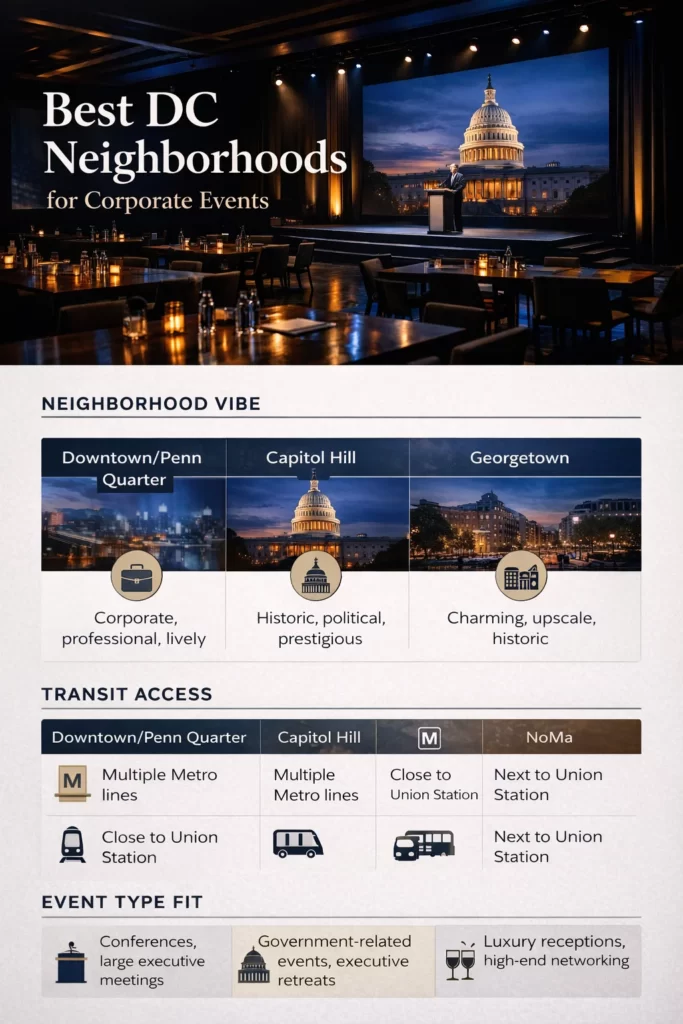
Neighborhood choice directly impacts attendance, logistics, and perceived professionalism.
Downtown DC
Downtown remains the safest choice for business-focused events. It offers the largest concentration of hotels, conference rooms, and transit access.
Best for: formal meetings, multi-day conferences
Trade-off: less “wow” factor
Georgetown
Georgetown venues are premium, polished, and best suited for executive audiences and leadership retreats.
Best for: executive meetings, VIP client events
Trade-off: limited parking, higher costs
Dupont Circle
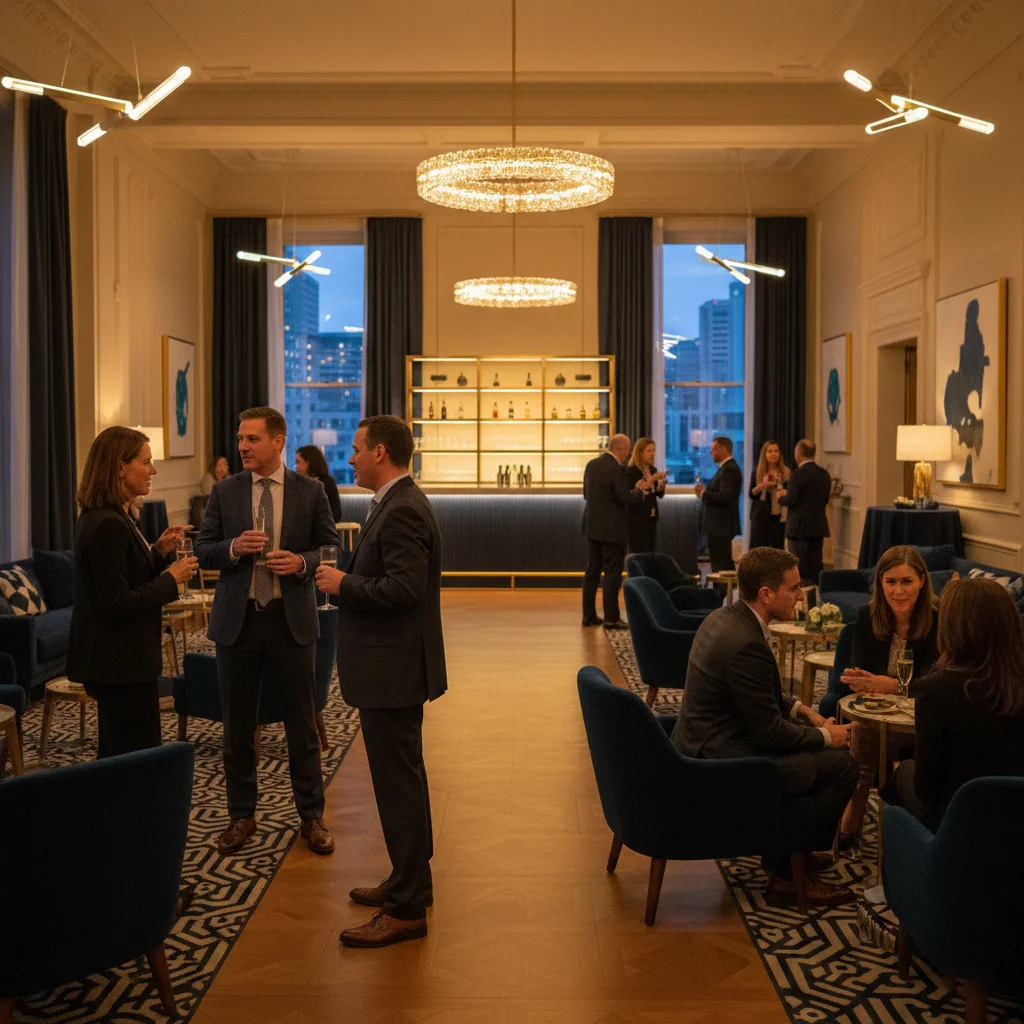
Dupont Circle appeals to creative and international organizations seeking character without sacrificing accessibility.
Best for: workshops, agency events, brand activations
Trade-off: street parking challenges
Capitol Hill
Capitol Hill is unmatched for policy-adjacent, government, and nonprofit events.
Best for: advocacy events, government affairs meetings
Trade-off: stricter venue rules
How should companies choose a venue based on event size?
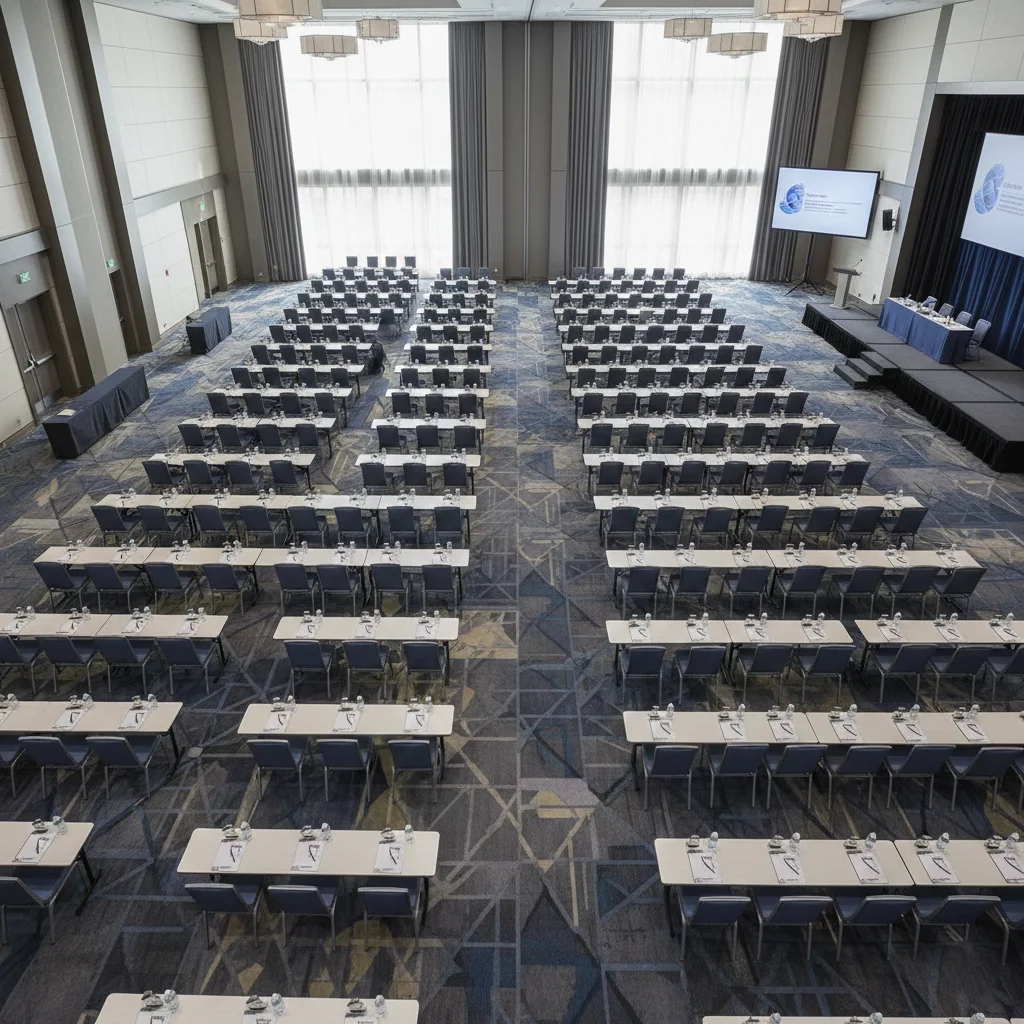
Capacity planning is where many corporate events fail—not because venues are too small, but because they’re poorly matched.
- Under 50 attendees: boardrooms, co-working spaces, private meeting rooms
- 50–150 attendees: modular venues with breakout flexibility
- 150–500 attendees: hotel ballrooms, large historic venues
- 500+ attendees: convention centers or stadium-style venues
The goal is 75–85% capacity utilization, which ensures energy without overcrowding.
Interestingly, capacity planning principles here are nearly identical to how planners choose small wedding venues in Washington DC, where flow and utilization matter more than raw square footage.
What amenities are non-negotiable for corporate events today?
Modern corporate venues must support technology-first experiences.
Non-negotiables include:
- Enterprise-grade WiFi
- Professional AV and sound systems
- Multiple breakout spaces
- Climate control across rooms
- ADA accessibility
- Catering flexibility
- Parking or validated garages
Hybrid events add additional requirements, including multi-camera setups and live-streaming infrastructure.
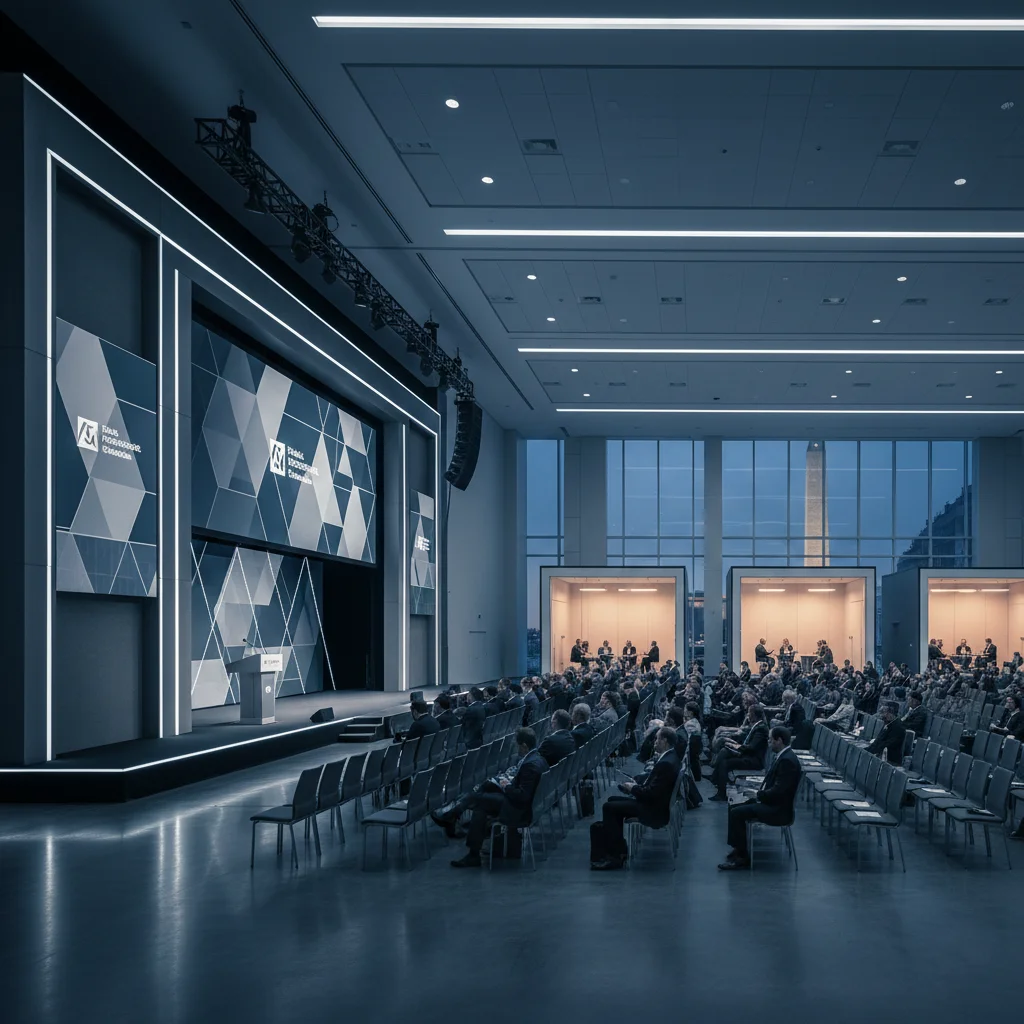
How far in advance should corporate venues be booked in DC?

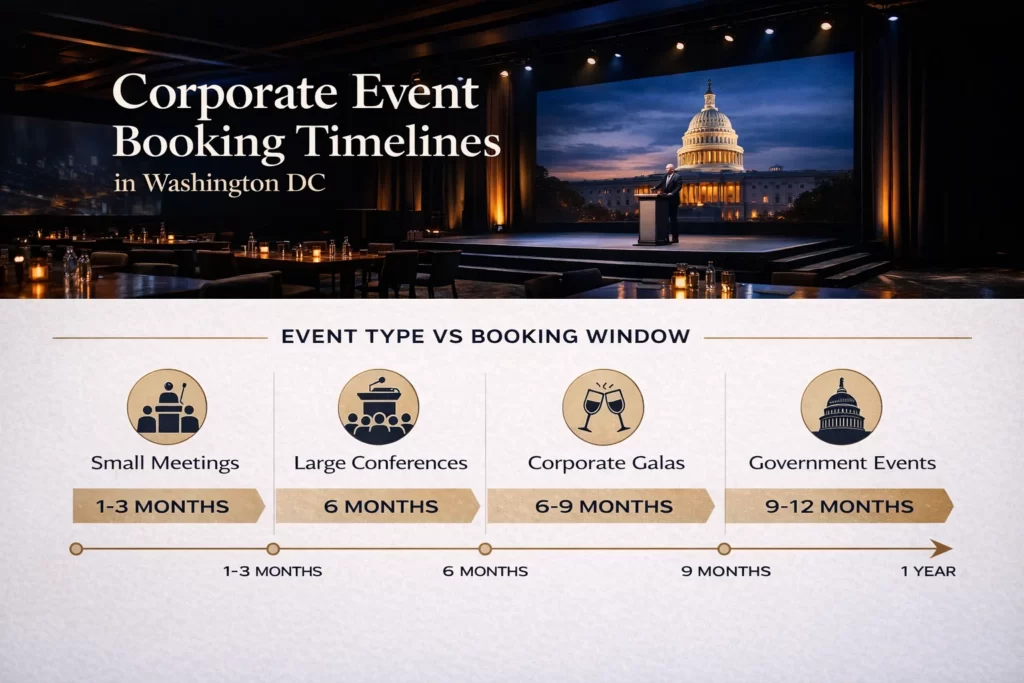
Booking timelines vary more by event type than size.
Typical booking windows:
- Small meetings: 1–3 months
- Team offsites: 3–6 months
- Client dinners: 6–8 weeks
- Annual conferences: 8–12 months
- Holiday parties: 6–12 months (often booked by July)
December is the most competitive month in DC.
Learning how to book a venue in Washington DC helps corporate teams avoid last-minute compromises, especially during peak conference seasons.
Can corporate venues in Washington DC support hybrid events?
Yes—but not all venues are truly hybrid-ready.
Hybrid-capable venues offer:
- Multi-camera production
- Platform integration (Zoom, Teams, WebEx)
- Technical rehearsals
- Dedicated production teams
Hybrid support typically adds $1,500–$5,000 to venue costs, depending on complexity.
For companies with distributed teams, this investment is now standard—not optional.
Reviewing real event space costs in Washington DC helps companies budget accurately beyond the base rental fee.
Where greatEvent fits into corporate venue planning
Corporate planners rarely have time to call 15 venues individually.
Teams that want to:
- Compare venues by capacity
- Filter by neighborhood
- Check amenities upfront
…often use platforms like greatEvent to shortlist venues before contacting anyone. It reduces planning friction while keeping decision control internal.
Platforms that help teams host your own event in Washington DC simplify venue comparisons without outsourcing control.
Final Takeaway
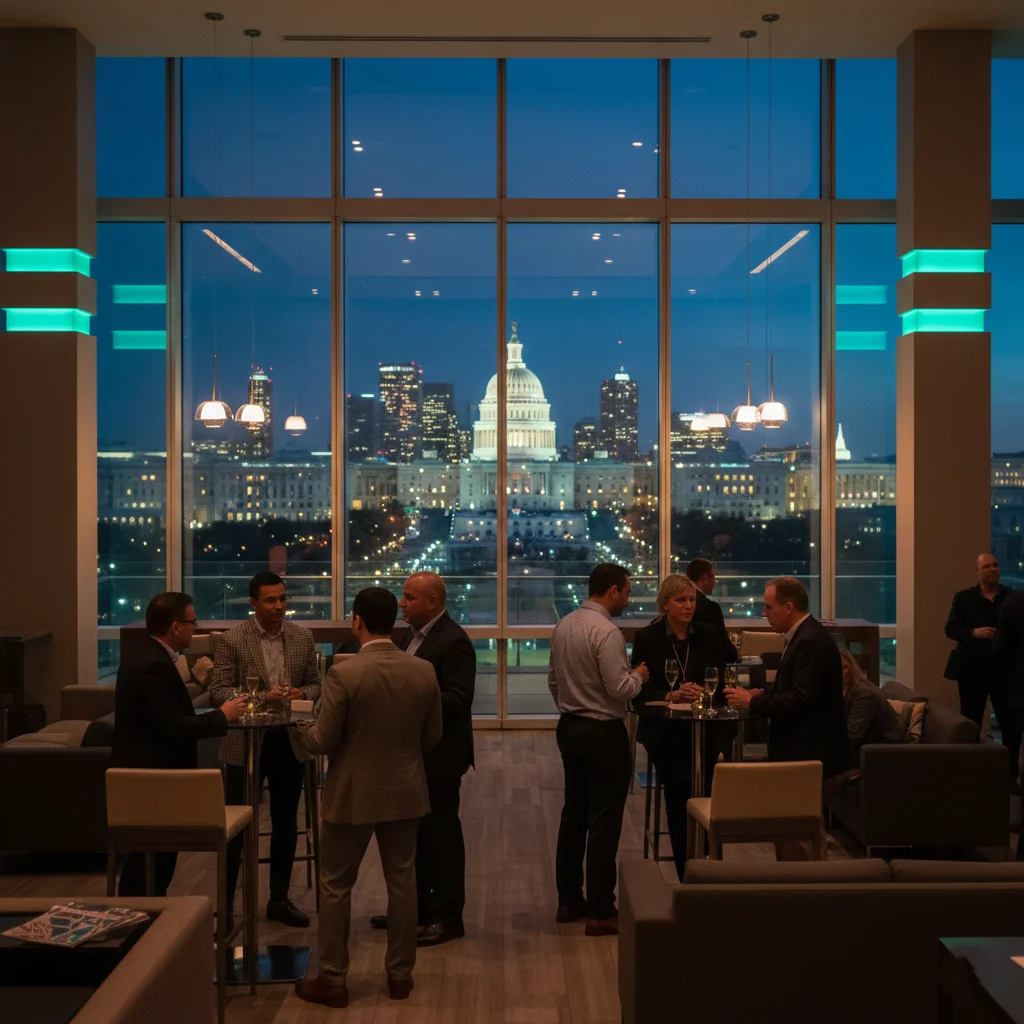
Corporate event success in Washington DC depends less on finding “the best venue” and more on matching venue type, size, neighborhood, and timeline to the event’s purpose.
Companies planning other types of events can also explore event venues in Washington DC for broader venue options beyond corporate formats.
Frequently Asked Questions
What is the best location for corporate events in Washington DC? ▾
Downtown DC and Penn Quarter are the most reliable choices due to strong Metro access, professional venues, and proximity to hotels and business districts.
Are corporate venues in DC expensive compared to other cities? ▾
Yes. Corporate venues in Washington DC are typically 30–60% more expensive than suburban markets due to demand, location, and infrastructure.
Do corporate venues require minimum spends? ▾
Many do, especially for evenings, weekends, and peak seasons. Minimum spends often replace flat rental fees.
Can venues accommodate last-minute changes? ▾
Smaller venues tend to be more flexible, while large venues and conference centers require longer lead times for changes.
Are weekday events easier to book? ▾
Yes. Weekday events usually offer better availability, more venue options, and lower pricing compared to weekends.
What is the most cost-effective type of corporate event venue in DC? ▾
Co-working spaces and modern industrial venues often provide the best value for small to mid-size corporate events, especially daytime meetings.
Which DC neighborhoods are best for out-of-town corporate guests? ▾
Downtown DC, Penn Quarter, and Arlington, VA are easiest for visitors thanks to Metro access, nearby hotels, and airport proximity.
Do corporate venues in DC allow outside catering and AV vendors? ▾
Some do, but many require in-house services. Always confirm vendor flexibility early, as it directly impacts total cost.
How much should companies budget beyond venue rental? ▾
Venue rental usually covers only 30–40% of total costs. Catering, AV, staffing, and logistics make up the remainder.
Are hybrid-ready venues more expensive? ▾
Yes. Hybrid-capable venues typically add $1,500–$5,000 depending on production complexity, but they significantly reduce technical risk.
Is parking a major concern for corporate events in DC? ▾
Yes. Venues with on-site or validated parking consistently see higher attendance and fewer late arrivals.
Can corporate venues support multi-day events? ▾
Yes. Hotels, convention centers, and large historic venues are best suited for multi-day programs with breakout sessions.
Related Post







Search by Category

Contact Us
Please provide your contact information with event details. You will be contacted soon.
