Event Venue Capacity in Washington DC: Why Max Occupancy Isn’t the Real Limit
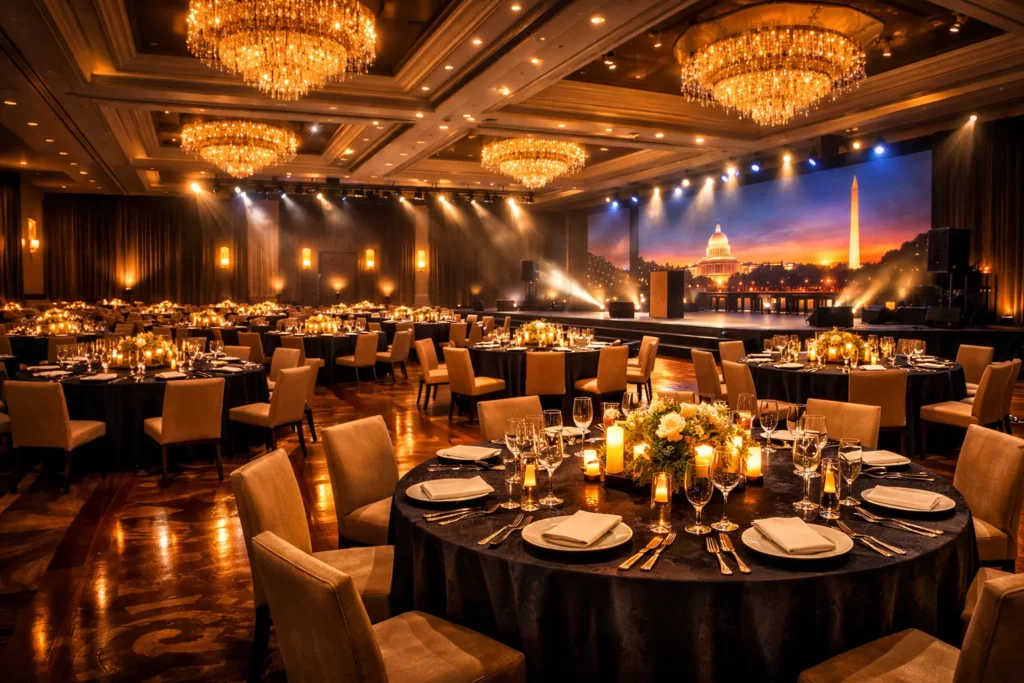
When people search for event venue capacity in Washington DC, they’re usually looking for a clear number:
How many people can this venue actually hold?
The reality is more nuanced. In DC, the maximum occupancy number posted on a wall is a life-safety limit, not a planning recommendation. Smart event planning starts below that number — where comfort, flow, service, and guest experience actually live.
This guide breaks down what capacity really means in DC venues, why layouts matter more than square footage, and how to choose a realistic guest count for weddings, conferences, banquets, rooftops, and large-scale events.
TL;DR — The Capacity Reality in DC
- Maximum occupancy is a fire-code ceiling, not a comfort target
- Most successful events run at 60–80% of posted capacity
- Seating style, staging, and service reduce usable space fast
- Conferences and weddings need more space per guest than standing events
- The “right” capacity depends on experience, not just legality
What Does “Maximum Capacity” Mean for Event Venues in Washington DC?
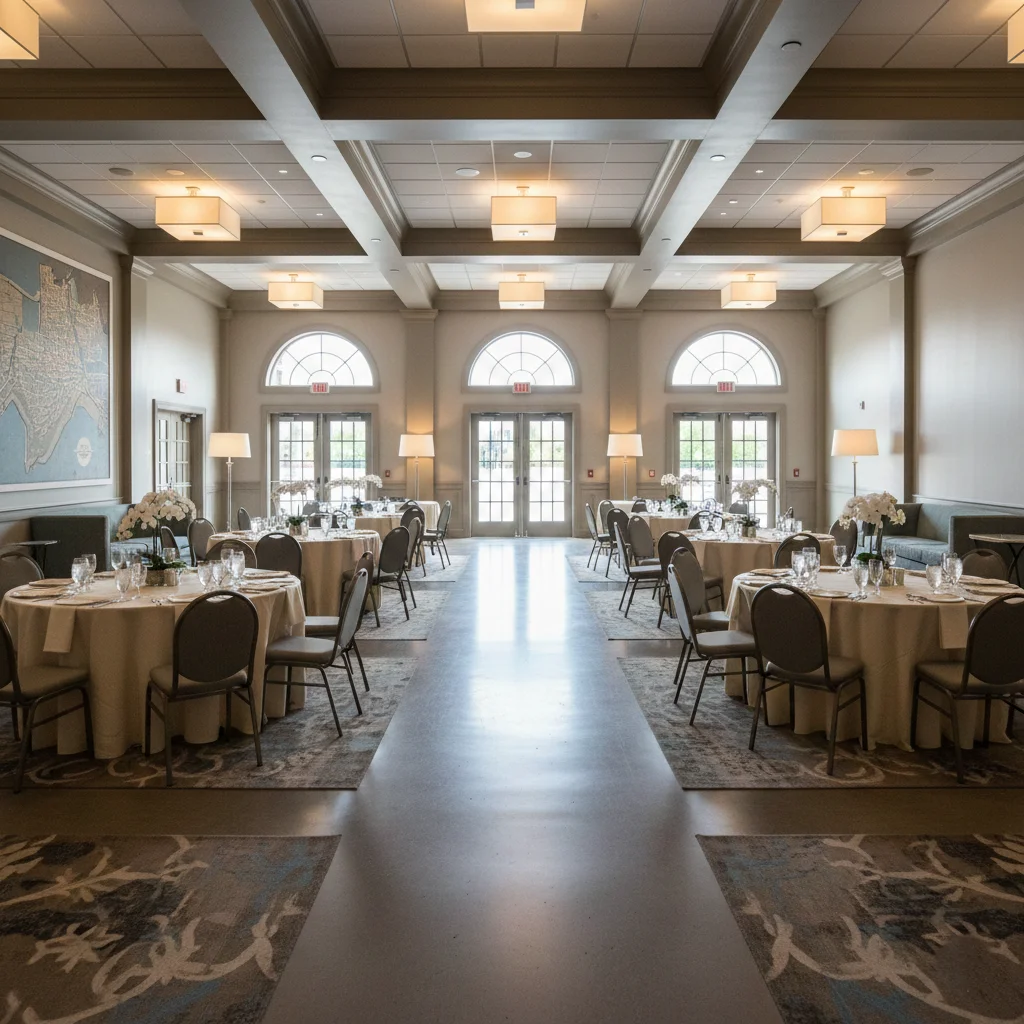
In Washington DC, maximum capacity is calculated using building and fire codes. It assumes:
- People are evenly distributed
- No large stages, décor, or equipment
- Minimal circulation needs
- Emergency evacuation as the priority
As seen across many upcoming events in Washington DC, planners increasingly prioritize experience over filling every square foot.
What it does not account for:
- Tables, chairs, or lounge furniture
- Dance floors, stages, or AV control
- Catering flow and bar lines
- Staff, vendors, or security
- Guest comfort or premium experience
So while a venue may legally allow 300 people, that does not mean 300 guests will feel comfortable — or even functionally fit — for your specific event.
What Are the Average Capacities for Popular Event Spaces in Washington DC?
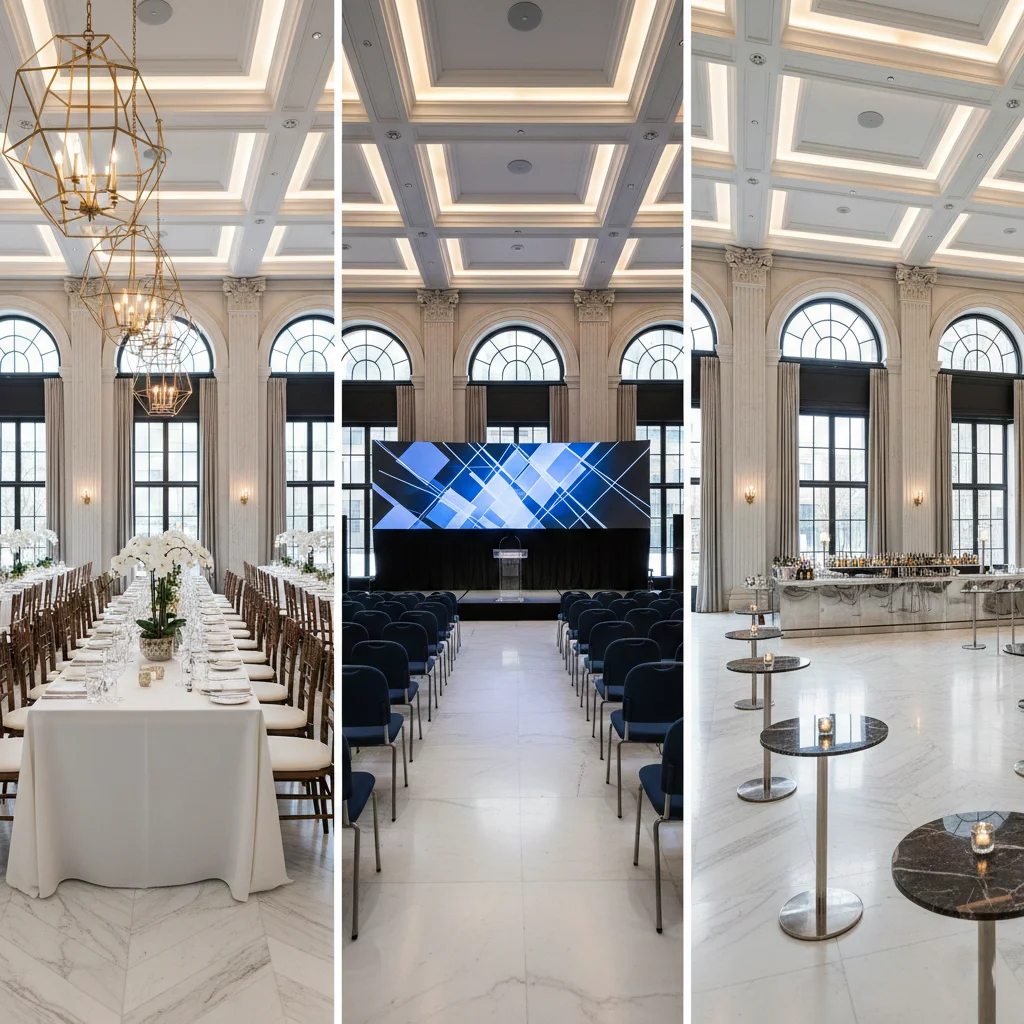
Instead of thinking in absolutes, it’s more useful to think in working ranges.
Average Capacity Ranges by Event Type
| Event Type | Posted Capacity | Comfortable Guest Range |
|---|---|---|
| Standing reception | 150–400 | 120–320 |
| Seated banquet | 150–350 | 100–250 |
| Conference (theater) | 200–500 | 150–350 |
| Conference (classroom) | 150–400 | 100–275 |
| Rooftop cocktail | 75–150 | 45–100 |
This is why browsing different Washington DC event venues side by side is so important — two spaces with the same posted number can feel completely different once laid out.
Why Max Occupancy Is Not the Real Guest Limit in DC
Capacity signs are designed for worst-case emergency evacuation, not real events.
For many planners — especially those reviewing wedding venues in Washington DC — this disconnect is where confusion starts. Weddings, galas, and conferences all require:
- Wider aisles
- Extra service space
- Visual breathing room
- Guest circulation
The moment you add:
- A dance floor
- A stage
- A sweetheart table
- Bars or buffet stations
You’ve already reduced usable capacity — often by 20–40%.
How Layout Choices Change Capacity More Than Room Size
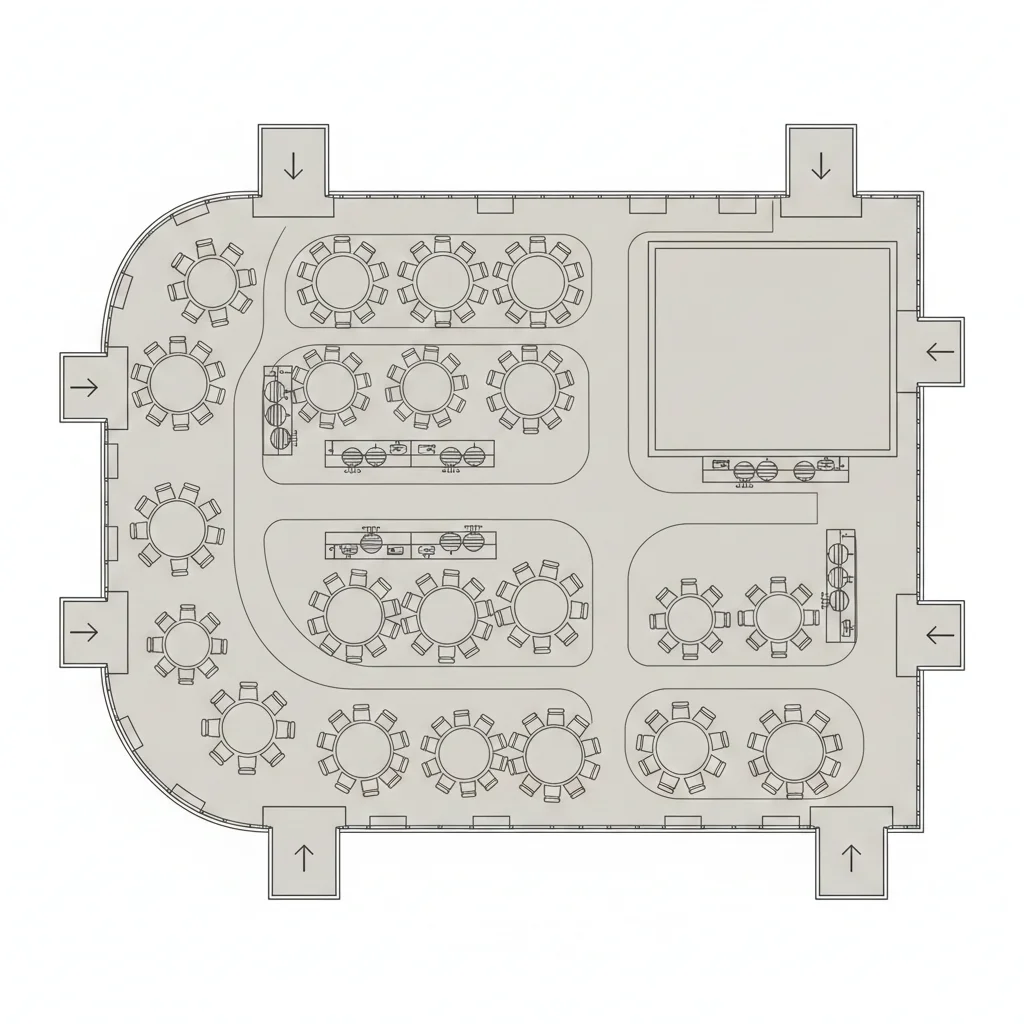
Layout decisions “spend” square footage quickly.
Typical Layout Impact on Capacity
| Layout Element | Capacity Reduction |
|---|---|
| Stage / dance floor | −10% to −25% |
| Buffet stations | −5% to −15% |
| AV risers & control | −5% to −10% |
| Wider aisles (ADA & comfort) | −5% to −10% |
This is why venues that offer flexible layouts tend to work better than those advertising a single headline number. Many planners compare multiple event venues in DC before locking in a guest count for this reason alone.
Event Venues in Washington DC With Capacity Over 500 Guests
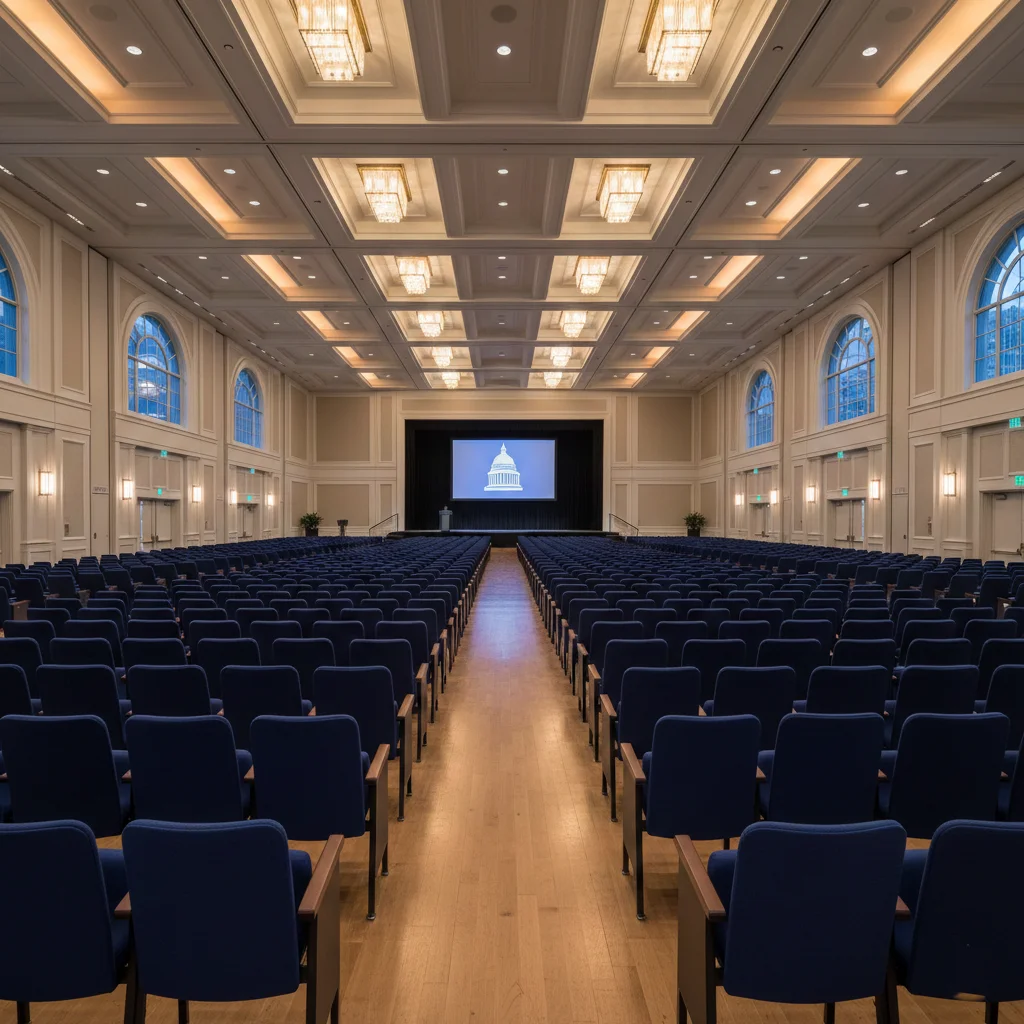
Large-capacity events — conventions, summits, expos, and major galas — require venues built for scale and flow.
Examples from greatEvent that support 500+ guest formats include:
- Marriott Marquis – convention-scale ballrooms and breakouts
- Washington Hilton – large conferences and galas
- Omni Shoreham Hotel – formal banquets and receptions
- Grand Hyatt Washington – corporate and association events
Even in these spaces, seated events almost always operate below the maximum to preserve circulation and service quality.
List Event Venues in DC Suitable for 200 Seated Guests
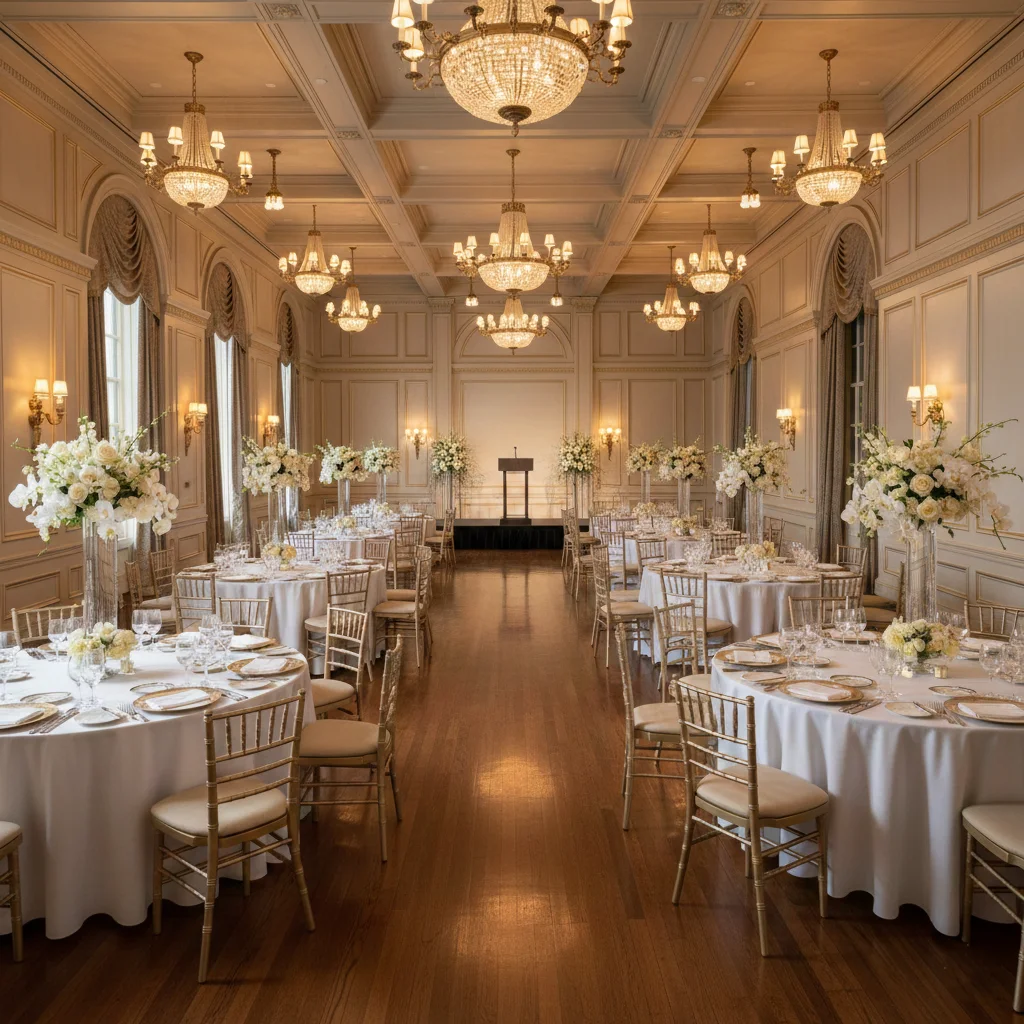
A common planning mistake is assuming a venue listed at 200 capacity works for 200 seated guests. In reality, seated dinners need more square footage per person.
Venues that work well for ~200 seated guests usually advertise closer to 275–325 capacity.
Strong fits from greatEvent include:
This is especially relevant when filtering wedding venues with seated layouts in Washington DC, where comfort expectations are higher than for standing events.
Where Can I Find Banquet Halls in Washington DC That Hold at Least 300 People?
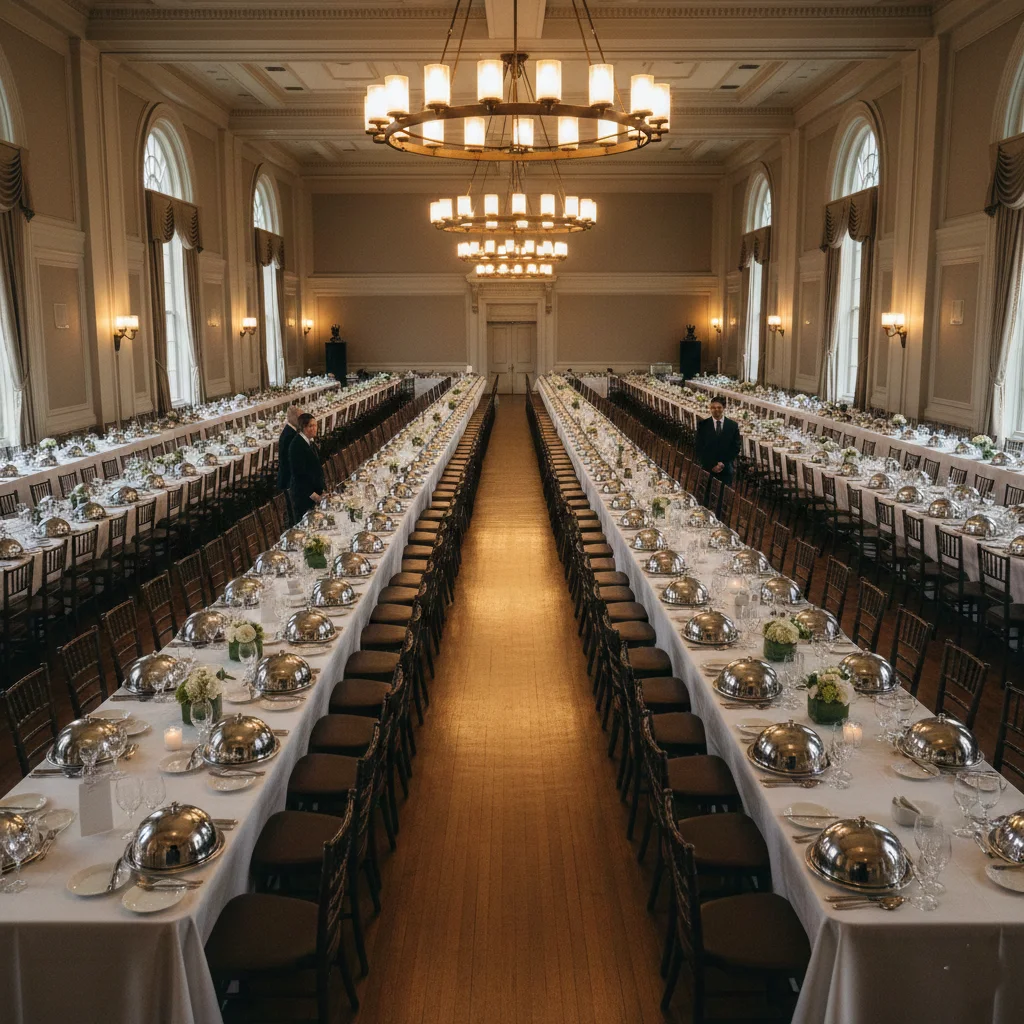
True 300-person banquets require:
- Large, unobstructed ballrooms
- Strong catering back-of-house
- Flexible table spacing
- Multiple service access points
Venues that consistently support this scale include:
- Renaissance Washington DC
- Hyatt Regency Washington
- Washington Marriott at Metro Center
A dedicated Washington DC wedding venue capacity guide is often the fastest way to translate posted numbers into real banquet counts.
Compare Large Capacity Conference Venues in the DC Metro Area
Conference-Focused Capacity Comparison
| Venue | Theater Style | Classroom Style | Best Use Case |
|---|---|---|---|
| Marriott Marquis | 800+ | 500+ | Convention-scale events |
| Washington Hilton | 700+ | 450 | Multi-track conferences |
| Grand Hyatt | 600 | 400 | Corporate summits |
Conference layouts demand more aisle width, AV zones, and attendee circulation than receptions, which is why capacity drops faster.
Which Venues in Washington DC Offer Flexible Event Space Capacity Options?
Flexibility matters when:
- Attendance fluctuates
- Hybrid or multi-format events are planned
- Breakouts and networking zones are needed
Venues known for adaptable layouts include:
- Hotel Zena
- Eaton DC
- The Line DC
Rooftop Event Venues in DC With Capacity for 75 People
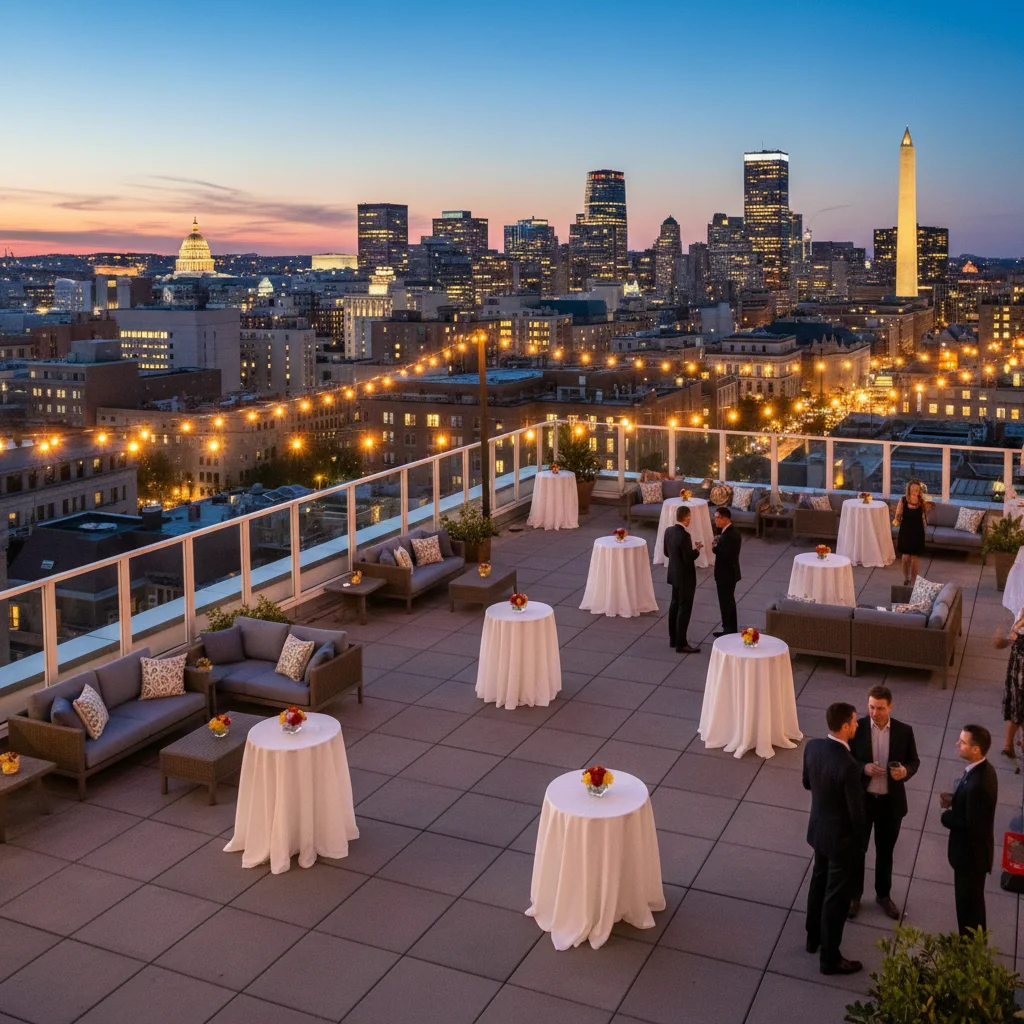
Rooftop venues often list optimistic numbers, but usable capacity drops due to:
- Furniture anchoring
- Guardrail setbacks
- Weather buffers
- Service zones
Rooftop Capacity Reality
| Venue | Posted Capacity | Comfortable Range |
|---|---|---|
| Hotel Washington | ~100 | 60–75 |
| The Watergate | ~150 | 75–100 |
How to Choose the Right Capacity for Your DC Event
A practical approach:
- Start with posted capacity
- Subtract layout elements (stage, bars, décor)
- Include staff and vendors in the count
- Apply a 10–15% comfort buffer
This is the difference between a room that feels technically legal and one that feels effortless.
Once you understand how posted capacity differs from real-world guest comfort, the next step is translating those numbers into a layout that actually works for your event.
- Clarifying realistic guest counts based on layout and event type
- Reviewing capacity tradeoffs before committing to a venue
- Aligning space, service flow, and experience expectations
Final Takeaway
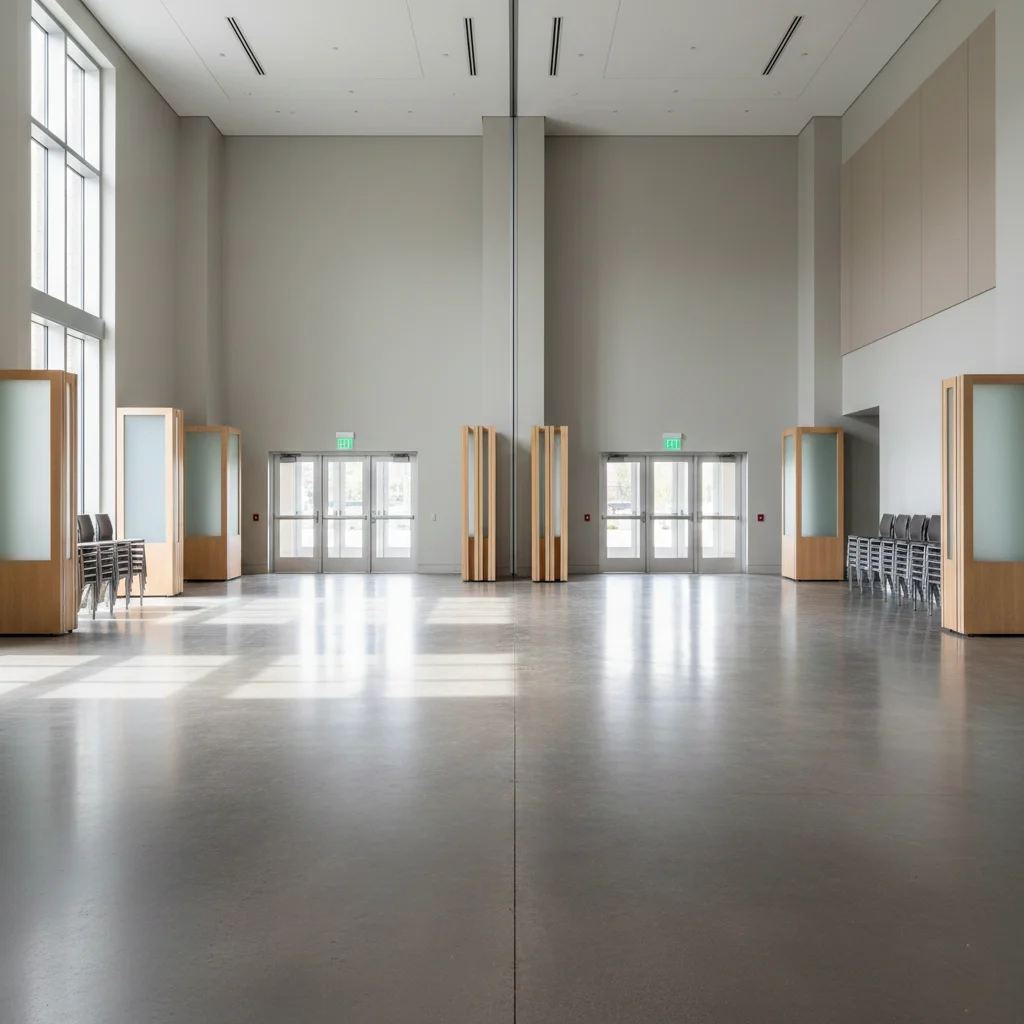
In Washington DC, maximum occupancy is the starting point — not the answer.
The best events plan for:
- Flow
- Comfort
- Service quality
- Guest experience
When capacity decisions are made with those factors in mind, venues feel better, events run smoother, and guests remember the experience — not the crowding.
Frequently Asked Questions
What does maximum occupancy mean for event venues in Washington DC? ▾
Maximum occupancy is the legal safety limit set by building and fire codes. It indicates how many people can safely evacuate a space in an emergency, not how many guests will be comfortable during an event.
Is maximum occupancy the same as a venue’s usable event capacity? ▾
No. Usable event capacity is almost always lower than maximum occupancy because layouts must account for seating, aisles, staging, décor, catering flow, staff, and accessibility requirements.
What are the average capacities for popular event spaces in Washington DC? ▾
Most successful events in Washington DC operate at 60–80% of the posted maximum capacity, depending on event type. Seated banquets and conferences typically require more space per person than standing receptions.
How many guests can a DC venue realistically host for a seated event? ▾
A venue that lists a capacity of 300 guests will often feel most comfortable hosting 180–240 seated guests, once tables, service aisles, and staging are included.
Can event venues in Washington DC accommodate more than 500 guests? ▾
Yes, some large hotels and conference venues can host 500+ guests, especially for standing receptions or theater-style conferences. However, seated dinners and multi-session events usually require lower guest counts.
Where can I find banquet halls in Washington DC for 300 or more guests? ▾
Banquet halls capable of hosting 300 or more guests are typically found in large hotels and full-service venues with expansive ballrooms, strong back-of-house operations, and flexible floor plans.
Are there event venues in DC suitable for conferences with 200+ attendees? ▾
Yes. Conference-friendly venues in DC are designed with wide aisles, AV infrastructure, and breakout space. These features improve flow and comfort but often reduce capacity compared to the posted maximum.
Why do rooftop event venues in DC have lower usable capacity? ▾
Rooftop venues are limited by guardrails, setbacks, furniture anchoring, service zones, and weather buffers. As a result, a rooftop listed for 100 guests may feel comfortable with only 50–75 attendees.
How do layout choices affect event venue capacity? ▾
Layout choices such as adding a stage, dance floor, buffet stations, or wider aisles can reduce usable capacity by 20–40%, even if the venue’s posted occupancy remains unchanged.
Should staff and vendors be included in capacity calculations? ▾
Yes. Capacity limits apply to everyone in the space, including guests, catering staff, AV teams, performers, security, and vendors. Ignoring this can push an event over its safe or permitted limit.
How can I choose the right guest count for my DC event? ▾
Start with the venue’s posted capacity, subtract space for layout elements, include staff and vendors, and then apply a 10–15% comfort buffer. This approach prioritizes guest experience over filling the room.
Why do some events feel overcrowded even when they’re under capacity? ▾
Because maximum occupancy is based on evacuation safety, not experience. Events feel overcrowded when circulation, service flow, acoustics, and personal space are compromised — even if the event is technically compliant.
Related Post




Search by Category

Contact Us
Please provide your contact information with event details. You will be contacted soon.

Thank You for your submission