
How to Book a Wedding Venue in Washington DC With a Flexible Cancellation Policy
TL;DR
- Most DC wedding venues require 25–50% deposits that are usually non-refundable after a short grace period.
- Cancellation penalties typically increase as the wedding date gets closer.
- Flexibility almost always exists before you sign, not after.
- Hotels and large venues tend to have more rigid contracts than independent spaces.
- Rescheduling, credits, or partial refunds are sometimes negotiable—but only if discussed early.
- Reading cancellation, force majeure, and payment clauses carefully can prevent major financial loss.
Booking a wedding venue is one of the first—and most financially significant—decisions couples make. In Washington DC, where demand is high and venues book far in advance, contracts are typically written to protect the venue first.
Couples often begin by browsing event venues in Washington DC or shortlisting spaces based on availability, aesthetics, and pricing. Cancellation policies usually get attention only after a contract is on the table. By then, flexibility can be limited.
This guide explains how cancellation policies actually work in DC wedding venues, what flexibility realistically looks like, and how to approach booking decisions more carefully—based on patterns commonly seen across dc wedding venues.
What Cancellation Policies Usually Look Like at DC Wedding Venues
Most wedding venues in Washington DC follow a tiered cancellation structure. While the exact numbers vary, the pattern is consistent.
Typical Cancellation Structure (Observed Pattern)
| Time Before Event | Common Outcome |
|---|---|
| Immediately after signing | Short grace period (often 7–15 days) |
| 6–12 months out | Deposit forfeited |
| 3–6 months out | 50–75% of total venue fee due |
| Under 30 days | 100% of venue fee due |
These tiers are designed around the venue’s ability to rebook the date. The closer the event date, the harder it is for the venue to replace the booking.
For couples still comparing options, it helps to browse wedding venues in DC alongside contract terms—not just photos or pricing.

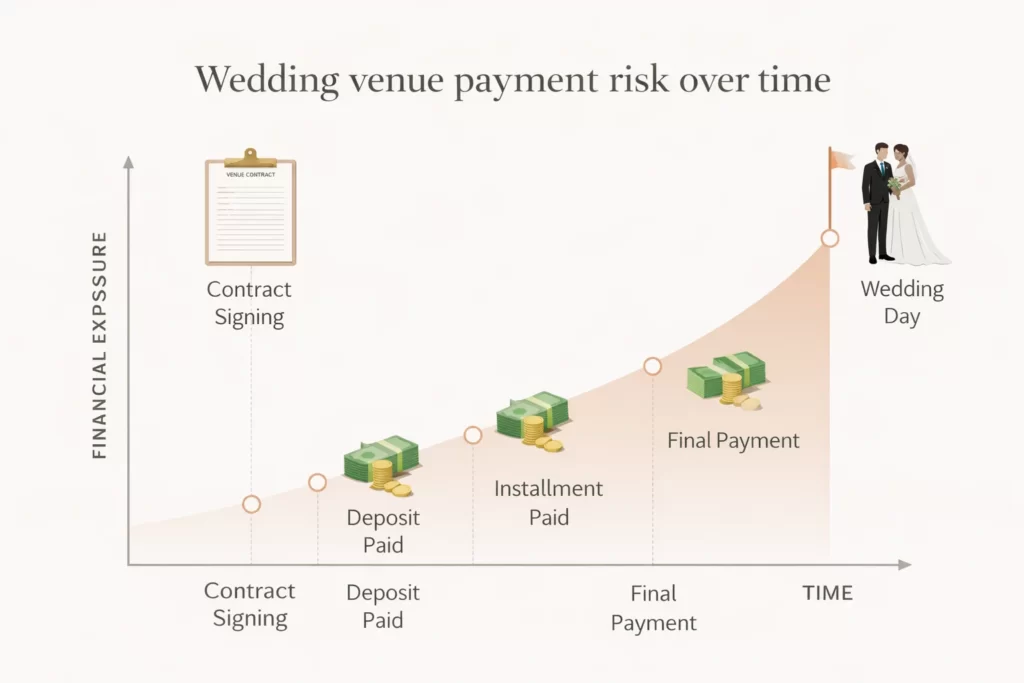
How Payment Schedules Increase Financial Risk Over Time
Cancellation risk is closely tied to when payments are due, not just the cancellation clause itself.
Common DC Wedding Venue Payment Timeline
| Stage | Typical Payment |
|---|---|
| Contract signing | 25–30% deposit |
| 6 months before event | Additional 40–50% |
| 30 days before event | Remaining balance |
This means couples often have most of the venue fee paid well before the wedding date, increasing financial exposure if plans change.
Where Cancellation Flexibility Actually Exists
Flexibility tends to vary by venue type, not just by price point.
Couples comparing different types of DC event venues often notice that policy rigidity depends on how the space is typically used.
More Common
- Date rescheduling within a defined window
- Credits toward a future date instead of refunds
- Partial refunds far in advance of the event
- Adjustments before minimum guest counts are finalized
Less Common
- Full refunds close to the event
- Open-ended cancellation language
- Verbal promises not reflected in contracts
Some private party venues in Washington DC or hourly or pop-up venues in DC may offer lower commitment structures, which can reduce cancellation risk for certain types of celebrations.
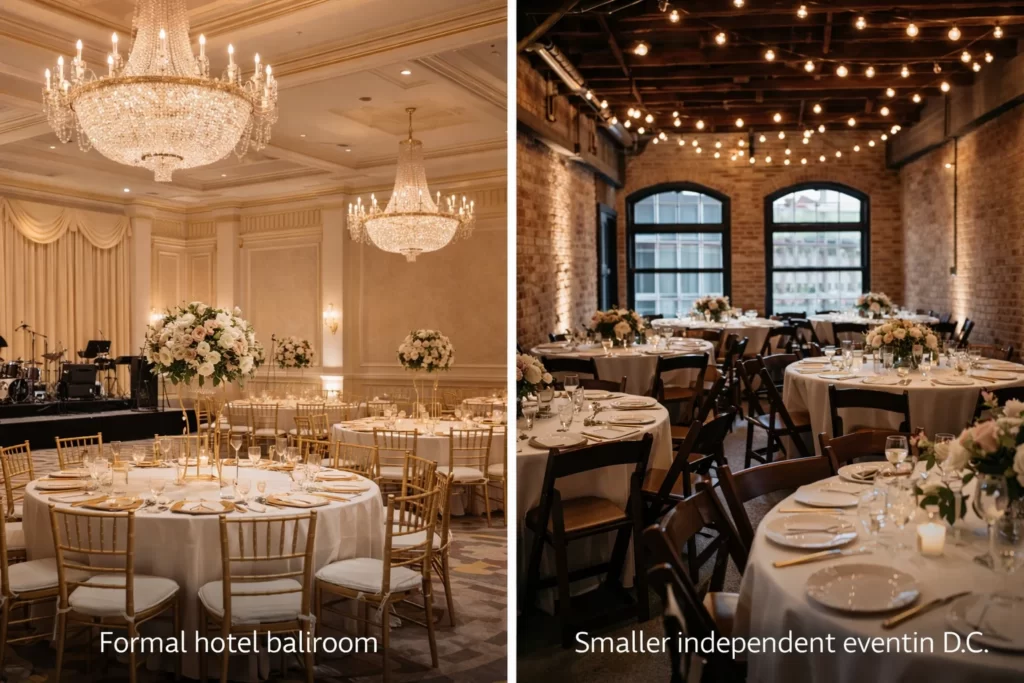
Hotel Wedding Venues vs Independent Event Spaces
Policy rigidity often depends on whether a venue operates under standardized corporate rules.
Comparison: Contract Flexibility by Venue Type
| Venue Type | Typical Flexibility Level |
|---|---|
| Hotel wedding venues in Washington DC | Low |
| Large, branded venues | Low to moderate |
| Independent event spaces | Moderate |
| Smaller boutique venues | Moderate to higher |
Venues that primarily host conferences or business events—such as corporate event venues in Washington DC or other business-style venues in DC—often rely on fixed contracts designed for predictable scheduling.
When Couples Have the Most Negotiation Leverage
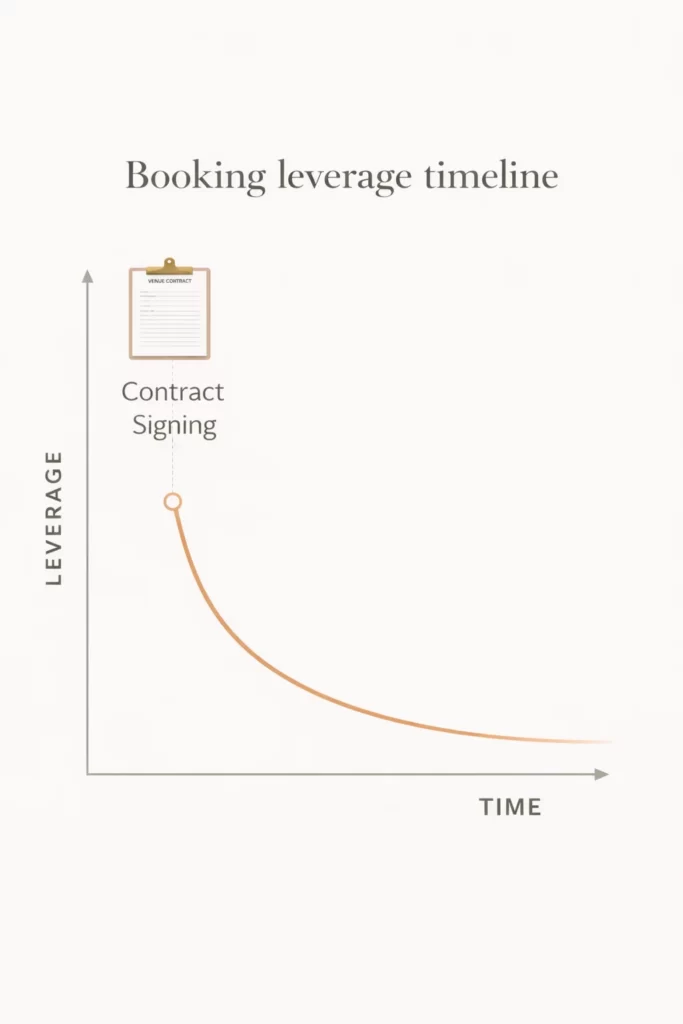
Timing matters more than wording.
Leverage by Booking Stage
| Stage | Negotiation Power |
|---|---|
| Before signing | High |
| After deposit paid | Low |
| After final payment | Very low |
Once a contract is signed, venues rarely change terms. Flexibility discussions are most effective before any payment is made.
Clauses That Deserve Extra Attention Before Signing
When reviewing contracts at dc wedding venues, these sections deserve careful reading:
- Cancellation clause: exact timeframes and penalties
- Force majeure clause: what qualifies and what happens next
- Rescheduling terms: fees, deadlines, availability limits
- Guest count minimums: when numbers become locked
- Venue-initiated cancellation: remedies if the venue cancels
If any section feels vague, it’s reasonable to request clarification in writing.
What “Best Wedding Venues in Washington DC” Often Miss
Many “best wedding venues in Washington DC” lists focus on visuals and pricing. Contract structure is often overlooked.
Couples comparing different unique wedding venues in Washington DC often find that:
- Two venues with similar prices can carry very different cancellation risk
- Slightly higher venue fees sometimes come with clearer, fairer terms
- Flexibility matters more for weddings involving travel or large guest lists
Understanding contracts can matter as much as choosing the venue itself.
Practical Takeaways Before You Book
Before committing to a venue:
- Ask cancellation questions early
- Review payment schedules alongside cancellation penalties
- Don’t rely on verbal assurances
- Compare venue types, not just prices
- Assume flexibility must be explicitly written
Couples planning around major dates or celebrations may also find it helpful to stay aware of upcoming events in Washington DC, as citywide demand can affect availability and terms.
Closing
Booking a wedding venue in Washington DC isn’t just about finding a space you love. It’s also about understanding the contract you’re signing and the financial exposure that comes with it.
Couples who approach cancellation policies carefully—before signing—are better positioned to make informed decisions, manage risk, and avoid unnecessary stress later.
Clear expectations don’t make a wedding less joyful. They make planning more stable.
Frequently Asked Questions
Are wedding venue deposits refundable in Washington DC? ▾
In most cases, no. Deposits for DC wedding venues are typically non-refundable after a short grace period. Some venues may offer credits or partial refunds if cancellation happens far in advance, depending on the contract.
Do hotel wedding venues in Washington DC have stricter cancellation policies? ▾
Generally, yes. Hotel wedding venues in Washington DC often operate under standardized contracts with limited room for negotiation. Independent or boutique venues may offer slightly more flexibility before signing.
What does a flexible cancellation policy usually mean? ▾
Flexibility usually means defined alternatives rather than free cancellation. This may include rescheduling, credits toward a future date, or reduced penalties if canceled early. Full refunds close to the event are uncommon.
Can I negotiate cancellation terms with DC wedding venues? ▾
Negotiation is most realistic before signing the contract. Once a deposit is paid, venues rarely adjust cancellation terms.
Is rescheduling treated the same as canceling a wedding venue? ▾
Not always. Some DC wedding venues treat date changes as cancellations, while others allow rescheduling for a fee or within a specific timeframe. The contract should clarify this.
Do smaller or unique wedding venues offer more flexibility? ▾
Sometimes. Smaller or unique wedding venues in Washington DC may have more discretion, but flexibility varies and should always be confirmed in writing.
What clauses should I review carefully before booking a venue? ▾
Key clauses include cancellation timelines, payment schedules, force majeure language, guest minimum requirements, and what happens if the venue cancels.
Is wedding insurance necessary if a venue has a flexible policy? ▾
Wedding insurance can help in specific situations, but it does not replace reviewing the venue contract. The venue’s policy determines how payments are handled.
Related Post









Search by Category

Contact Us
Please provide your contact information with event details. You will be contacted soon.
