
How Much Does a Wedding Cost in 2026? A Complete Breakdown of the Average Wedding Cost
Planning a wedding is exciting, but one of the first questions couples ask is simple: what is the average wedding cost today? Many couples start researching venues, vendors, and budgeting tools on platforms like greatEvent before setting their wedding budget.
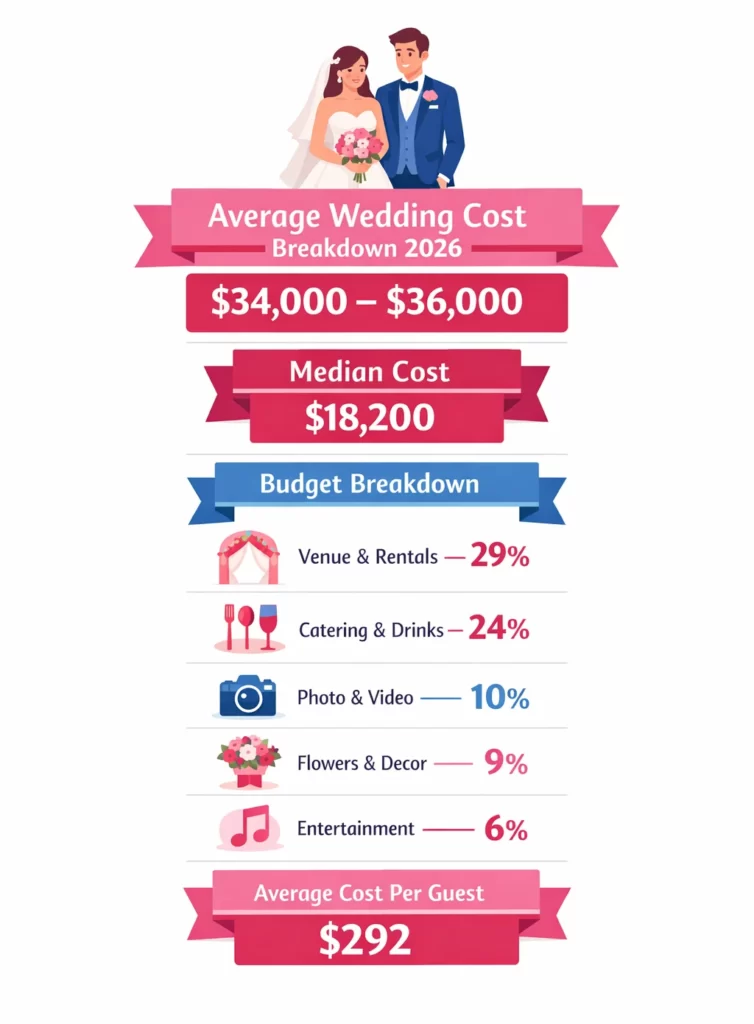
In 2026, the average wedding cost in the United States ranges between $34,000 and $36,000. However, that number doesn’t represent every couple’s reality.
Many weddings cost significantly less. Industry reports show the median wedding cost is around $18,000, meaning half of couples spend less than that amount.
Several factors influence the total cost of a wedding:
- Guest count
- Venue and location
- Catering and drinks
- Photography and videography
- Décor and floral arrangements
- Wedding planners and entertainment
For example, a small wedding with 50 guests might cost under $15,000, while a large metropolitan celebration with 200 guests could easily exceed $70,000 or more.
Understanding how wedding costs break down can help couples build a realistic and stress-free budget.
TL;DR: Average Wedding Cost in 2026
- The average wedding cost in 2026 is about $34,000–$36,000.
- The median cost is about $18,000, meaning many weddings cost far less.
- The average cost per guest is about $290–$300.
- Venue and catering together make up over 50% of the wedding budget.
- Weddings in cities like New York or Los Angeles can exceed $80,000.
- Micro weddings (under 50 guests) are becoming increasingly popular to reduce costs.
- Budget-friendly strategies include smaller guest lists, off-season dates, and flexible venues.
What Is the Average Wedding Cost in the United States?

Industry data from multiple wedding platforms provide a good estimate of the national average wedding cost.
| Source | Average Wedding Cost |
|---|---|
| The Knot Real Weddings Study | $34,200 |
| Zola Wedding Survey | $36,000 |
| Wedding Report | $32,900 |
| Median Wedding Cost | $18,200 |
The large difference between the average and median cost shows that wedding spending varies widely. Luxury weddings in expensive cities significantly raise the overall average.
Another major factor affecting costs is the venue. If you’re researching location pricing, this detailed guide to the average wedding venue cost can help couples estimate one of their biggest expenses.
Why Has the Average Wedding Cost Increased?
Wedding costs have gradually increased over the past decade due to economic factors and changing wedding trends.
| Year | Average Wedding Cost |
|---|---|
| 2019 | $28,000 |
| 2020 | $19,000 |
| 2021 | $28,000 |
| 2022 | $30,000 |
| 2023 | $35,000 |
| 2024 | $33,000 |
| 2025–2026 | $34,000+ |
Several factors contribute to rising wedding costs:
Inflation
Food, flowers, rentals, and décor have all become more expensive.
Labor Costs
Wedding vendors, caterers, planners, and florists charge higher fees due to increased wages.
Supply Chain Challenges
Imported décor items, flowers, and wedding dresses may cost more due to global supply issues.
Demand for Unique Venues
Modern couples increasingly seek distinctive venues such as rooftops, wineries, and historic buildings.
Many couples also explore alternative event spaces when planning their celebration. Comparing event space rental costs can help uncover budget-friendly venue options.
How Much Does a Wedding Cost Per Guest?

The easiest way to estimate a wedding budget is by calculating the average cost per guest.
In 2026, the average wedding cost per guest is about $290–$300.
| Guest Count | Average Total Cost |
|---|---|
| 1–50 guests | $17,000 |
| 50–100 guests | $27,000 |
| 100+ guests | $43,000 |
This is why guest list size has such a dramatic impact on the total wedding cost.
For example:
- Reducing the guest list from 150 guests to 75 guests could save more than $15,000.
- Micro weddings allow couples to spend more per guest while keeping the total budget lower.
How Much Does Each Wedding Vendor Cost?
Wedding budgets are typically divided across several major vendor categories.
| Category | Average Cost |
|---|---|
| Reception Venue | $12,900 |
| Catering (per guest) | $80 |
| Photographer | $3,000 |
| Videographer | $2,300 |
| DJ | $1,800 |
| Floral & Decor | $2,800 |
| Wedding Planner | $2,100 |
| Wedding Dress | $2,100 |
| Cake | $540 |
| Alcohol / Bar | $2,800 |
| Wedding Rings | $3,000 |
Typical Wedding Budget Breakdown
- Venue & rentals — 29%
- Catering and drinks — 24%
- Photography & videography — 10%
- Flowers & décor — 9%
- Entertainment — 6%
- Attire & beauty — 6%
- Wedding planner — 5%
- Rings — 5%
Because planning can be complicated, many couples hire professional coordinators. If you’re considering this option, you may want to review how much event planners charge to factor it into your budget.
Wedding Cost by Region in the United States
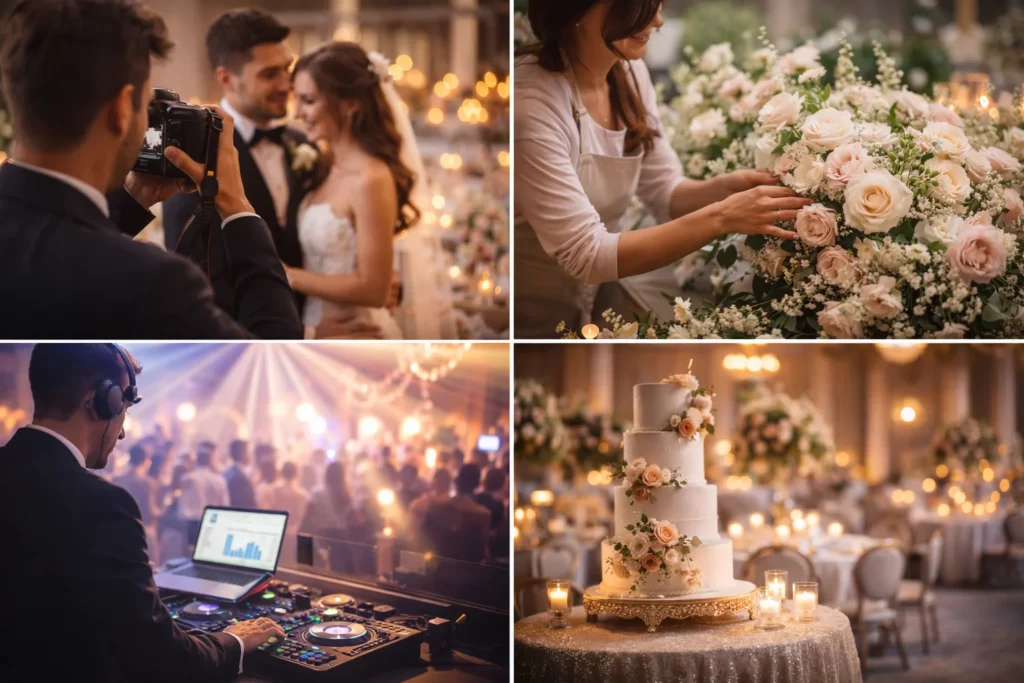
Wedding prices vary dramatically depending on the region.
| Region | Average Cost |
|---|---|
| Mid-Atlantic | $48,400 |
| Northeast | $46,600 |
| South | $31,300 |
| West | $31,300 |
| Southwest | $30,800 |
| Midwest | $29,000 |
Major cities are significantly more expensive than smaller towns.
Examples include:
- New York City — ~$88,000
- Los Angeles — ~$45,000
- Chicago — ~$54,000
- Houston — ~$33,000
Couples planning urban weddings often explore curated venue lists such as wedding venues in Washington DC when researching pricing and venue styles.
How Much Do Weddings Cost Based on Size?
Guest count is one of the most important factors affecting wedding costs.
| Wedding Size | Guests | Typical Budget |
|---|---|---|
| Elopement | 1–20 | $1K – $5K |
| Micro Wedding | 20–50 | $5K – $15K |
| Small Wedding | 50–100 | $15K – $30K |
| Medium Wedding | 100–200 | $30K – $50K |
| Large Wedding | 200–400 | $50K – $100K+ |
Micro weddings have become particularly popular because they allow couples to:
- Create more intimate experiences
- Spend more per guest
- Reduce overall event costs
Couples seeking budget-friendly venues often browse lists like affordable wedding venues in San Antonio when researching options.
How Can Couples Reduce Wedding Costs?
Even though the average wedding cost is over $30,000, many couples successfully plan beautiful weddings on smaller budgets.
Some practical ways to reduce wedding expenses include:
Reduce the Guest List
Since catering is priced per person, cutting the guest list significantly reduces costs.
Choose Off-Peak Wedding Dates
Winter weddings or weekday ceremonies can reduce venue costs by 10–20%.
Consider Nontraditional Venues
Restaurants, art galleries, parks, or breweries often cost less than banquet halls.
Simplify Invitations
Digital invitations can save hundreds of dollars.
Use Seasonal Flowers
Local and seasonal flowers are far cheaper than imported arrangements.
Budget planning often begins long before the wedding day. Couples may also plan engagement celebrations first, so understanding who pays for an engagement party can help set early expectations.
Wedding Planning Timeline (12–18 Months)

| Timeline | Planning Tasks |
|---|---|
| 12–18 months | Set wedding budget and guest list |
| 12 months | Book venue and photographer |
| 9 months | Book entertainment and florist |
| 6 months | Send save-the-date cards |
| 4 months | Send invitations |
| 2 months | Final guest count |
| 1 month | Final vendor payments |
If you’re planning additional celebrations, understanding birthday party planner costs can also help when organizing related events.
Couples planning weddings alongside other events sometimes also research events happening in Washington DC for inspiration and venue ideas.
Frequently Asked Questions
What is the average wedding cost in 2026? ▾
The average wedding cost in the United States in 2026 is about $34,000–$36,000 according to major industry reports. However, the median wedding cost is closer to $18,000, meaning many couples spend significantly less depending on location, guest count, and vendor choices.
What is the average cost per guest at a wedding? ▾
The average cost per guest at a wedding is about $290–$300. This includes expenses such as venue rental, catering, décor, and entertainment. Larger guest lists significantly increase the overall wedding budget.
What is the most expensive part of a wedding? ▾
The venue and catering are typically the most expensive parts of a wedding, together accounting for more than 50% of the total wedding budget. Venue rental alone can average around $12,000–$13,000, while catering costs usually average about $80 per guest.
How much does a small wedding cost? ▾
A small wedding with 50–100 guests typically costs between $15,000 and $30,000. Couples who host micro weddings with fewer than 50 guests may spend between $5,000 and $15,000 depending on venue and vendor choices.
Why are weddings so expensive today? ▾
Wedding costs have increased due to inflation, higher labor costs, rising food prices, and growing demand for unique venues. Many couples also invest more in photography, décor, and entertainment to create memorable experiences.
Can you have a wedding for under $10,000? ▾
Yes. Couples can host a wedding for under $10,000 by reducing the guest list, choosing off-season dates, selecting affordable venues, simplifying décor, and limiting catering or alcohol services.
How much should couples budget for a wedding? ▾
Most couples should budget between $25,000 and $40,000 for a typical U.S. wedding depending on their location and priorities. Creating a clear budget early helps allocate funds to major categories like venue, catering, photography, and attire.
Do smaller weddings save money? ▾
Yes. Smaller weddings often reduce costs significantly because fewer guests mean lower catering, seating, rental, and invitation costs. Many couples now choose micro weddings with fewer than 50 guests for a more intimate and affordable celebration.
How long should couples plan a wedding budget? ▾
Most couples begin planning their wedding budget 12–18 months before the wedding date. This timeline allows time to secure venues, compare vendors, and spread payments across the planning process.
What hidden costs should couples include in a wedding budget? ▾
Common hidden wedding costs include vendor service charges, gratuities, marriage license fees, attire alterations, overtime charges, transportation for guests, and taxes. Adding a 10–15% buffer to the budget helps cover unexpected expenses.
Related Post








Search by Category

Contact Us
Please provide your contact information with event details. You will be contacted soon.
