
Wedding Ceremony vs. Reception: Event Space Costs and What Every Couple Needs to Know

TL;DR
Wedding Ceremony: The formal exchange of vows lasting 20–45 minutes, often in an intimate, meaningful setting like a church or scenic location. It is the sacred, legal, or spiritual core of the day. Wedding Reception: The celebration that follows, typically 4–6 hours of dining, dancing, and festivities with a larger guest list. It is the social and celebratory component. Event Space Costs: Venues account for 27–40% of total wedding budgets, with average costs ranging from $8,500–$12,200 in the U.S. depending on location. Hosting both events at one venue can save thousands in rental fees, transportation, and décor.
Introduction: Why Understanding Event Space Costs Changes Everything
Planning a wedding can feel overwhelming, especially when you realize that event space costs often represent the single largest expense on your budget. According to The Knot’s 2025 Real Weddings Study, couples spent an average of $12,200 on their venue in 2024, representing roughly 27% of their total wedding budget. Meanwhile, Zola’s Wedding Cost Index reports an average venue cost of approximately $8,573, typically ranging between $6,900 and $10,300.
But here’s what many couples overlook: understanding the fundamental differences between a wedding ceremony and reception isn’t just about traditions—it directly impacts how much you’ll spend on venues, décor, catering, and logistics. Whether you’re deciding between one all-inclusive venue or two separate locations, knowing what each component of your wedding day requires can help you allocate your budget wisely and avoid costly surprises.
To explore venues within your budget, you can browse our collection of wedding venues on greatEvent.
This guide breaks down everything you need to know about the ceremony versus reception distinction, explores how these choices affect event space costs, and provides actionable strategies to make your budget stretch further without sacrificing your vision.
When planning a wedding, some couples also turn to trusted vendors like Little Black Book Event Services for expert guidance in creating a seamless ceremony and reception experience.
What Is a Wedding Ceremony?
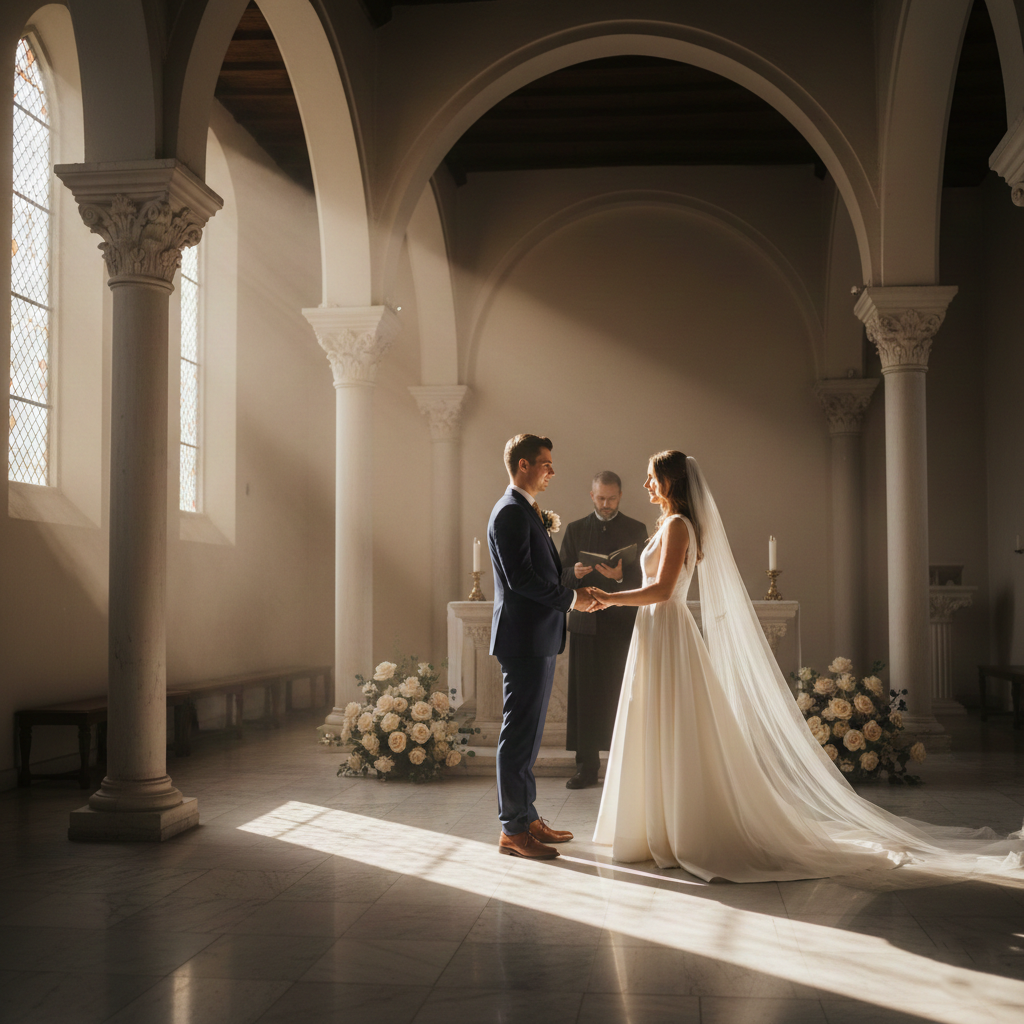
The wedding ceremony is the heart of your wedding day—the moment when you and your partner officially become married. This is where couples exchange vows, rings, and promises in front of their loved ones, and it typically carries a more solemn, emotional, and formal tone.
Key Characteristics of Wedding Ceremonies
- Duration: Most wedding ceremonies last between 20 and 45 minutes, though this varies significantly based on religious or cultural traditions. A quick civil ceremony might wrap up in 15–20 minutes, while a Catholic mass can extend to 60–90 minutes.
- Guest Count: The ceremony guest list is often smaller and more intimate than the reception, limited to close family and friends who will witness the exchange of vows.
- Atmosphere: The tone is typically formal and reflective, focusing on the significance of the commitment being made.
- Venue Preferences: Many couples choose meaningful settings such as churches, chapels, scenic overlooks, family homes, or nostalgic locations that symbolize their relationship. Ceremony locations are often chosen for sentimental value rather than practicality.
What Happens During a Ceremony?
A typical wedding ceremony follows this structure:
- Processional (5 minutes): The wedding party and couple make their entrance
- Opening remarks (5–10 minutes): The officiant welcomes guests and sets the tone
- Readings and rituals (5–10 minutes): Poems, religious readings, or unity ceremonies
- Exchange of vows (5–8 minutes): Personal or traditional promises
- Ring exchange (1 minute): Symbolic commitment
- Pronouncement and kiss (1 minute): Official declaration of marriage
- Recessional (5 minutes): The newlyweds exit to celebration
What Is a Wedding Reception?
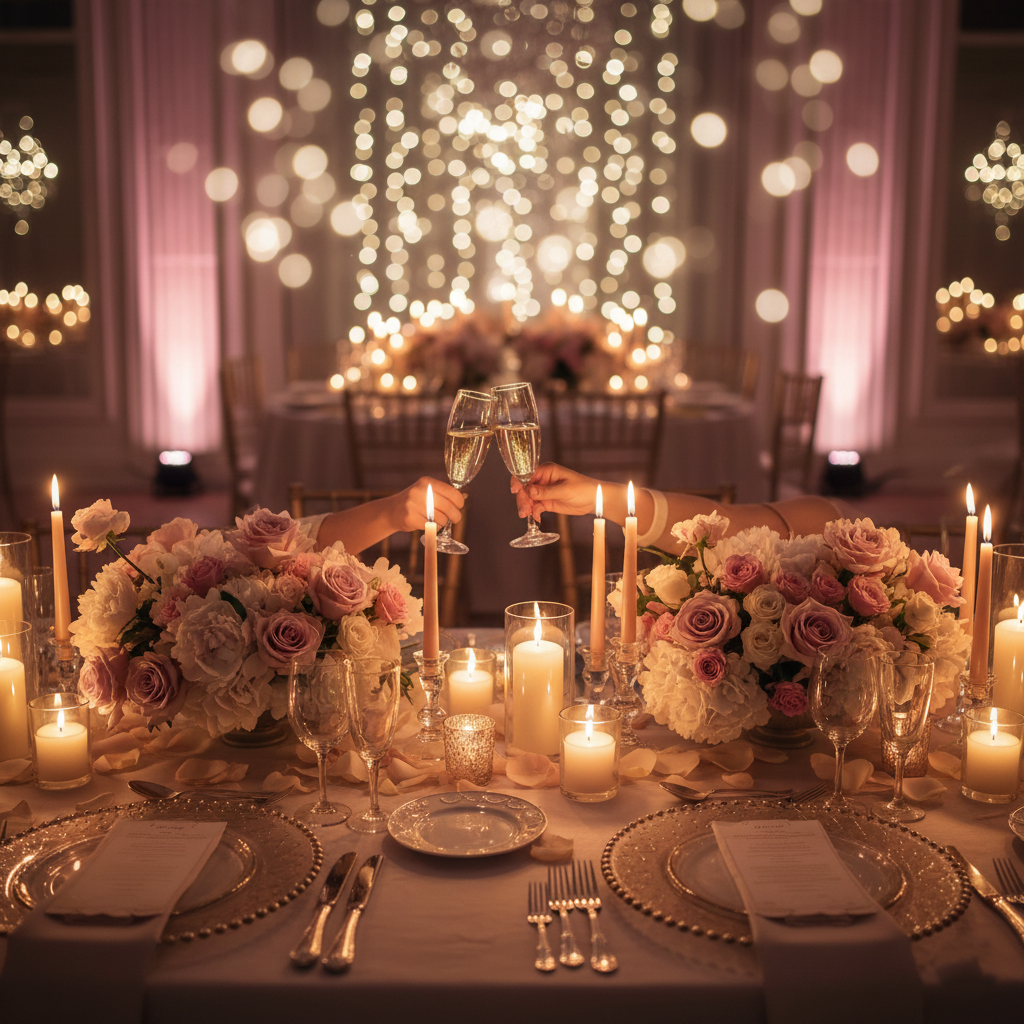
The wedding reception is the celebration that follows the ceremony—a party hosted by the couple to thank guests for attending and to celebrate their new union. Unlike the ceremony’s solemnity, receptions are characterized by a festive, relaxed, and social atmosphere.
What’s the Difference Between a Wedding Ceremony and Reception?
The ceremony is the formal, legal, or spiritual moment where vows are exchanged. The reception is the celebration afterwards, centered around food, music, and socializing. The ceremony is usually brief and intimate, while the reception lasts several hours and includes most of the evening’s events.
How Long Is a Wedding Ceremony vs. Reception?
Most ceremonies run 20–45 minutes depending on traditions. Receptions typically last 4–6 hours because they include dining, entertainment, and dancing.
You can find a wide range of spacious and flexible event venues suitable for receptions on greatEvent.
What Happens at Each Event?
A ceremony includes vows, readings, rings, and the pronouncement. A reception includes dinner, speeches, dancing, and festivities.
Key Characteristics of Wedding Receptions
- Duration: Receptions typically last 4 to 6 hours, allowing ample time for dining, dancing, toasts, and traditions.
- Guest Count: The reception guest list is usually larger than the ceremony, often including extended family, colleagues, and acquaintances who weren’t part of the intimate ceremony.
- Atmosphere: The mood shifts from formal to celebratory, with emphasis on entertainment, mingling, and joy.
- Venue Requirements: Reception venues need significantly more space to accommodate dining tables, a dance floor, catering stations, and entertainment setups.
Typical Wedding Reception Timeline
Based on wedding planning experts, here’s what a standard reception looks like:
- Cocktail hour (1 hour): Guests mingle while the couple takes photos
- Grand entrance (15–30 minutes): Couple and wedding party are introduced
- First dance and parent dances (15–20 minutes)
- Dinner service (1–1.5 hours): Plated, buffet, or family-style
- Toasts and speeches (30–45 minutes)
- Cake cutting (10 minutes)
- Open dancing (2+ hours): The party continues into the night
Ceremony vs. Reception: A Comparison of Traditions
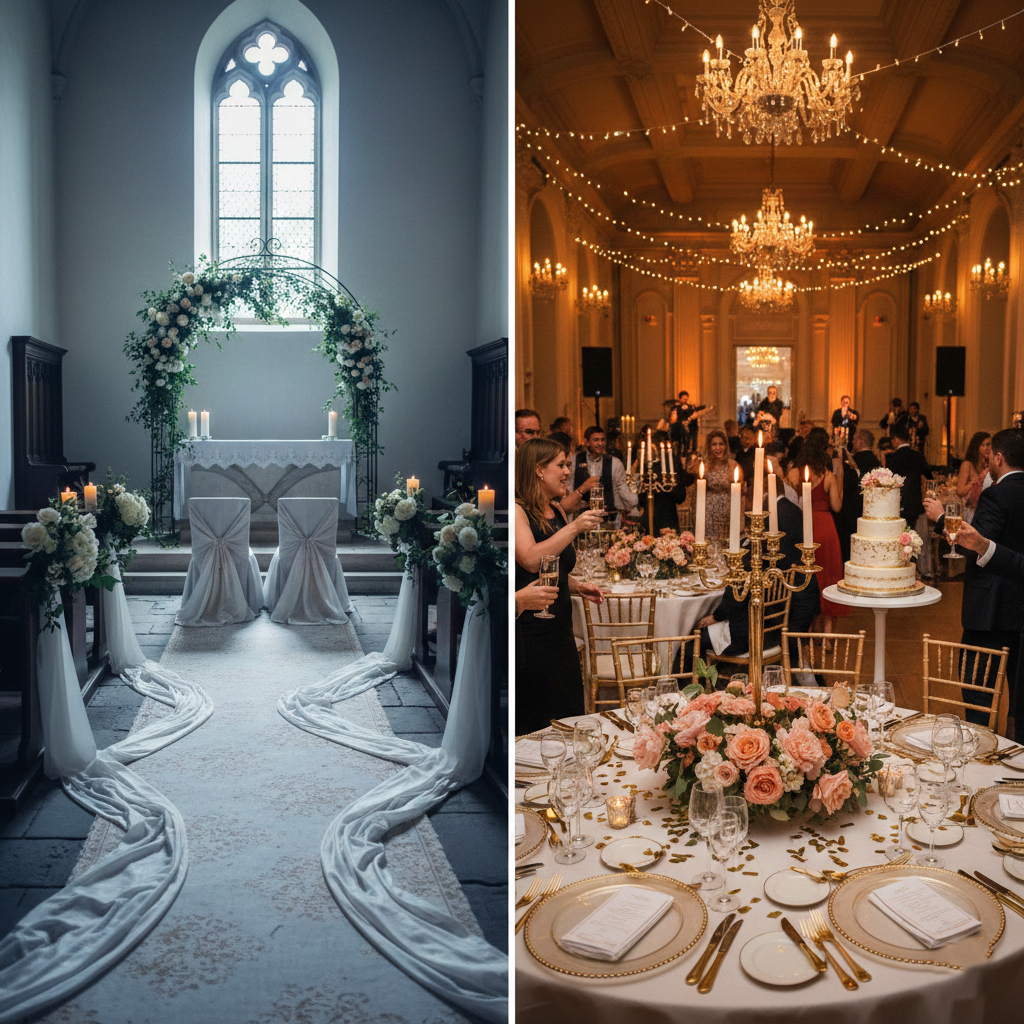
While the core purpose of the ceremony is the legal and spiritual union, and the reception is the celebration, many traditions are unique to each event. Understanding these differences is key to planning the flow and atmosphere of your day.
| Tradition | Ceremony | Reception | Purpose/Significance |
|---|---|---|---|
| Processional/Recessional | Yes | No (Replaced by Grand Entrance/Exit) | Formal entrance and exit of the wedding party and couple, marking the start and end of the formal union. |
| Vows and Ring Exchange | Yes | No | The central, legally binding, and symbolic act of commitment. |
| First Dance | No | Yes | The first dance of the newly married couple, symbolizing their new life together. |
| Toasts and Speeches | No (May have short readings) | Yes | Formal well-wishes and blessings from the wedding party and family. |
| Cake Cutting | No | Yes | A traditional act of the couple sharing their first meal, symbolizing their future provision for one another. |
| Bouquet/Garter Toss | No | Yes (Optional) | A playful tradition intended to pass on good luck and the chance of marriage to single guests. |
| Religious/Cultural Rituals | Yes (e.g., Unity Candle, Breaking Glass) | Less Common (May include cultural dances) | Rituals that honor faith, heritage, or family customs, often tied to the solemnity of the union. |
| Guest Attire | More formal, traditional, and conservative | More relaxed, focused on comfort for dancing and socializing | Reflects the atmosphere of the event. |
Wedding Ceremony vs. Reception: Key Differences at a Glance (Updated)
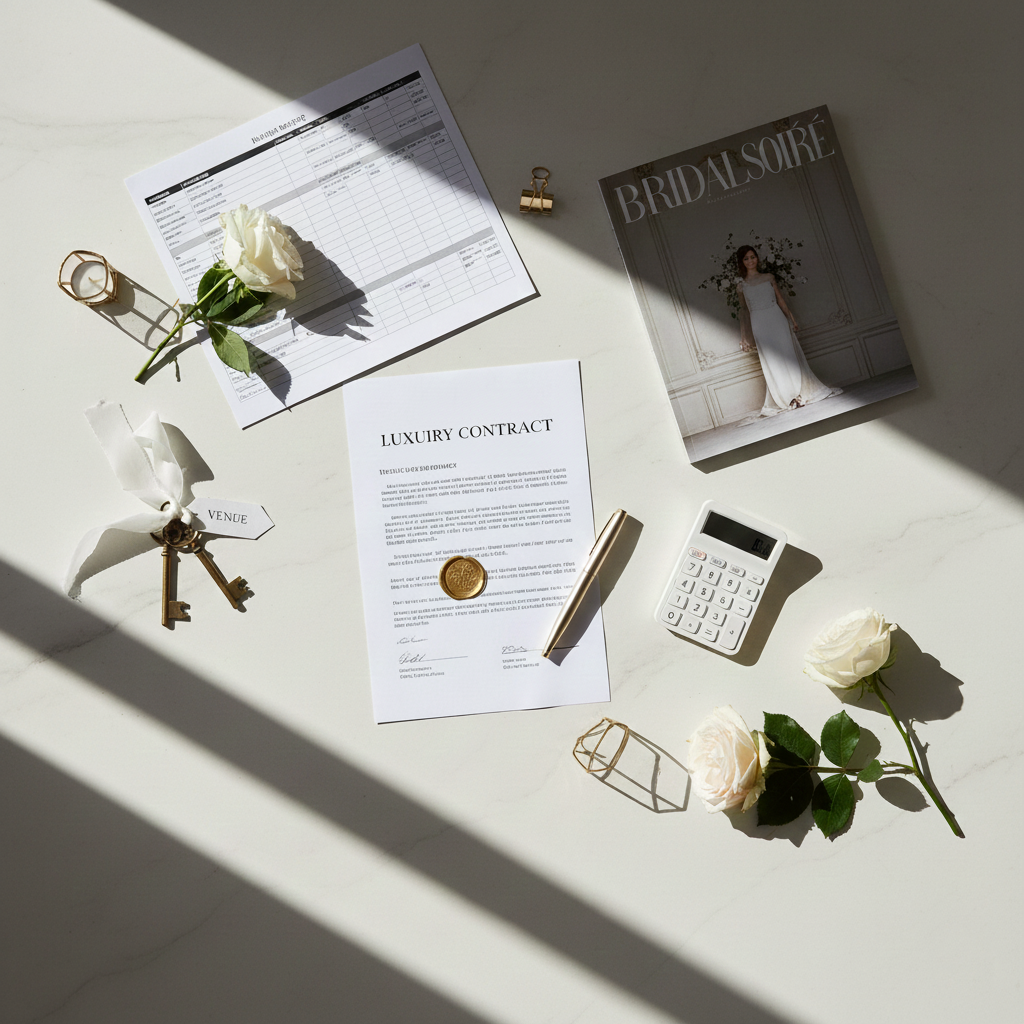
| Aspect | ||
|---|---|---|
| Core Purpose | Formal exchange of vows and legal/spiritual union | Celebration of the marriage and thanking guests |
| Duration | 20–45 minutes | 4–6 hours |
| Atmosphere | Solemn, emotional, formal, reflective | Festive, relaxed, social, celebratory |
| Guest Count | Often smaller, intimate (witnesses) | Usually larger, inclusive (celebrants) |
| Typical Venue | Churches, gardens, scenic locations, family homes | Ballrooms, banquet halls, restaurants, event centers |
| Space Needs | Seating with aisle for processional, altar/chuppah/mandap | Tables, dance floor, catering area, bar, entertainment setup |
| Budget Share | ~2% of total budget (officiant, license, small décor) | ~18%+ of total budget (catering, entertainment, venue rental) |
| Key Activities | Vows, rings, readings, pronouncement | Dinner, dancing, toasts, cake cutting, mingling |
Do You Need Both a Ceremony and a Reception?
No. Some couples choose a ceremony-only event or a reception-only celebration if they legally wed ahead of time. It’s a personal decision based on budget, culture, and guest expectations.
Can You Have a Reception Without a Ceremony?
Yes. Many couples legally marry in a courthouse and then host a standalone reception later. If doing this, clarify the event type on invitations so guests know what to expect.
Who Pays for the Ceremony vs. Reception?
Traditionally, the bride’s family covered the ceremony and reception, but modern couples often divide costs or pay together. The reception typically represents the larger spend.
Understanding Event Space Costs: The Numbers That Matter
Event space costs represent the largest single expense for most weddings. Here’s what you need to know about venue pricing in 2025.
How Much Space Do You Need for a Wedding Ceremony?
A ceremony setup typically requires an aisle, seating for all guests, and space for an altar or arch. Most planners recommend 8–10 sq. ft. per seated guest.
For a detailed breakdown of what couples typically spend, visit our complete wedding venue cost guide.
How Much Space Do You Need for a Wedding Reception?
Receptions need more space for tables, catering, and dancing—around 12–20 sq. ft. per seated guest depending on your layout and dance floor size.
Average Wedding Venue Costs in the United States
According to The Knot, the national average wedding venue cost is $12,200. However, this figure varies dramatically by location:
Most Expensive States:
- New Jersey: $27,710
- New York: $21,300
- Massachusetts: $19,180
- Rhode Island: $19,540
Most Affordable States:
- Wyoming: $3,770
- Idaho: $4,020
- Oklahoma: $5,000
- South Dakota: $4,740
Major Metropolitan Areas:
- New York City: $30,000
- Boston: $20,800
- San Francisco: $18,480
- Los Angeles: $16,400
- Chicago: $17,550
Venue Pricing by Type
Different venue types come with vastly different price tags:
| Venue Type | Cost Range (USD) |
|---|---|
| Banquet Halls | $800–$3,000 |
| Hotels | $1,000–$5,000+ |
| Country Clubs | $3,000–$8,000+ |
| Historic Sites | $1,500–$5,000 |
| Outdoor Parks/Gardens | $200–$7,000 |
| Restaurants | $200+ plus food minimum |
If you’re looking for more budget-friendly options, explore these affordable wedding venues popular among cost-conscious couples.
Wedding Budget Allocation
According to wedding industry data, here’s how couples typically distribute their budget:
- Venue and Rentals: 27–40%
- Catering: 25–30%
- Photography/Videography: 10–15%
- Décor: 10–15%
- Entertainment: 5–10%
- Ceremony costs: ~2%
Couples wondering about costs often look into details like How Much Do Event Planners Charge? to budget their ceremony and reception efficiently.
One Venue vs. Two: How Your Choice Impacts Event Space Costs
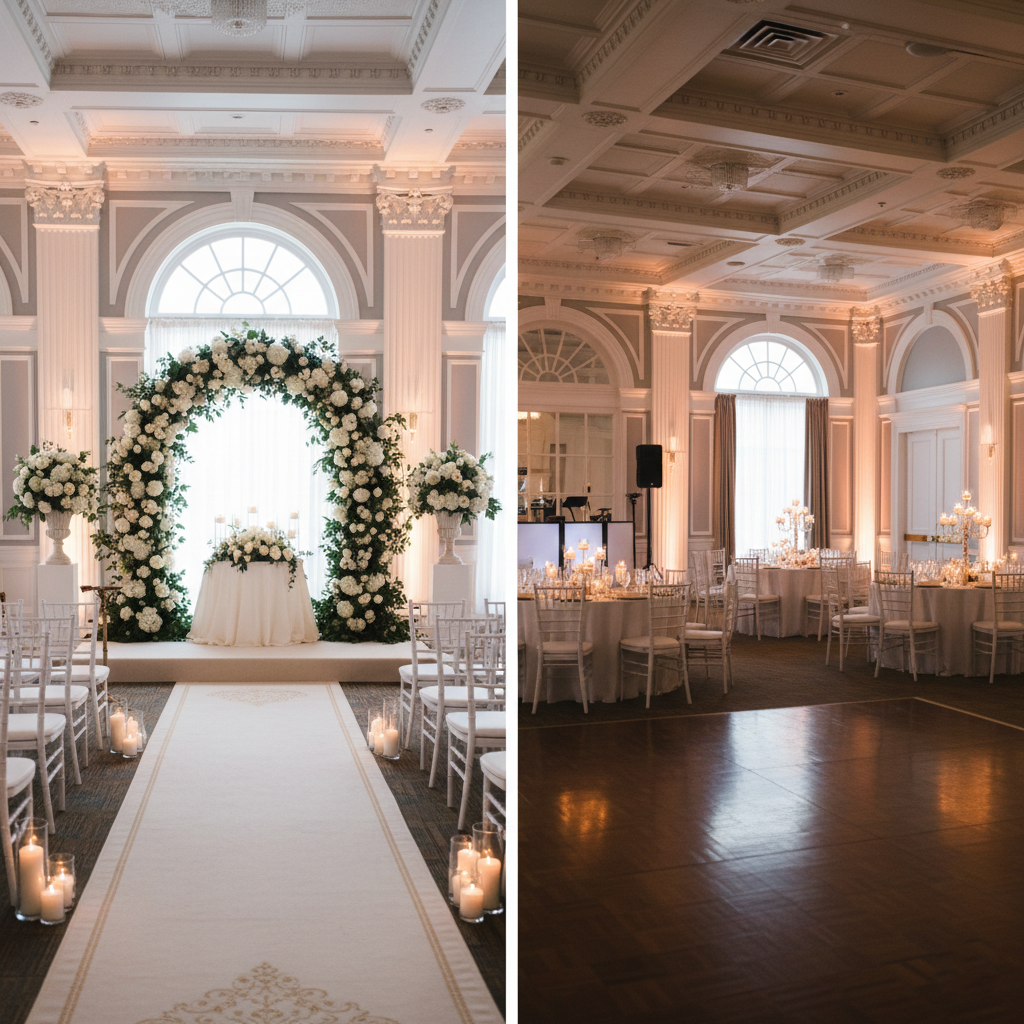
One of the most significant decisions affecting your event space costs is whether to host your ceremony and reception at the same venue or separate locations.
Benefits of Same-Venue Weddings
Hosting both events at one location has become increasingly popular, and for good reason:
- Cost Savings: Many venues offer bundled pricing when you book both the ceremony and reception together. You also eliminate transportation costs and reduce vendor travel fees.
- Simplified Logistics: Working with one venue team streamlines communication and ensures every detail is handled smoothly. As one wedding planner noted, “Not having to coordinate multiple teams or timelines takes enormous stress off couples”.
- Guest Convenience: No one gets lost driving between venues, and guests—especially elderly relatives—won’t struggle with multiple locations.
- Seamless Transitions: The flow from ceremony to cocktail hour to reception feels natural and unrushed.
- Décor Efficiency: You can repurpose ceremony flowers and décor for the reception, potentially saving hundreds or thousands on floral arrangements.
Ceremony and Reception at the Same Venue: Pros and Cons
Pros
- Lower rental and travel costs
- Easier logistics and smoother timeline
- Guests remain comfortable with no travel gap
Cons
- Limited décor flexibility if room must flip
- Some venues lack private spaces for either event
Our in-depth resource on event planner costs explains typical pricing and what services are included.
Outdoor Ceremony vs. Indoor Reception Considerations
Outdoor ceremonies offer natural scenery but require weather backup plans. Indoor receptions give stable lighting, electrical access, and more layout flexibility.
According to discussions on Reddit’s wedding planning community, couples who booked a park lodge for both ceremony and reception cited it as their biggest cost savings, saving thousands compared to separate venue fees.

21Fun – Casino Party Rentals in California
When Separate Venues Make Sense
Despite the cost advantages of one-venue weddings, separate locations work well in certain situations:
- Religious Requirements: If you want to marry in a church, synagogue, or mosque that doesn’t offer reception facilities, you’ll need a second venue.
- Sentimental Significance: Some couples have a deep connection to a specific ceremony location—perhaps where they got engaged or a family property—that isn’t suitable for a large reception.
- Distinct Atmospheres: Separate venues allow for dramatically different vibes—a romantic garden ceremony followed by a sleek urban restaurant reception, for example.
- Guest List Flexibility: Having two venues makes it easier to invite a smaller group to the ceremony and a larger crowd to the reception.
Cost Comparison: Same Venue vs. Separate Venues
| Factor | Same Venue | Separate Venues |
|---|---|---|
| Venue rental fees | One fee (often discounted) | Two separate fees |
| Transportation | Minimal/none | Shuttle or guest travel costs |
| Vendor travel fees | Reduced | Potentially increased |
| Setup time | Streamlined | Requires two setups |
| Décor costs | Can repurpose items | May need duplicate décor |
| Coordination complexity | Lower | Higher |
How Much Do DJs Cost for Weddings?
Hidden Event Space Costs to Watch For
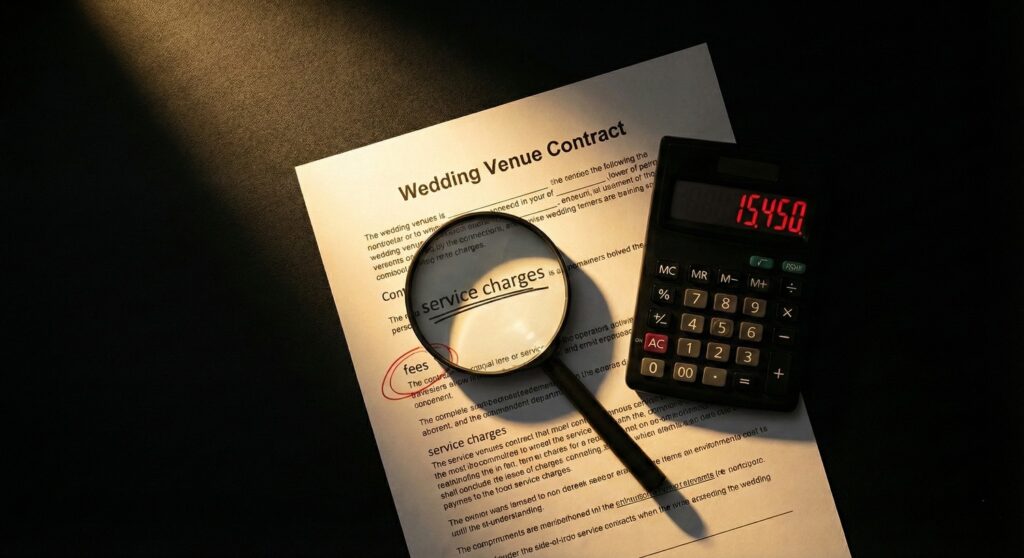
Even after securing your venue, unexpected fees can significantly inflate your budget. Based on industry research, here are the most common hidden costs:
Venue-Related Hidden Fees
- Service Charges: A mandatory fee of 15–25% applied to your food and beverage total—this alone can add thousands to your bill.
- Overtime Charges: If your event runs past the contracted hours, expect to pay premium overtime rates.
- Corkage Fees: Bringing your own wine or alcohol? Venues typically charge $10–$30 per bottle.
- Cake Cutting Fees: Using an outside baker often incurs a $1–$7 per guest cutting fee.
- Early Access Fees: Need extra time for decorating? Some venues charge for additional setup hours.
- Non-Preferred Vendor Fees: Many venues add 20% or more if you don’t use their approved vendor list.
- Cleanup and Breakdown Fees: Post-event cleaning isn’t always included in the rental price.
How to Plan a Ceremony and Reception Timeline
Start with ceremony time, then build backward and forward. Most planners allow 1 hour for the ceremony, 1 hour for cocktails, and 4–5 hours for the reception.
How Much Time Should You Allow Between Ceremony and Reception?
If separate venues are involved, 1–1.5 hours is standard. Longer gaps should include guest guidance, such as activities or hospitality lounges.
How to Avoid Surprise Costs
According to wedding planning experts, the best defense is thorough contract review:
- Request an itemized breakdown of all fees before signing
- Ask specifically about service charges, taxes, and gratuities
- Clarify overtime rates and cutoff times
- Inquire about corkage, cake cutting, and vendor fees
- Understand what’s included in the site fee versus what costs extra
Bachelor and Bachelorette Parties
Smart Strategies to Reduce Event Space Costs

Based on wedding planning forums and expert advice, here are proven ways to save on venue expenses without compromising your vision:
Timing Strategies
- Choose Off-Peak Dates: Weddings on Fridays, Sundays, or during off-season months (January–March) often come with 20–50% discounts on venue rates.
- Consider Weekday Weddings: Thursday or Friday weddings typically cost less than Saturday celebrations.
- Book Morning or Afternoon Slots: Brunch or afternoon tea receptions are often more affordable than evening events.
Venue Selection Tips
- Go All-Inclusive: Venues that include catering, rentals, and décor may seem pricier upfront but often provide better overall value when you add up à la carte costs.
- Check What’s Included: A venue charging $1,000 more but including linens, centerpieces, and ceremony décor could actually be the cheaper option.
- Consider Non-Traditional Spaces: Restaurants, public parks, community centers, and family properties often cost a fraction of traditional wedding venues.
Guest Count Management
According to The Knot, weddings with fewer than 50 guests averaged $15,000 in 2024, while those with 100+ guests averaged $42,000. Trimming your guest list is one of the most effective ways to control costs.
For couples seeking flexible hourly rentals, our roundup of party venues you can rent by the hour in DC shows how pricing varies.
Same-Venue Benefits
As wedding planners on Reddit emphasize, booking one venue for both ceremony and reception was their single biggest cost saver. The convenience alone—reduced coordination, simplified vendor logistics, no transportation hassles—makes this approach attractive even beyond the financial benefits.
Wedding Ceremony Seating vs. Reception Seating
Ceremony seating is often arranged in rows facing the altar. Reception seating uses round or banquet tables designed for conversation and dining.
Ceremony Décor vs. Reception Décor
Ceremony décor highlights the aisle and altar, while reception décor focuses on tablescapes, lighting, and ambiance. Reusing flowers between the two can dramatically reduce costs.
Small Ceremony, Big Reception Ideas
A micro-ceremony followed by a large reception allows intimacy without sacrificing celebration. Couples often book a small scenic location for vows and a larger venue for the party.
Final Thoughts: Making Informed Decisions About Event Space Costs
Understanding the distinction between a wedding ceremony and reception goes far beyond tradition—it’s essential knowledge for creating a realistic budget and making venue decisions that align with your priorities.
The ceremony represents the emotional core of your wedding day: intimate, meaningful, and focused on the commitment you’re making. The reception is your celebration: the party where you thank your guests and mark the beginning of your married life together. Each serves a unique purpose, requires different space considerations, and contributes differently to your overall event space costs.
Whether you choose a grand ballroom that hosts both events, a meaningful church ceremony followed by a restaurant reception, or an intimate backyard celebration, the key is understanding exactly what you need from each component—and what you’ll pay for it.
By researching venue costs in your area, reading contracts carefully, asking about hidden fees, and considering same-venue options for potential savings, you can plan a wedding that honors both your vision and your budget. After all, the best wedding isn’t the most expensive one—it’s the one that reflects who you are as a couple while setting you up for a financially healthy start to married life.
Sources and Attribution
This article synthesizes information from multiple wedding planning resources including [1]The Knot’s 2025 Real Weddings Study, [2]Zola’s Wedding Cost Index, industry expert interviews, and community discussions from wedding planning forums on Reddit and Quora. Cost data reflects 2024–2025 averages and may vary by location and specific vendor offerings.
Frequently Asked Questions
Can I invite different guests to the ceremony and the reception? ▾
Yes. It’s perfectly acceptable to have a smaller ceremony and invite additional guests to the reception. The one rule: never invite someone to the ceremony and exclude them from the reception.
How much time should I allow between the ceremony and reception if they’re at different venues? ▾
Plan for 1–1.5 hours to cover travel, photos, and any delays. If the gap is longer (2–3 hours), consider sharing local activity suggestions or providing a hospitality space for guests.
Is it okay to hold the ceremony and reception on different days? ▾
Absolutely. Many couples choose an intimate weekday ceremony followed by a larger weekend celebration. Just be sure guests attending the ceremony are included in a small reception or gathering afterward.
What percentage of my wedding budget should go toward the venue? ▾
Experts suggest allocating up to 40% of your total budget for venue, catering, rentals, and alcohol combined. The venue alone typically accounts for around 27% of overall costs.
What should I do if I can only attend the ceremony or the reception? ▾
If you must choose, attending the reception is usually preferred since you’ll spend more time with the couple and your presence is already accounted for. However, if you RSVPed “yes” to both, do your best to attend both parts of the celebration.
How does a venue flip a room from ceremony to reception? ▾
Professional venues handle room flips efficiently—often during cocktail hour. Guests are moved to a separate area while staff resets the space. Most flips take 10–20 minutes.
Will there be transportation between ceremony and reception locations? ▾
Many couples provide shuttles when events are held at separate venues. Check the wedding website or invitation insert for transportation details.
What time should I arrive for the ceremony? ▾
Plan to arrive 15–30 minutes before the scheduled start time so you can find your seat and settle in without interrupting the processional.
How long does a wedding ceremony usually last? ▾
Most civil or non-religious ceremonies last 20–30 minutes. Ceremonies with religious traditions can run 45–90 minutes.
Does the reception start immediately after the ceremony? ▾
Typically, there is a cocktail hour right after the ceremony. This gives the couple time for photos and allows the venue staff to complete final setup.
What is the dress code? ▾
The dress code is listed on the invitation or wedding website. If nothing is specified, guests should assume semi-formal attire.
Can I bring a plus-one or my children? ▾
Only those listed on your invitation are invited. If a plus-one or children are not included by name, please respect the couple’s wishes.
Where should I place my gift? ▾
Most receptions have a designated gift or card table. You may also choose to send a gift directly to the couple’s home.
Is photography allowed during the ceremony? ▾
Many couples prefer an unplugged ceremony where guests refrain from taking photos. Photography is generally welcome at the reception.
Related Post



Search by Category

Contact Us
Please provide your contact information with event details. You will be contacted soon.
