Should You Hire a Wedding Planner Before Choosing a Venue? The Smartest Wedding Decision Couples Make in 2026
Event PlanningMay 2026·8 min read
TLDR
In most cases, hiring a wedding planner before booking a venue is the smarter move. A planner helps you avoid hidden venue costs, understand contracts, align your guest count with your budget, and prevent expensive planning mistakes later. If your wedding date is fixed or you already know your ideal venue, booking the venue first can still work — but expert guidance early often saves couples significant stress and money.
INTRODUCTION
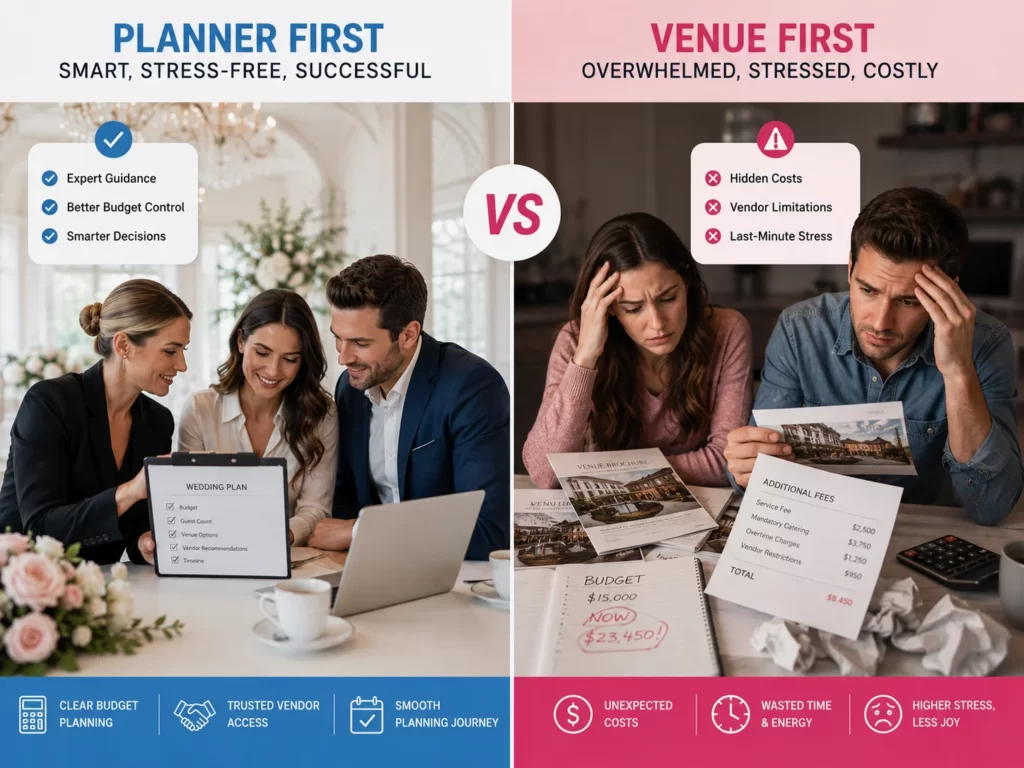
You find the perfect wedding venue online. The chandeliers sparkle, the garden ceremony setup looks cinematic, and suddenly you can already picture your first dance there. A week later, you discover the venue requires in-house catering, limits outside vendors, and charges overtime fees you never planned for.
That scenario is more common than most engaged couples realize.
When couples ask, “Should You Hire a Wedding Planner Before Choosing a Venue?”, they’re really asking something bigger: how do you avoid making one expensive decision too early? Because your venue doesn’t just determine where your wedding happens — it shapes your budget, guest count, vendor flexibility, and overall experience.
According to wedding professionals cited in this guide, bringing in a planner early can help couples evaluate venues objectively instead of emotionally. Before you start touring venues or comparing packages, understanding your overall wedding budget is critical. Couples exploring realistic pricing often begin with resources like greatEvent and detailed breakdowns such as average wedding cost in 2026.
Here’s what couples need to know before signing any venue contract in 2026.
Why the Order Matters More Than Couples Think
A wedding venue isn’t just décor and square footage. It influences nearly every major wedding decision that follows.
The moment you secure a venue, you’re also committing to:
A wedding date
A location
A guest capacity limit
Certain vendor restrictions
Payment timelines
Operational rules
That’s why experienced planners encourage couples to pause before booking emotionally.
Many couples fall in love with a venue first and only later realize:
Their guest list exceeds the venue capacity
Their preferred photographer isn’t allowed
Hidden fees dramatically increase costs
Logistics become difficult for guests
The venue style doesn’t support their actual vision
Industry experts note that couples who plan venue-first without guidance are far more likely to exceed their original budget.
Planner First vs. Venue First: The Honest Pros and Cons
Hiring a Wedding Planner First
Benefit
Why It Matters
Budget guidance
Prevents overspending before priorities are clear
Contract review
Helps identify hidden venue fees
Vendor compatibility
Ensures preferred vendors are allowed
Strategic venue selection
Matches venue with actual guest count and wedding style
Stress reduction
Couples avoid costly planning pivots later
A planner also understands the real operational side of weddings — something Pinterest boards don’t reveal.
For couples still estimating costs, reviewing articles about event space pricing and venue costs can help establish realistic expectations before touring venues.
Pro Tip: If you’re planning during peak wedding season (May–October), hire your planner before beginning venue tours. Popular venues and planners often book 12–18 months ahead.
Booking the Venue First
Sometimes booking the venue first genuinely makes sense.
This approach works best when:
Your wedding date is fixed
You already know the exact venue you want
You’re planning a smaller or simpler wedding
You only need day-of coordination
Booking early can secure highly competitive dates before availability disappears.
However, couples should still have a professional review contracts before signing. Even beautiful venues can include:
Mandatory vendor lists
Corkage fees
Noise restrictions
Setup limitations
Service minimums
The Biggest Wedding Planning Misunderstanding
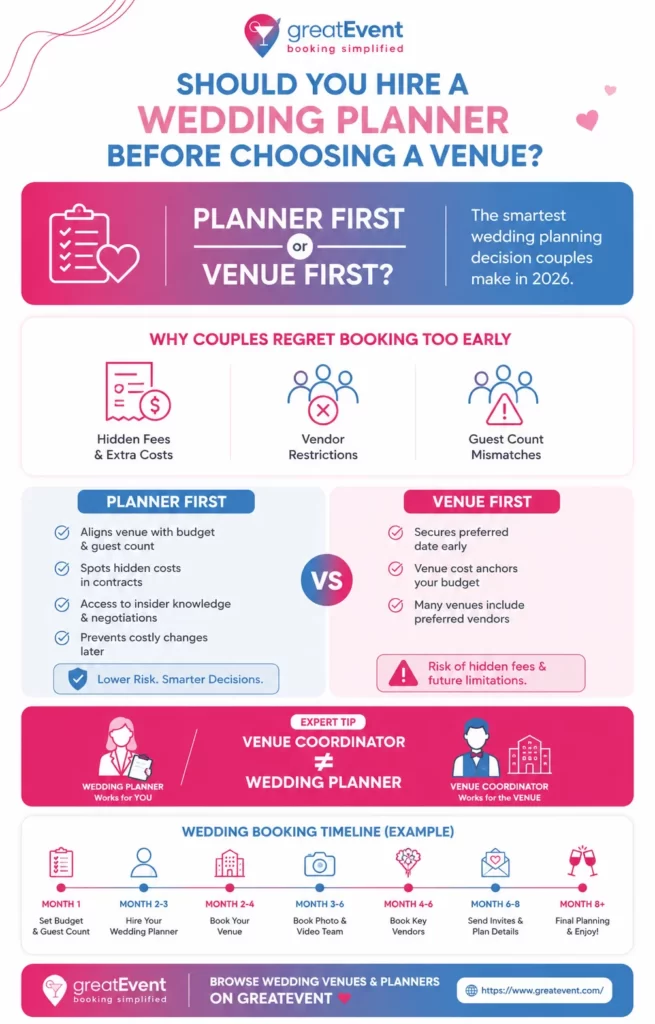
Venue Coordinator vs. Wedding Planner
This is where many couples get blindsided.
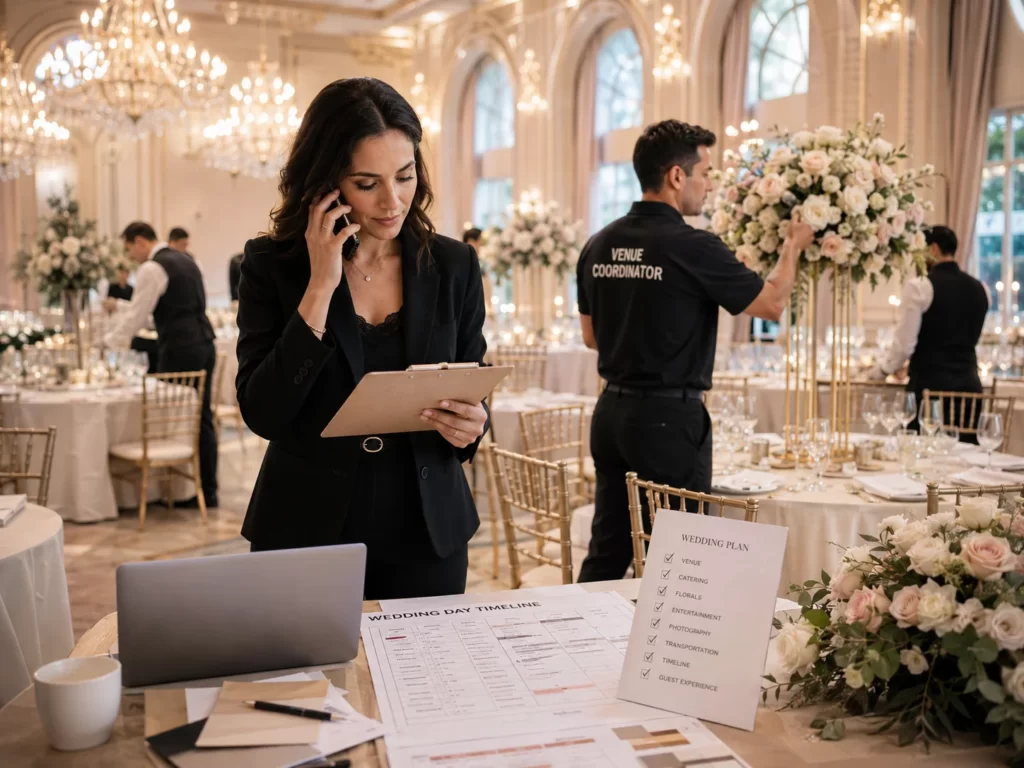
A venue coordinator is not the same as a wedding planner.
A Venue Coordinator Typically:
Works for the venue
Oversees venue logistics
Coordinates load-in and setup timing
Enforces venue rules
Manages in-house catering operations
A Wedding Planner:
Works for you
Manages your budget
Coordinates all vendors
Reviews contracts
Protects your vision and priorities
Handles timeline management
Solves problems throughout the process
The distinction matters because couples often assume the venue will “handle everything,” only to discover critical responsibilities still fall on them.
If you’re comparing service levels and pricing, guides like how much event planners charge can help clarify what different planning packages actually include.
When You Should Absolutely Hire a Planner Before the Venue
There are situations where hiring a planner first is almost always the safer decision.
1. You Don’t Fully Understand Venue Contracts
Wedding contracts can include fees couples don’t anticipate until much later:
Mandatory staffing fees
Security requirements
Vendor commissions
Cleanup charges
Insurance clauses
Experienced planners know what’s normal and what’s negotiable.
2. You Haven’t Finalized Your Guest Count
A venue tour feels emotional. Couples imagine the atmosphere before they fully understand logistics.
Without a finalized guest estimate, couples often:
Book spaces too small
Overpay for oversized venues
Create uncomfortable layouts
That’s why planners often insist on budget and guest count discussions first.
3. You’re Planning a Destination or Multi-Day Wedding
Destination weddings involve:
Travel logistics
Guest accommodations
Vendor coordination
Transportation timing
Local regulations
A planner familiar with the destination can prevent expensive mistakes.
Insider Tip: Multi-day wedding events often require more logistical planning than couples initially expect. A planner can identify hidden transportation, accommodation, and staffing costs early.
What a Planner Actually Does During Venue Selection
Many couples know planners “help organize weddings,” but they don’t realize how involved planners become before the venue is even booked.
Contract Review
A planner evaluates:
Cancellation clauses
Deposit structures
Weather backup plans
Decor limitations
Vendor restrictions
Overtime policies
Vision Alignment
Beautiful doesn’t always mean functional.
A planner helps determine:
Whether the dance floor fits your guest count
If separate cocktail areas exist
Whether ceremony flow makes sense
If your entertainment setup is realistic
Budget Reality Checks
A venue that seems affordable upfront may become expensive once required add-ons are included.
Planners calculate:
Service fees
Taxes
Rentals
Staffing
Vendor limitations
Setup costs
This prevents couples from accidentally allocating too much of their total wedding budget to one line item.
A Simple Framework: Which Should You Book First?
Your Situation
Best First Step
First large event you’ve ever planned
Hire a planner first
Flexible wedding date
Planner first
Fixed date or dream venue already chosen
Venue first
Destination wedding
Planner first
Tight budget concerns
Planner first
Small wedding with day-of coordination only
Venue first
This framework helps couples make decisions based on logistics — not pressure.
Recommended Wedding Booking Timeline for 2026
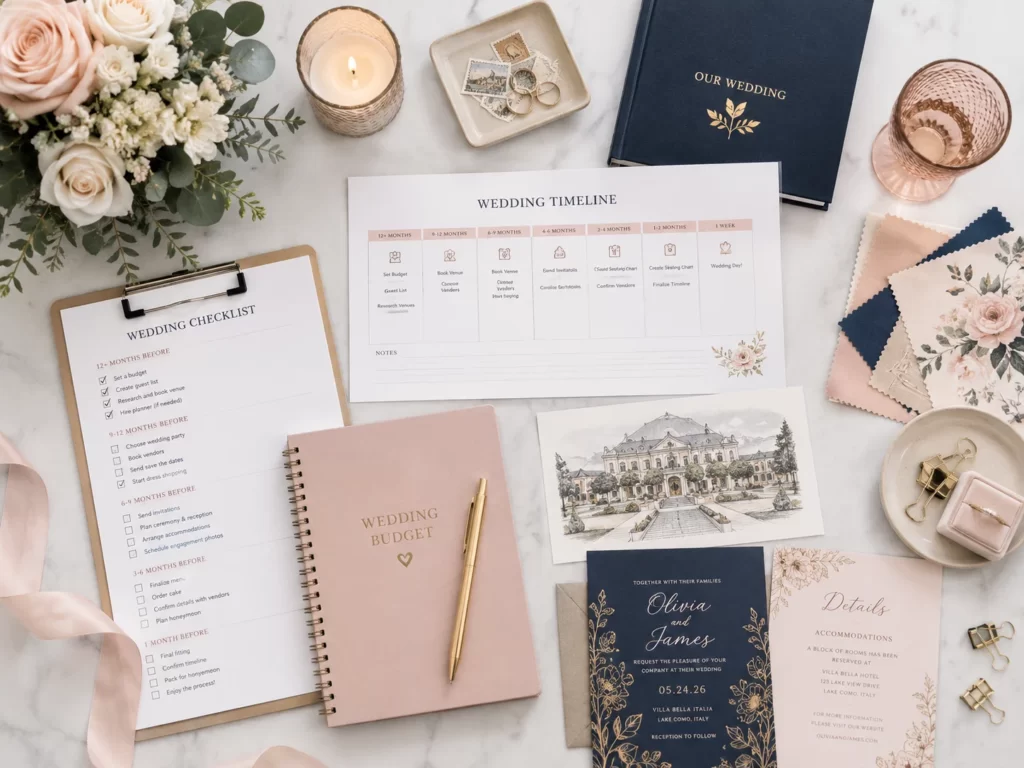
Most wedding professionals recommend the following sequence for a 12–18 month engagement:
Timeline
Priority
Month 1–2
Finalize guest count and total budget
Month 1–3
Hire a wedding planner
Month 2–4
Book venue
Month 3–6
Secure photographer and videographer
Month 4–8
Book remaining vendors
Many couples now use platforms with real-time booking visibility to speed up the venue process. Resources such as wedding venues in San Antonio and affordable wedding venues in San Antonio allow couples to compare venue styles, pricing expectations, and availability faster than traditional inquiry-based searches.
According to the provided research, greatEvent has coordinated and supported more than 500 events alongside certified planning professionals.
How greatEvent Simplifies Wedding Planning
Modern couples increasingly want faster, more transparent booking experiences.
Instead of waiting days for callbacks and incomplete pricing details, platforms like greatEvent contact support and real-time booking tools through GE Invite by greatEvent help couples manage communication, invitations, and venue coordination more efficiently.
The earlier couples organize planning priorities, the smoother vendor coordination becomes later.
The best weddings rarely happen because couples rushed into the first beautiful venue they saw. They happen because every decision — from budget to vendor coordination — worked together intentionally. Whether you’re just starting venue tours or narrowing down your final shortlist, getting expert guidance early can save money, reduce stress, and protect the wedding experience you actually want. Browse curated wedding venues, planners, and event professionals on greatEvent and start planning your wedding with clarity today.
Frequently Asked Questions
What is the difference between a venue coordinator and a wedding planner?
▾
A venue coordinator works for the venue and handles operational logistics related to the property itself. A wedding planner works for the couple and manages vendors, timelines, budgets, contracts, and the overall wedding experience. Most weddings benefit from having both roles involved.
How does a wedding planner help before booking a venue?
▾
A wedding planner helps couples establish a realistic budget, estimate guest count, review contracts, and evaluate venues based on logistics rather than appearance alone. This guidance often prevents expensive mistakes later in the planning process.
How do I book a wedding venue without endless back-and-forth emails?
▾
Modern event platforms like greatEvent allow couples to browse venue details, compare spaces, check availability, and simplify communication digitally. This reduces delays and makes venue comparisons much easier.
Where can I find affordable wedding venues with flexible vendor options?
▾
Couples can compare venue styles, budgets, and vendor flexibility through curated platforms that specialize in event planning resources. Searching venue categories by city or style helps narrow down realistic options faster.
What is the best season to book wedding venues in the United States?
▾
Peak wedding season usually runs from late spring through early fall, especially May through October. Couples planning weddings during these months should ideally begin booking venues and planners 12–18 months in advance.
Compare vendors for your next event
Search caterers, photographers, florists, planners, and rentals — then send one request to several vendors at once.