TL;DR
The venue sets the tone for every networking event. The best corporate networking mixer venues encourage natural conversation through flexible layouts, comfortable seating, excellent acoustics, and thoughtful guest flow. This guide explains how to evaluate venues, compare different space types, avoid costly mistakes, and create an event where meaningful business relationships can flourish.
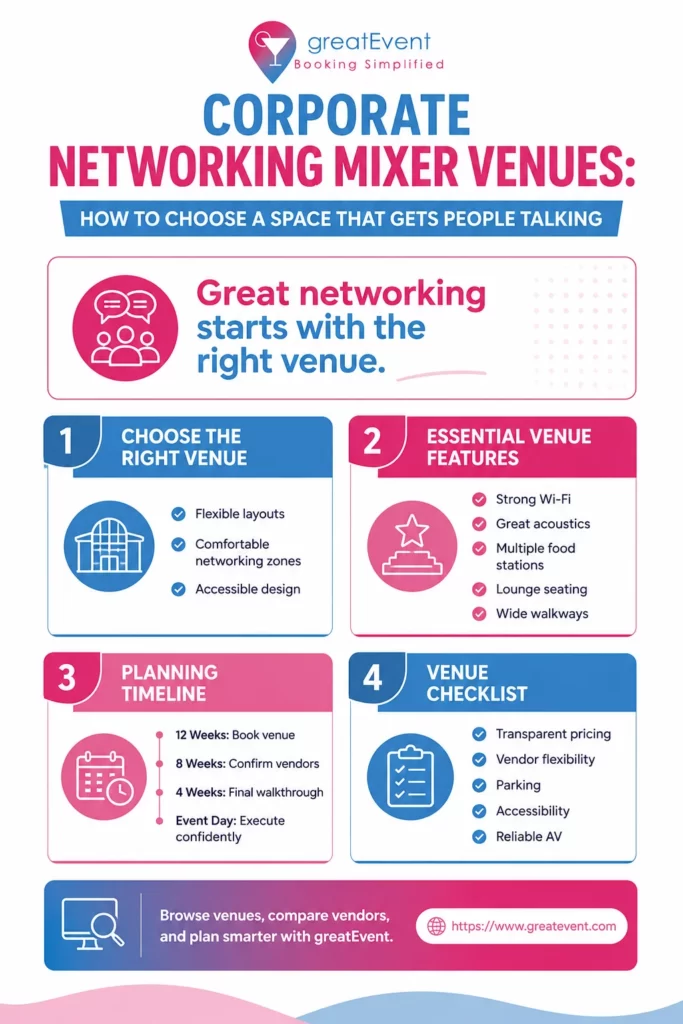
Table of Contents
- Why Venue Choice Shapes Networking Success
- What Makes a Great Networking Venue?
- The Essential Venue Selection Checklist
- Venue Layout Strategies
- Best Venue Types
- Accessibility & Guest Experience
- Planning Timeline
- Venue Comparison
- FAQs
Introduction
Great business relationships rarely begin with a scheduled meeting—they often start with a casual conversation over coffee, a shared table during a networking reception, or an introduction made in the right environment. That’s why choosing the right Corporate Networking Mixer Venues is one of the most important decisions you’ll make when planning a professional event.
An outstanding networking venue doesn’t simply accommodate guests. It encourages movement, sparks conversations, and creates comfortable spaces where professionals feel confident introducing themselves and building new relationships. Whether you’re hosting a startup meetup, executive reception, client appreciation event, or industry association mixer, the venue quietly influences every interaction throughout the evening.
Before you begin comparing locations, it’s worth understanding how much do event planners charge because planning costs often determine how much of your budget can be dedicated to the venue itself. Likewise, exploring the about us page provides insight into how curated venue platforms simplify the search process for businesses looking to compare event spaces efficiently.
This guide explores the venue features, layouts, planning strategies, and practical considerations that help transform an ordinary corporate gathering into an event where meaningful conversations happen naturally.
Why Your Venue Matters More Than You Think
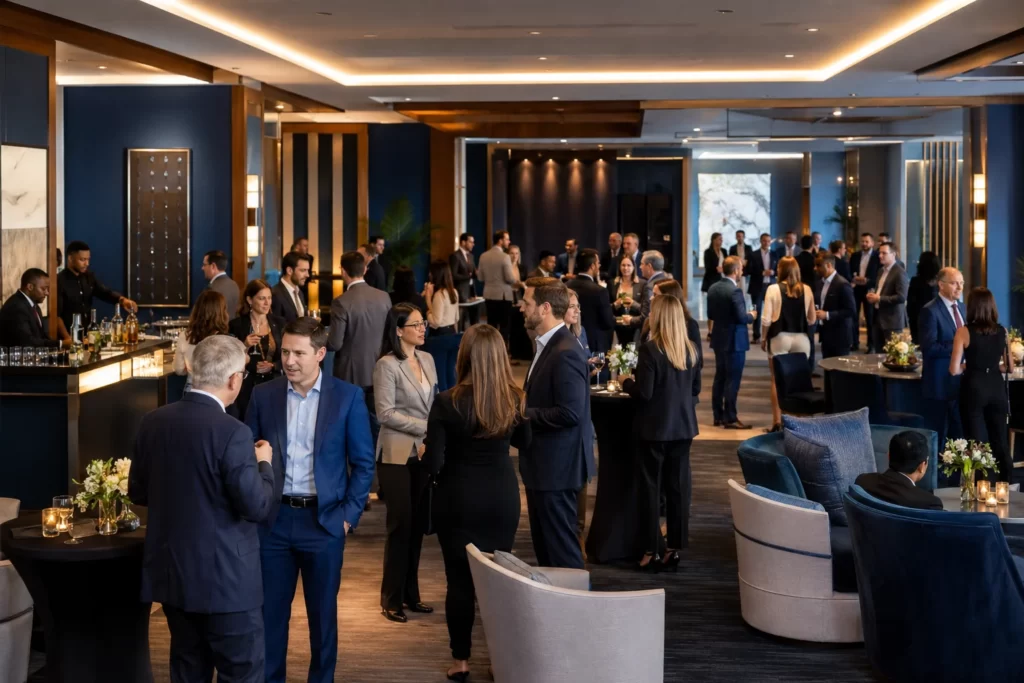
Unlike conferences or formal dinners, networking events depend almost entirely on spontaneous interactions. Guests should feel comfortable walking across the room, joining conversations, introducing themselves, and moving naturally between different activity zones. When the venue supports these behaviors, networking feels effortless rather than forced.
Many organizers focus on guest capacity, décor, or catering before considering how the physical environment affects attendee behavior. However, research shows that open layouts, comfortable acoustics, multiple gathering points, and clear circulation paths significantly improve guest engagement.
If your event budget is still being finalized, reviewing event planning price packages can help you understand where venue costs fit into your overall event investment. For organizations planning recurring networking events, this budgeting exercise often prevents unexpected expenses later in the planning process.
The venue should encourage guests to move freely instead of remaining in one location throughout the evening. Wide walkways, strategically placed food stations, and multiple lounge areas naturally increase the number of conversations each attendee has during the event.
What Makes Great Corporate Networking Mixer Venues?
Every successful networking venue shares several characteristics that directly influence guest interaction.
Flexible Layouts
Corporate networking events are dynamic by nature. Unlike weddings or conferences with assigned seating, mixers require adaptable spaces that allow guests to circulate comfortably.
Look for venues that offer:
- Open floor plans
- Movable furniture
- Multiple networking zones
- Flexible staging options
- Spacious registration areas
- Convenient vendor access
Businesses searching for inspiration often browse event venues in Washington DC because many modern corporate venues combine flexible layouts with premium hospitality services that naturally support networking events.
Conversation-Friendly Furniture
The furniture you choose has a direct impact on guest behavior.
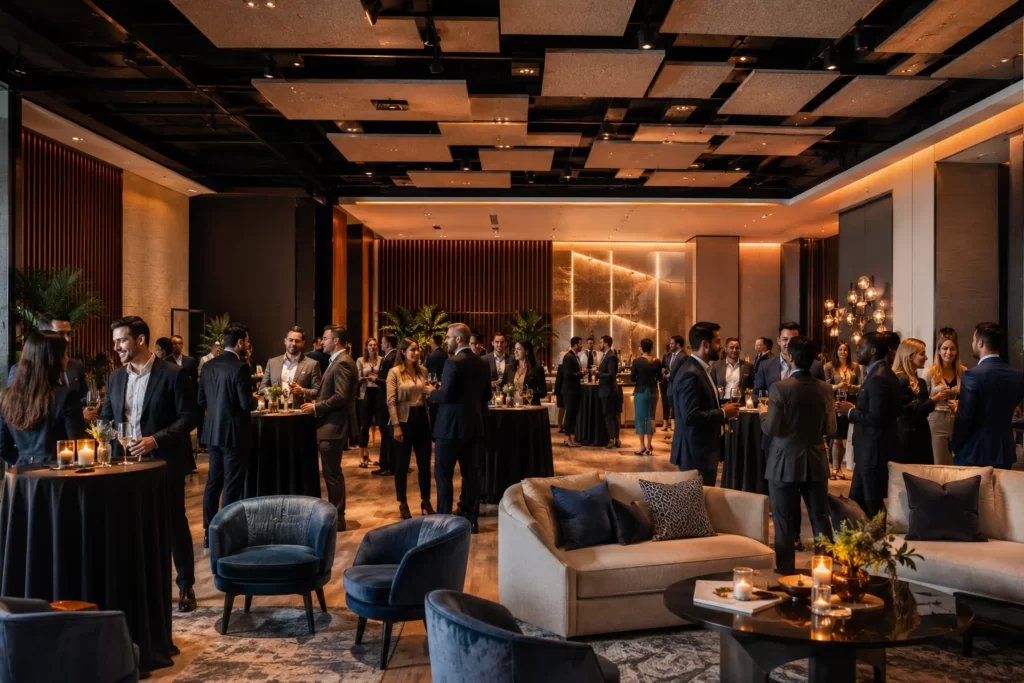
High-top cocktail tables encourage brief introductions, while comfortable lounge seating supports longer discussions. Mixing both styles throughout the venue creates different environments for different types of conversations.
Rather than lining furniture against the walls, create small “conversation islands” positioned throughout the room. This arrangement naturally draws attendees into smaller groups while maintaining excellent visibility across the venue.
If you’re evaluating different venue sizes, comparing rental halls near me helps establish realistic expectations for available layouts, amenities, and rental pricing before requesting proposals.
Multiple Activity Zones
Instead of one crowded buffet or single networking area, divide the venue into several engagement spaces.
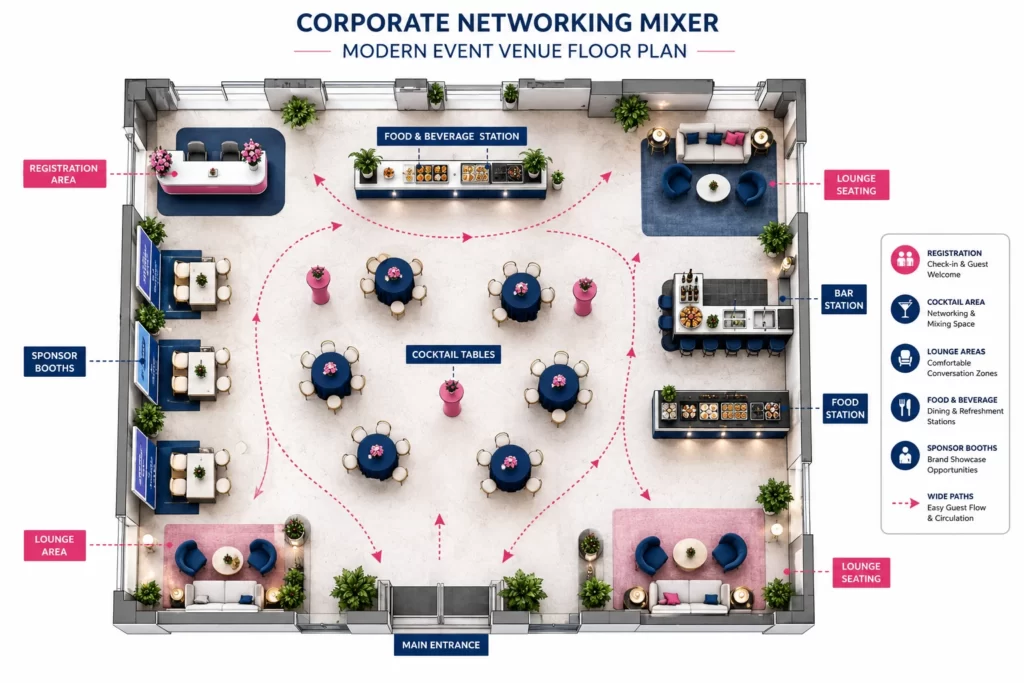
An effective networking mixer typically includes:
| Zone | Purpose |
|---|---|
| Registration | Smooth guest arrival |
| Welcome Lounge | Initial introductions |
| Cocktail Tables | Quick conversations |
| Lounge Seating | Extended discussions |
| Food Stations | Natural gathering points |
| Sponsor Booths | Business interactions |
| Photo Area | Social engagement |
This approach prevents crowding while encouraging guests to explore the entire venue throughout the evening.
💡 Pro Tip
One of the simplest ways to improve networking is to spread food and beverage stations throughout the venue instead of placing everything in one location. Guests naturally circulate between stations, creating more opportunities to meet new people instead of staying within familiar groups.
Budget Is More Than the Rental Fee
Many planners compare venues using only the advertised rental price. In reality, the total event cost often includes furniture, audiovisual equipment, staffing, cleaning, security, overtime, Wi-Fi upgrades, and service fees.
Understanding how much to rent a hall for party before requesting proposals helps you evaluate venues based on total value rather than headline pricing. Similarly, businesses considering alternative event spaces should explore renting a place for a party to understand how flexible venues compare with traditional hotels and conference centers.
Designing a Venue That Encourages Meaningful Networking
Finding a beautiful venue is only the first step. The real goal is creating an environment where attendees naturally meet new people, exchange ideas, and build professional relationships. Thoughtful venue design influences guest behavior more than many planners realize, making it one of the biggest contributors to a successful networking mixer.
Create Open Sightlines
One common mistake is filling every available corner with furniture or decorative elements. While the venue may look full, it often feels crowded.
Instead, prioritize open sightlines so guests can easily spot colleagues, recognize speakers, or notice groups they would like to join. Low-profile furniture, minimal partitions, and strategically placed décor help the room feel larger while encouraging movement.
Large plants, branded displays, or sponsor booths should define spaces without blocking visibility across the venue.
Organizations looking for distinctive event environments often explore unique wedding venues DC because many of these flexible spaces also work exceptionally well for upscale networking receptions and corporate celebrations.
Lighting and Acoustics Influence Every Conversation
Even the most impressive venue can struggle if guests can’t comfortably hear each other.
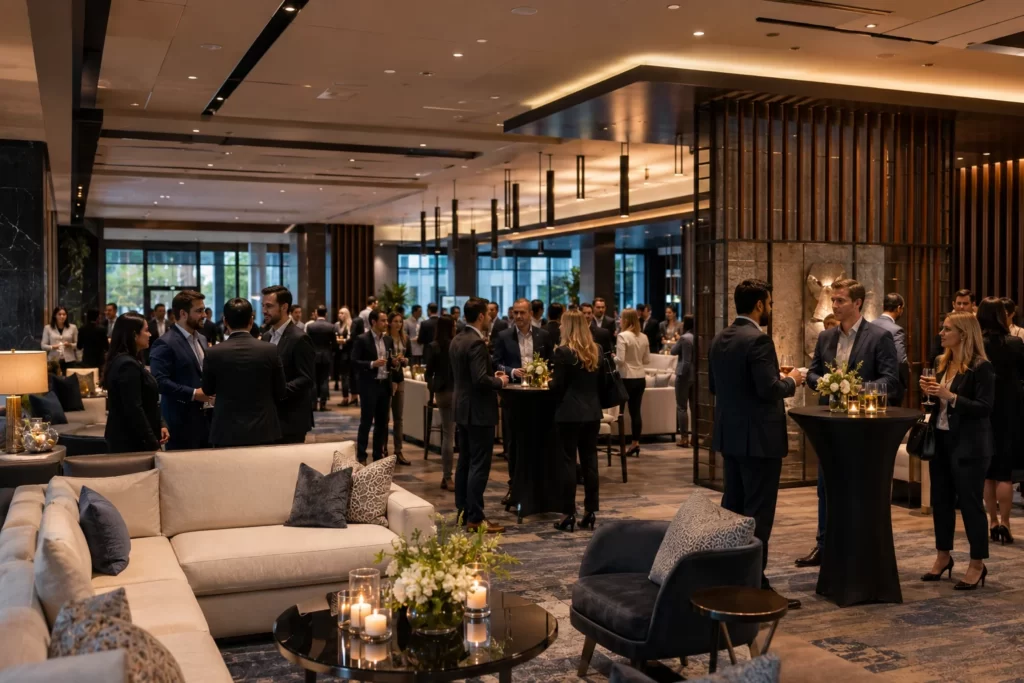
Networking events should feel energetic without becoming noisy. Warm ambient lighting paired with focused accent lighting creates welcoming conversation spaces while ensuring guests can easily recognize faces across the room.
Background music should complement the atmosphere rather than compete with conversations. Venues with acoustic panels, carpeting, soft furnishings, or sound-treated ceilings provide a much better networking experience than echo-filled industrial spaces.
When comparing venues, confirm they offer:
- Adjustable lighting controls
- Reliable HVAC systems
- Strong Wi-Fi coverage
- Multiple electrical outlets
- Built-in audiovisual capabilities
- Quiet corners for private discussions
These operational details often become far more valuable than elaborate décor once the event begins.
💡 Pro Tip
Ask venue managers to demonstrate the room with music playing at networking volume during your site visit. A space that sounds comfortable when empty can become surprisingly loud once hundreds of conversations begin simultaneously.
Registration Should Set the Tone
Your guests begin forming impressions long before the first conversation starts.
A smooth registration process creates momentum and prevents unnecessary congestion at the entrance. Clear signage, organized check-in stations, and digital guest lists reduce waiting times while helping attendees transition quickly into networking mode.
If invitations are still being finalized, using ge invite simplifies digital invitations and guest communication while helping organizers manage attendance before event day.
Equally important is making sure guests understand rsvp meaning so attendance numbers remain accurate. Reliable RSVPs help planners finalize seating, catering, staffing, and venue layouts with greater confidence.
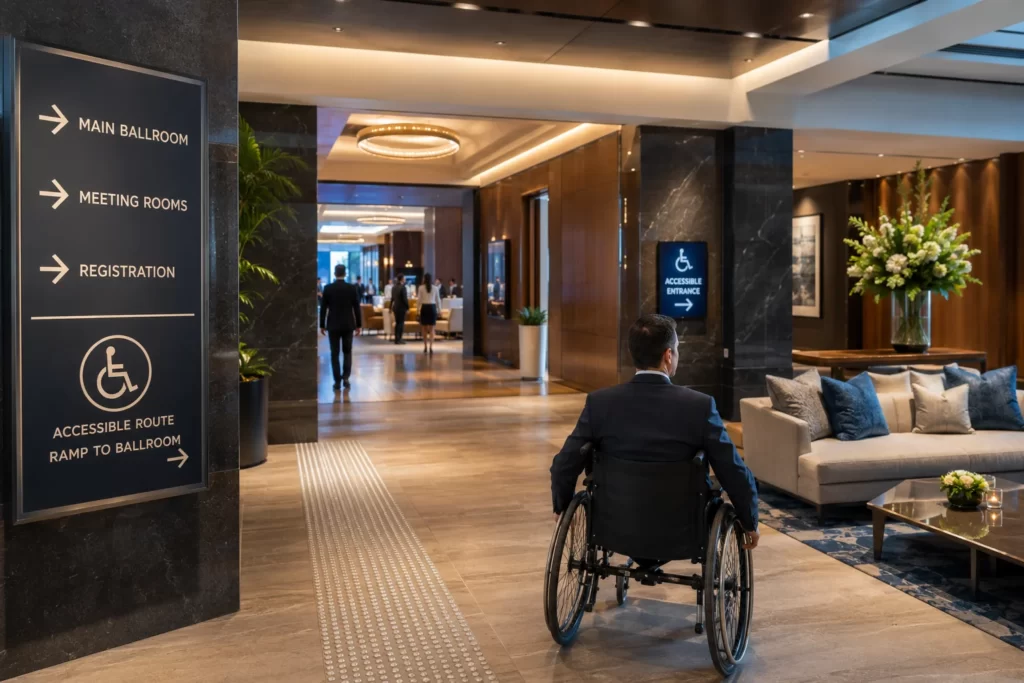
Accessibility Is Part of Great Hospitality
Exceptional networking events welcome every attendee.
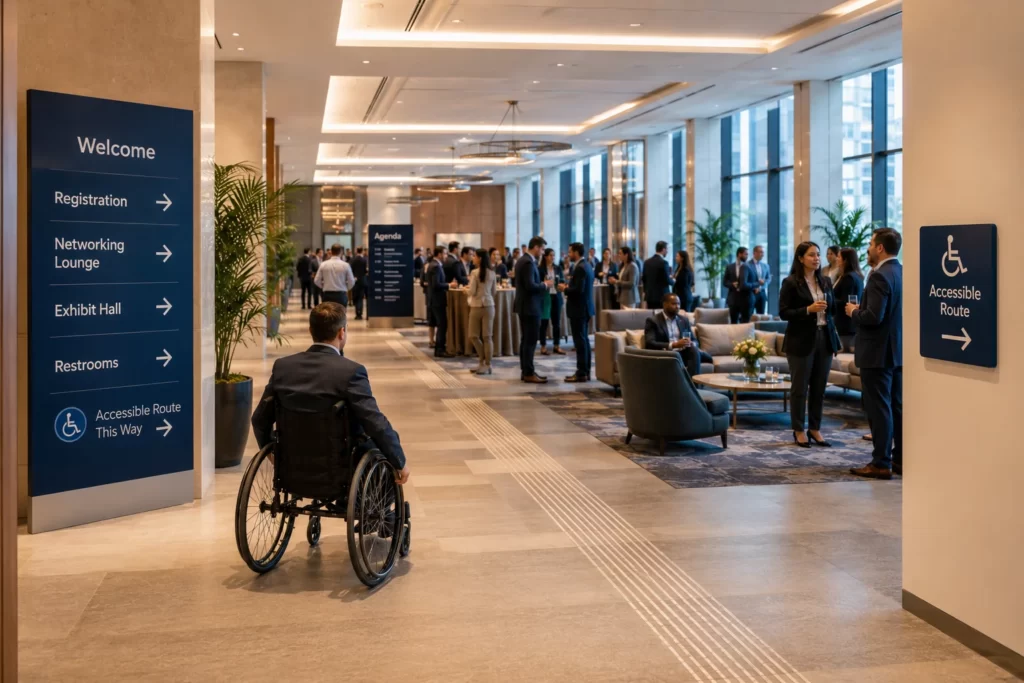
When evaluating venues, accessibility should never be treated as an afterthought. Comfortable access benefits guests using mobility devices, older professionals, parents, and anyone requiring additional assistance.
Look for venues that provide:
- Step-free entrances
- Elevators where required
- Accessible restrooms
- Wide circulation paths
- Reserved seating areas
- High-contrast directional signage
Accessibility also extends beyond physical design. Quiet spaces for neurodiverse attendees, multilingual signage where appropriate, and dietary accommodations all contribute to a more inclusive experience.
Questions to Ask Before Signing the Contract
Before committing to a venue, gather as much information as possible. Many unexpected costs appear only after contracts are signed.
Use this checklist during every venue tour:
| Question | Why It Matters |
|---|---|
| What is included in the rental fee? | Avoid hidden charges |
| Are outside vendors permitted? | Greater planning flexibility |
| Is furniture included? | Reduces rental costs |
| Is Wi-Fi complimentary and reliable? | Essential for business events |
| Are overtime charges applied? | Prevent unexpected expenses |
| What are the cancellation terms? | Protects your budget |
| Are loading docks available? | Simplifies vendor setup |
| Are there sound restrictions? | Important for presentations and entertainment |
Reviewing event planner fees before negotiations can also help you distinguish venue expenses from planning service costs, giving you a clearer picture of your total investment.
Building an Event That Guests Remember
Successful networking mixers aren’t remembered because of extravagant decorations or expensive catering.
They’re remembered because attendees leave with valuable conversations, meaningful introductions, and genuine business opportunities.
Every decision—from furniture placement to registration flow—should support those outcomes.
Whether you’re hosting fifty executives or five hundred industry professionals, your venue becomes the foundation upon which every interaction is built.
Businesses planning long-term networking programs often find that investing slightly more in the right venue delivers stronger engagement, higher attendance, and better post-event feedback than cutting costs on the space itself.
If you’re still exploring venue options or comparing locations, browsing greatEvent makes it easier to discover venues, compare amenities, and connect with trusted event professionals from one platform.
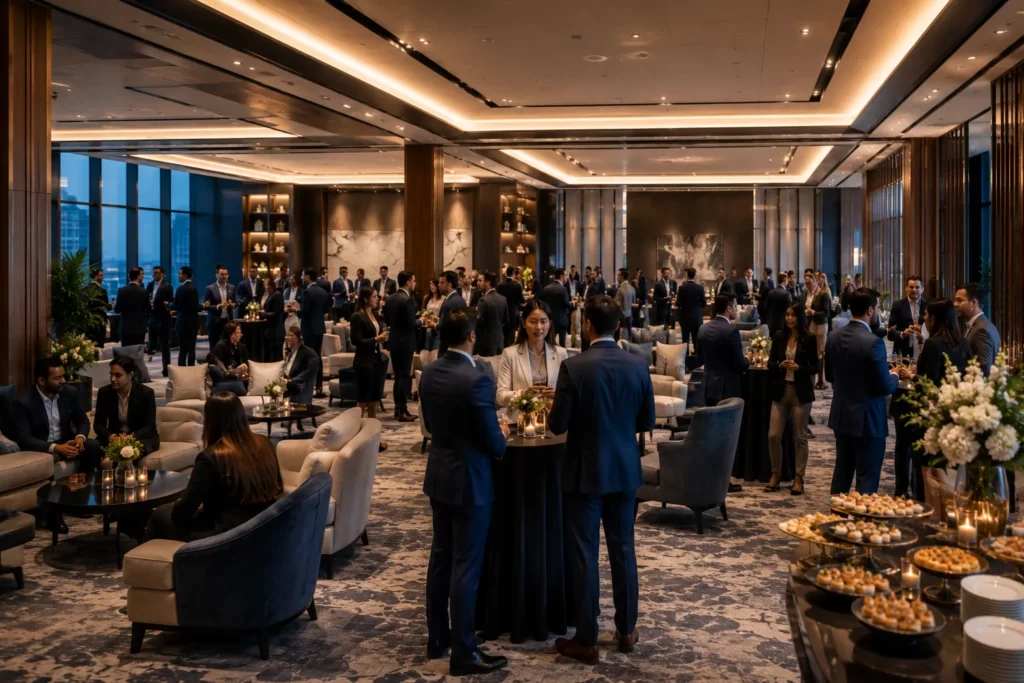
Best Corporate Networking Mixer Venues: Finding the Right Fit for Your Event
A networking event is only as successful as the conversations it creates. While food, speakers, and entertainment certainly contribute to the guest experience, the venue quietly influences every interaction from the moment attendees walk through the doors. The right environment encourages movement, sparks introductions, and makes networking feel natural rather than forced.
Instead of asking, “Which venue looks the most impressive?”, experienced planners ask, “Which venue helps people connect?” That shift in thinking often leads to more productive events, stronger attendance, and higher post-event satisfaction.
Before narrowing down your venue shortlist, it’s also worth understanding private event planning. Knowing which responsibilities belong to your planning team and which can be delegated to experienced professionals helps you evaluate venues more strategically and avoid unnecessary costs later in the planning process.
Hotel Ballrooms: Best for Large Corporate Networking Events
Hotel ballrooms remain one of the most popular choices for corporate networking mixers because they combine convenience with professional event infrastructure. From built-in audiovisual systems and experienced banquet staff to on-site accommodations and catering, hotels simplify logistics for organizers managing larger guest lists.
However, convenience shouldn’t outweigh functionality. A ballroom designed for banquet dinners may require significant reconfiguration before it becomes an effective networking space. Large round tables, fixed stages, and rigid seating plans can unintentionally limit guest interaction.
When touring a hotel venue, ask whether furniture layouts can be customized for cocktail-style receptions and whether additional networking zones can be created throughout the room.
Planning Tip 💡
Before comparing hotel proposals, review event planner fees alongside venue pricing. Understanding both planning and venue costs together provides a much clearer picture of your total event budget than evaluating rental fees alone.
Rooftop Venues: Ideal for Client Appreciation and Executive Mixers
Few venues create memorable first impressions like a rooftop overlooking a city skyline.
Open-air environments naturally encourage guests to move around, admire the views, and engage in relaxed conversations. This makes rooftop venues particularly effective for executive networking events, startup launches, investor receptions, and client appreciation evenings.
Despite their appeal, rooftop venues require additional planning. Weather contingency plans, seasonal considerations, accessibility, and local noise regulations should all be confirmed before signing a contract.
Businesses looking for creative venue inspiration often explore event venues in Washington DC because many rooftop venues successfully combine premium hospitality with flexible event layouts suitable for corporate receptions.
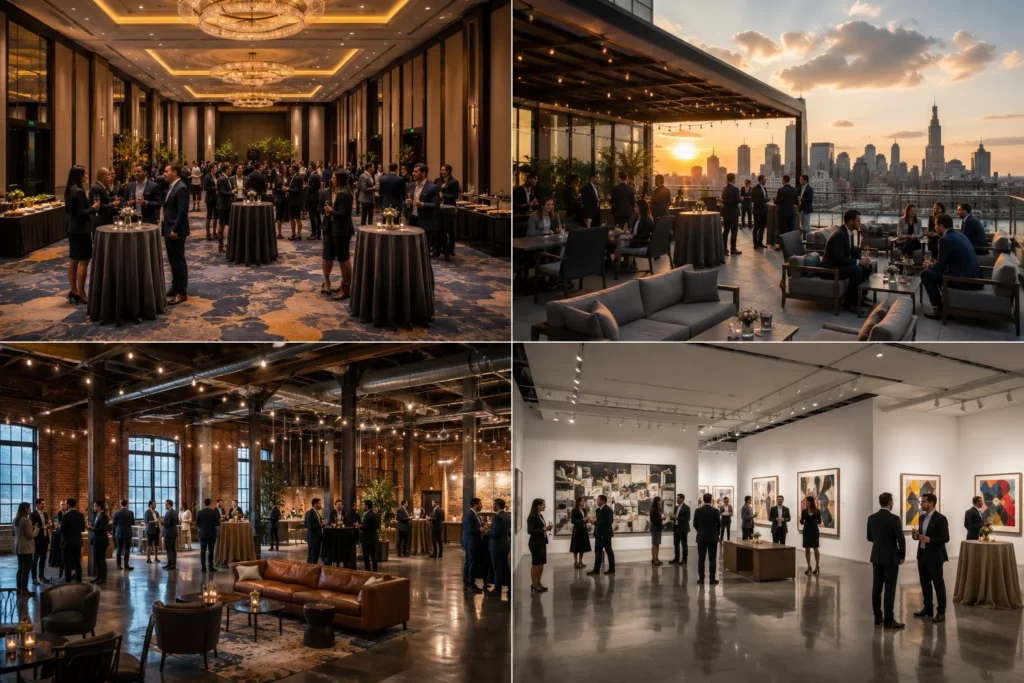
Industrial Lofts and Creative Spaces Encourage Innovation
Technology companies, creative agencies, and entrepreneurial communities often choose industrial lofts because these venues encourage a more relaxed style of networking.
Exposed brick, high ceilings, flexible floor plans, and open gathering spaces help eliminate the formal atmosphere that can sometimes discourage conversation in traditional conference venues.
The flexibility comes with responsibility, however.
Unlike hotels, loft venues frequently require organizers to source furniture, audiovisual equipment, décor, and catering separately. These additional logistics should always be reflected in the overall event budget rather than comparing venue rental costs alone.
If you’re evaluating flexible event spaces across multiple markets, researching renting a place for a party offers useful pricing benchmarks for nontraditional venues that can also accommodate business networking events.
Museums and Galleries Create Memorable Executive Experiences
When the objective is building relationships with executives, partners, or VIP clients, unique venues often leave stronger impressions than conventional meeting spaces.
Museums, galleries, and cultural venues provide built-in conversation starters that encourage guests to explore the environment together while naturally initiating discussions.
Artwork, architecture, and exhibits become networking catalysts without requiring elaborate entertainment or décor.
Many planners searching for distinctive corporate venues also browse unique wedding venues DC because these architecturally significant spaces frequently host premium business receptions outside wedding season.
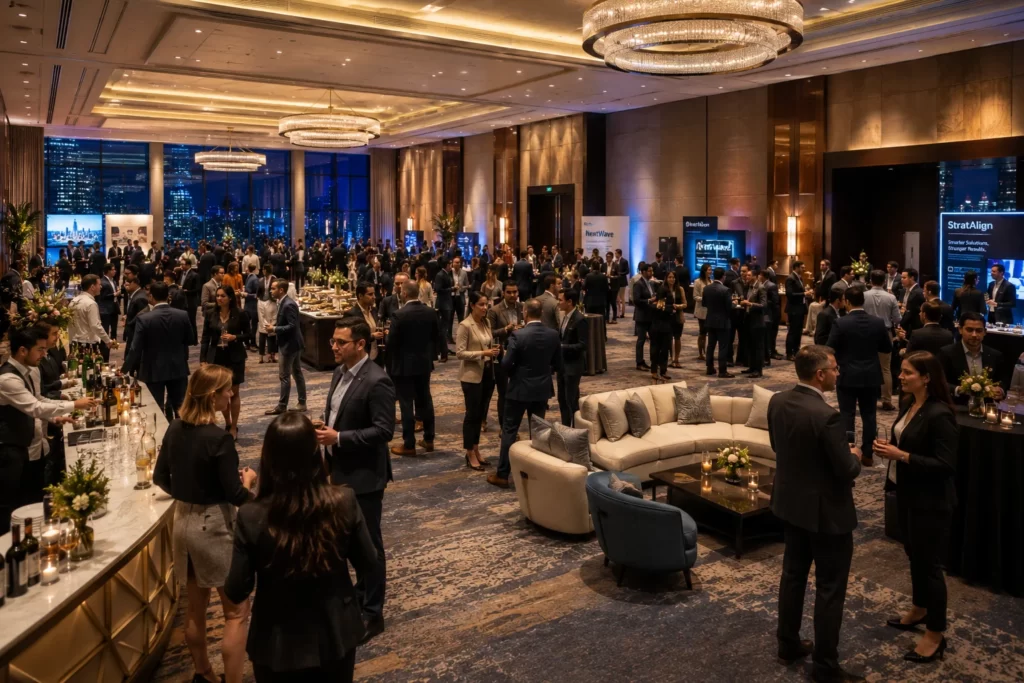
Venue Comparison at a Glance
| Venue Type | Best For | Biggest Strength | Watch Out For |
|---|---|---|---|
| Hotel Ballroom | Conferences & executive receptions | Full-service amenities | Higher overall costs |
| Rooftop Venue | Client networking | Memorable atmosphere | Weather dependency |
| Museum / Gallery | VIP receptions | Unique guest experience | Limited setup flexibility |
| Industrial Loft | Startup & creative networking | Highly customizable | Additional rental expenses |
| Co-working Space | Small business mixers | Budget-friendly | Limited capacity |
| Private Club | Executive dinners | Premium service | Membership restrictions |
When comparing options, don’t focus exclusively on rental prices. Understanding how much to rent a hall for party provides valuable context for evaluating whether premium venues genuinely deliver better overall value.
Choosing the Right Venue by Guest Count
Every networking event has its own rhythm, and guest count plays a major role in determining how the venue should function.
50–200 Guests
Smaller networking mixers thrive in intimate environments where guests can easily recognize faces and move between conversations.
Recommended layout:
- Welcome lounge
- Registration desk
- Central beverage station
- Six to eight cocktail table clusters
- Comfortable lounge seating
- One sponsor or demonstration area
For organizations hosting regional networking events, exploring small party venues in DC offers excellent examples of venues designed to maximize interaction without overwhelming attendees.
200–500 Guests
As attendance increases, the venue should shift from one large room into multiple interconnected experiences.
Instead of encouraging everyone to gather around a single buffet or bar, divide the venue into clearly defined networking zones.
These might include:
- Registration
- Sponsor Village
- Networking Lounge
- Beverage Stations
- Quiet Meeting Corners
- Presentation Stage
Research consistently shows that distributing attractions throughout the venue significantly improves guest circulation while reducing congestion around popular areas.
500–1,000 Guests
Large networking events require thoughtful traffic management.
Successful venues at this scale typically provide:
- Multiple registration counters
- Several food and beverage stations
- Clearly marked networking neighborhoods
- Executive lounges
- Sponsor activation spaces
- Wide circulation paths
Think of the venue as a collection of smaller experiences rather than one enormous room. Guests naturally explore the environment, increasing opportunities for meaningful introductions.
💡 Insider Tip
During your venue walkthrough, ask the venue manager where guests naturally gather during previous events.
Experienced venue teams often know exactly which corners become congested, which lounge areas encourage longer conversations, and which layouts consistently perform best for networking receptions.
Health, Comfort, and Air Quality Still Matter
Modern corporate events continue to prioritize guest comfort through thoughtful environmental design.
Well-ventilated venues with effective HVAC systems, comfortable temperatures, and adequate spacing contribute to a better overall experience.
When touring venues, ask about:
- Fresh air circulation
- HVAC maintenance schedules
- Outdoor networking spaces
- Flexible seating arrangements
- Crowd management procedures
These operational considerations help create an environment where attendees can comfortably focus on building relationships throughout the event.
Build a Planning Timeline That Keeps Your Event on Track
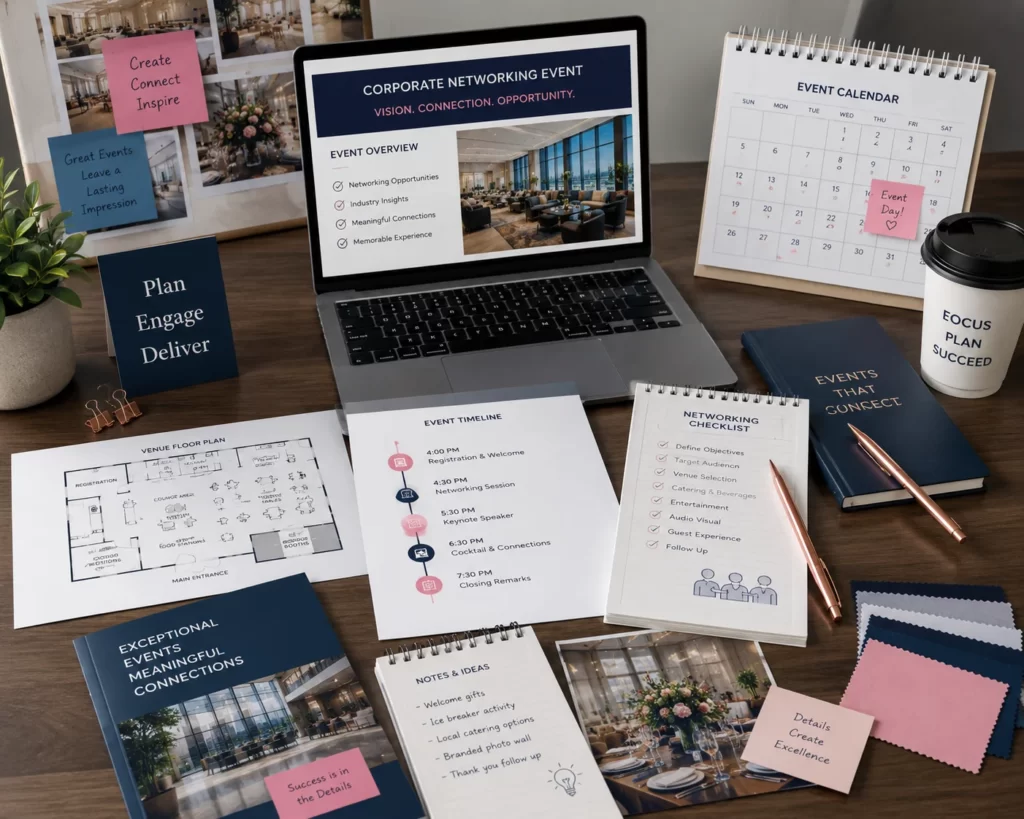
Even the best venue can fall short if planning begins too late. Corporate networking mixers involve multiple moving parts, from venue contracts and vendor coordination to guest communications and on-site logistics. Creating a structured timeline helps reduce last-minute stress and ensures every detail supports a seamless guest experience.
Before confirming your venue, remember that costs extend beyond rental fees. Comparing event planning price packages early in the process can help determine whether outsourcing certain planning responsibilities makes financial and operational sense.
12–10 Weeks Before the Event: Build the Foundation
This is the stage where strategic decisions shape the success of your event.
Focus on:
- Define event objectives and KPIs
- Finalize the budget
- Shortlist and tour venues
- Secure the preferred venue
- Identify sponsors and partners
- Develop a preliminary guest list
- Begin vendor discussions
Rather than selecting the first available venue, compare multiple options based on networking potential, accessibility, technology, and flexibility.
8–6 Weeks Before the Event: Confirm Vendors and Guest Experience
Once the venue is secured, attention shifts toward creating an exceptional attendee experience.
Prioritize:
- Final floor plans
- Catering selections
- AV requirements
- Branding materials
- Registration process
- Digital invitations
- Entertainment (if applicable)
Using gE invite at this stage makes invitation management and guest communication much easier, especially for corporate events with multiple attendee categories.
4–2 Weeks Before the Event: Fine-Tune Every Detail
With the event approaching, focus on refining operations rather than making major changes.
Checklist:
| Task | Status |
|---|---|
| Confirm final attendee count | ☐ |
| Submit catering numbers | ☐ |
| Finalize seating and networking zones | ☐ |
| Test audiovisual equipment | ☐ |
| Print signage and name badges | ☐ |
| Confirm vendor arrival times | ☐ |
| Review emergency procedures | ☐ |
| Schedule venue walkthrough | ☐ |
Accurate attendance numbers are especially important. If your invitations requested RSVPs, reviewing rsvp meaning can help improve guest response rates and provide more reliable planning data.
Coordinate Vendors Like a Hospitality Professional
Great networking events feel effortless because every vendor understands their role before guests arrive.
Your venue manager, caterer, audiovisual provider, photographer, florist, and event staff should all work from the same schedule and floor plan.
Share:
- Setup times
- Load-in instructions
- Parking information
- Contact list
- Emergency procedures
- Event timeline
- Floor plans
- Power requirements
A single planning document shared across all vendors minimizes confusion and improves event-day efficiency.
If your team would rather focus on guest experience than logistics, learning about private event planning can help you decide whether professional planning support is the right investment.
💡 Pro Tip
Schedule one final venue walkthrough about a week before the event with every key vendor present. Walking the space together often uncovers small operational issues—such as power outlet locations or registration bottlenecks—that are much easier to fix before event day.
Don’t Overlook the Contract Details
Venue contracts should protect your event, not create surprises.
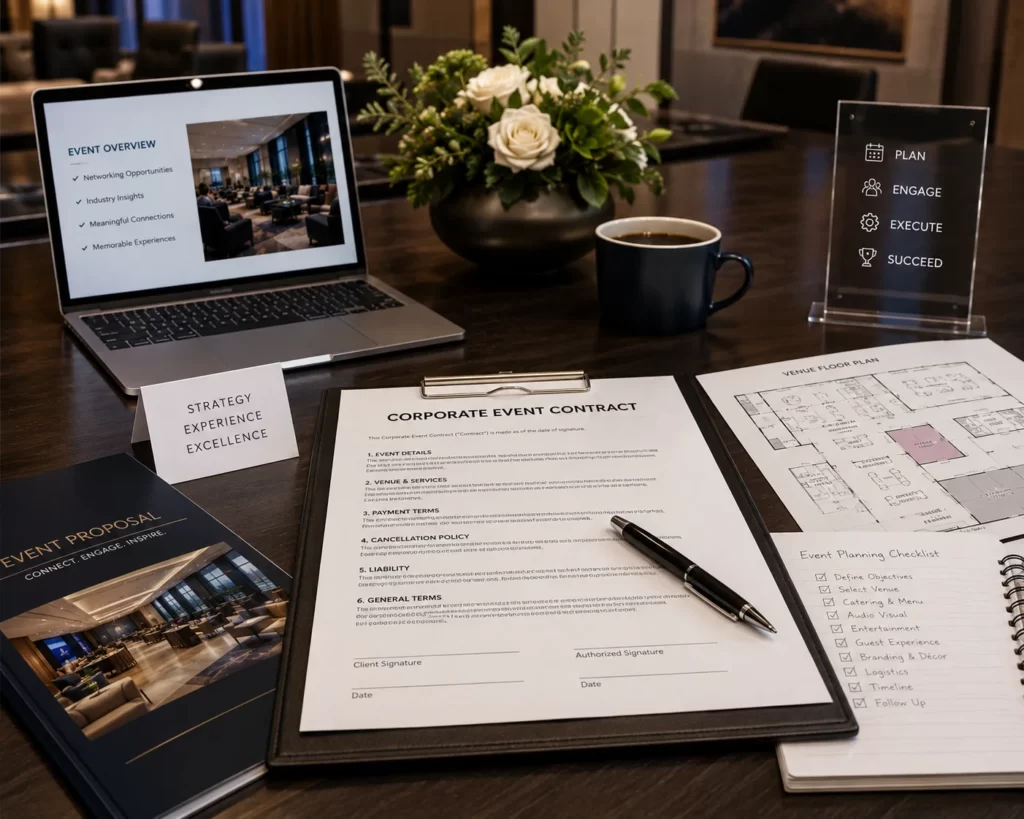
Before signing, confirm every important detail in writing.
Contract Checklist
- Rental hours
- Setup and teardown access
- Overtime charges
- Furniture included
- AV equipment included
- Wi-Fi availability
- Vendor restrictions
- Parking arrangements
- Insurance requirements
- Cancellation policy
- Weather contingency plan
- Hidden service charges
Many planners focus only on rental pricing, but hidden fees for cleaning, security, staffing, or equipment can significantly increase the final cost. Reviewing renting a place for a party alongside your venue proposals provides additional insight into the true cost of booking event spaces.
Final Recommendations
Every memorable networking event shares one common characteristic: the venue actively supports conversation.
Instead of selecting a venue based solely on appearance, evaluate how the space encourages guest movement, supports meaningful discussions, and simplifies operations for your planning team.
As you compare options, prioritize venues that offer:
- Flexible layouts
- Excellent acoustics
- Comfortable networking areas
- Strong accessibility
- Reliable technology
- Transparent pricing
- Experienced venue staff
These qualities consistently create better guest experiences than impressive décor alone.
If you’re still exploring venues across different cities, browsing greatEvent allows you to compare venues, vendors, amenities, and event services from one trusted platform, making it easier to shortlist spaces that match your networking goals.
Ready to Host a Networking Event That People Remember?
The most successful corporate networking mixers aren’t defined by expensive decorations or elaborate entertainment—they’re remembered for the conversations they inspire and the business relationships they create.
Whether you’re organizing an executive reception, startup networking event, client appreciation evening, or industry association mixer, choosing the right venue lays the foundation for every meaningful interaction.
If you need help finding a venue that aligns with your event goals, compare curated event spaces, trusted vendors, and professional services through greatEvent. If you have questions about the booking process or need assistance narrowing down your options, don’t hesitate to contact us and start planning your next networking event with confidence.
Frequently Asked Questions
What makes a good corporate networking mixer venue? ▾
A good networking venue provides flexible layouts, comfortable seating, open circulation paths, excellent acoustics, reliable technology, and multiple conversation zones. The goal is to encourage guests to move naturally and interact throughout the event.
How much space do I need for a networking mixer? ▾
Standing networking receptions generally require more open space than banquet-style events. The exact amount depends on guest count, furniture, food stations, and planned activities, but avoiding overcrowding should always be a priority.
How do I choose between a hotel ballroom and a unique venue? ▾
Hotels simplify logistics through built-in catering and audiovisual services, while unique venues such as museums, rooftops, or lofts create more memorable guest experiences. Your decision should reflect your audience, budget, and networking objectives.
How far in advance should I book a corporate networking venue? ▾
For medium to large networking events, booking 8–12 weeks in advance provides the best selection of venues and vendors. Peak seasons may require even earlier reservations.
What questions should I ask during a venue tour? ▾
Ask about included amenities, Wi-Fi, accessibility, vendor policies, setup times, parking, overtime charges, cancellation policies, and any additional fees that may affect your total event budget.
Compare vendors for your next event
Search caterers, photographers, florists, planners, and rentals — then send one request to several vendors at once.