TL;DR
The average event venue cost per hour in the United States ranges from around $50 for small community spaces to more than $1,800 for luxury hotel ballrooms and premium event venues. Your final price depends on the venue type, location, guest count, amenities, event date, and additional services. Knowing what influences pricing can help you compare venues more effectively, negotiate better rates, and avoid unexpected costs.
Shopping by the hour?
Compare event venues near you
See hourly-friendly spaces by capacity, price, and location before you book.
How Much Does It Cost to Rent a Venue Per Hour?
Booking the right venue starts with understanding one important question:
How much does an event venue cost per hour?
The answer isn’t as straightforward as many people expect.
A neighborhood community center may charge less than $75 per hour, while a luxury hotel ballroom in New York City can exceed $1,500 per hour before catering, staffing, taxes, and service fees are added. Two venues with the same guest capacity can also have dramatically different prices depending on their location, amenities, reputation, and what’s included in the rental package.
For most weddings, corporate events, birthday parties, conferences, fundraisers, and private celebrations, the venue represents one of the largest expenses in the overall budget. Choosing the right space isn’t simply about finding the lowest hourly rate. It’s about understanding the total value you’re receiving and whether the venue aligns with your event goals.
Before comparing venue prices, it’s also worth understanding how much event planners charge, since planning services can significantly influence your overall event budget and may even help reduce venue-related expenses through vendor relationships and negotiation.
If you’re still exploring options, you can browse thousands of event venues and event services to compare locations, amenities, capacities, and availability across the United States.
This guide explains average event venue cost per hour by venue type, guest capacity, and city, while also breaking down the hidden costs that many first-time planners overlook. You’ll learn what affects hourly pricing, when it makes sense to pay more, and practical ways to maximize your budget without compromising the guest experience. The pricing ranges and venue comparisons throughout this article are based on current U.S. market research from the document you provided.
Average Event Venue Cost Per Hour in the United States
Although pricing varies by market, most venues fall into a few recognizable pricing tiers.
| Venue Type | Average Hourly Rate | Ideal For |
|---|---|---|
| Community Centers | $50–$175 | Birthday parties, local gatherings, nonprofit events |
| Small Event Spaces | $175–$350 | Bridal showers, baby showers, intimate celebrations |
| Banquet Halls | $175–$700 | Weddings, receptions, formal dinners |
| Luxury Ballrooms | $600–$1,800+ | Luxury weddings, galas, corporate banquets |
| Meeting Rooms | $25–$160 | Business meetings, workshops, training sessions |
| Rooftop Venues | $100–$1,000+ | Cocktail receptions, networking events |
| Creative Studios | $40–$300 | Photoshoots, pop-up events, workshops |
| Industrial Lofts | $150–$750 | Product launches, private parties, social events |
These figures represent general U.S. pricing ranges. Premium markets such as New York City, Los Angeles, San Francisco, Boston, Chicago, and Washington, D.C., typically command significantly higher hourly rates than suburban communities and smaller metropolitan areas.
Pro Tip: Don’t compare venues based solely on their advertised hourly rate. A venue charging $400 per hour may include furniture, audiovisual equipment, parking, setup, and cleanup, making it a better value than a $250-per-hour venue that charges separately for every service.
What Determines Event Venue Cost Per Hour?
No two venues are priced exactly the same. Even similar spaces can differ by hundreds of dollars per hour because of several important pricing factors.
1. Location
Location is one of the biggest factors affecting hourly venue rental prices.
Venues in downtown business districts, entertainment hubs, and major metropolitan areas generally command higher prices because of increased demand, higher operating costs, and premium real estate values. According to the research, comparable venues in Tier 1 cities can cost two to three times more than similar venues in suburban markets.
- New York City
- Los Angeles
- San Francisco
- Washington, D.C.
- Boston
- Chicago
More Affordable Markets
- Atlanta
- Dallas
- Denver
- Nashville
- Phoenix
- Smaller suburban communities
2. Guest Capacity
The number of guests directly impacts venue pricing. Larger venues require additional square footage, furniture, utilities, staffing, and maintenance, resulting in higher hourly rental rates.
| Guest Capacity | Typical Hourly Cost |
|---|---|
| Under 50 Guests | $50–$175 |
| 50–200 Guests | $175–$550 |
| 200–500 Guests | $600–$1,800+ |
| More than 500 Guests | Custom Pricing |
These pricing ranges closely reflect the national averages outlined in your research document.
Common Mistake: Renting a venue that’s much larger than your guest list. Oversized venues increase costs and can make your event feel less lively if the space isn’t filled effectively.
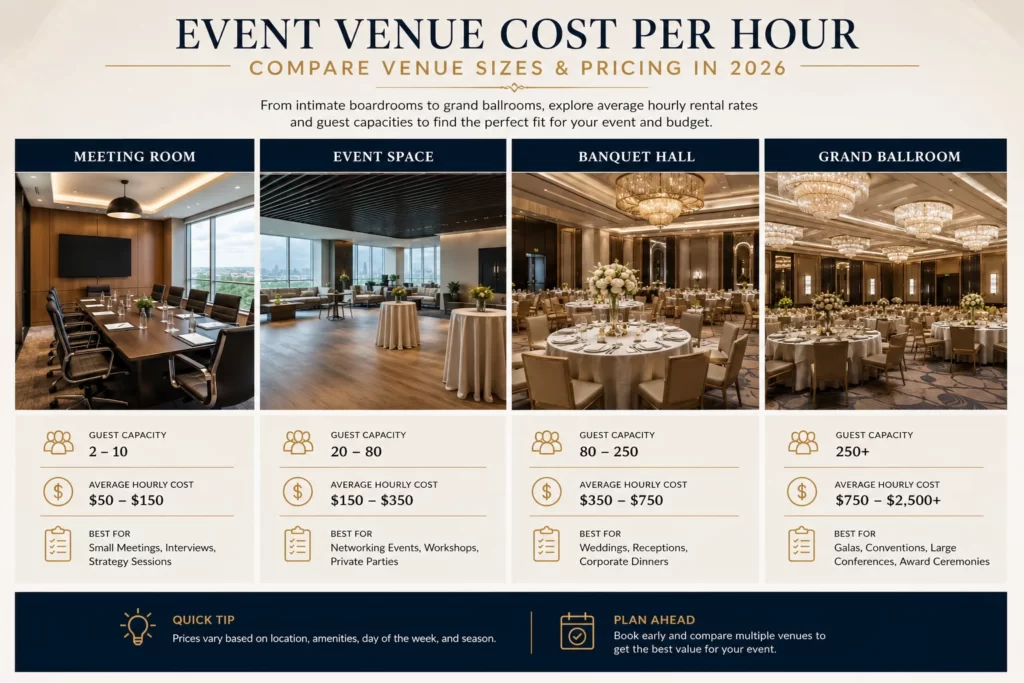
3. Venue Type
The type of venue you choose has a major impact on the event venue cost per hour. While guest capacity is important, two venues that accommodate the same number of people can have very different hourly rates based on the amenities, services, and overall experience they provide.
For example, a hotel ballroom may include banquet tables, chairs, in-house catering, audiovisual equipment, parking, and an event coordinator, whereas an industrial warehouse may only provide an empty space. Although the warehouse appears less expensive at first glance, additional rentals and vendor costs can quickly narrow the price difference.
Below is a breakdown of the most common venue types and what you can typically expect to pay.
Average Hourly Venue Cost by Venue Type
| Venue Type | Average Hourly Cost | Typical Capacity | Best For |
|---|---|---|---|
| Community Center | $50–$175 | 25–100 | Birthday parties, local events |
| Meeting Room | $25–$160 | 5–40 | Business meetings, workshops |
| Banquet Hall | $175–$700 | 75–300 | Weddings, receptions |
| Hotel Ballroom | $600–$1,800+ | 150–500+ | Luxury weddings, galas |
| Rooftop Venue | $100–$1,000+ | 30–200 | Cocktail parties, networking |
| Creative Studio | $40–$300 | 15–75 | Photoshoots, pop-ups |
| Warehouse/Loft | $150–$750 | 75–300 | Private parties, product launches |
| Country Club | $200–$600+ | 100–300 | Weddings, corporate dinners |
These pricing ranges reflect current U.S. venue rental trends and vary based on location, amenities, and demand.
Banquet Halls
Banquet halls remain one of the most popular venue choices because they balance affordability with convenience. Many include essentials like tables, chairs, restrooms, kitchen access, and on-site staff, making them an excellent option for weddings, anniversaries, quinceañeras, and formal celebrations.
Typical hourly rates include:
- Small banquet halls: $175–$300 per hour
- Medium banquet halls: $300–$550 per hour
- Luxury banquet halls: $600–$1,800+ per hour
If you’re comparing banquet halls with other venue styles, our guide to event space costs provides additional insights into pricing models and budgeting considerations.
Expert Insight: Ask whether setup and cleanup time is included in the rental window. Some venues begin charging the moment vendors arrive, while others provide complimentary setup hours.
Hotel Ballroom Rental Cost Per Hour
Hotel ballrooms are often the preferred choice for upscale weddings, corporate conferences, award ceremonies, and nonprofit galas. Although they command higher hourly rates, they frequently include amenities that would otherwise need to be rented separately.
Common inclusions may include:
- Ballroom furniture
- Professional lighting
- Built-in sound systems
- Event coordination
- Catering services
- On-site accommodations
- Valet parking
Because of these bundled services, comparing only the hourly rental price doesn’t always reflect the venue’s overall value.
Meeting Room Cost Per Hour
Meeting rooms are designed for productivity rather than entertainment. They’re ideal for board meetings, interviews, workshops, seminars, and training sessions.
Typical pricing:
| Meeting Space | Average Hourly Cost |
|---|---|
| Coworking Meeting Room | $25–$60 |
| Hotel Meeting Room | $70–$160 |
| Executive Boardroom | $100–$250 |
Corporate planners should also evaluate:
- Internet speed
- Display screens
- Video conferencing capabilities
- Whiteboards
- Parking availability
- Accessibility
A slightly higher hourly rate may save money if these amenities are included.

Rooftop Venues
Rooftop venues have become increasingly popular for cocktail receptions, engagement parties, networking events, and product launches. Guests enjoy panoramic city views, but those views come at a premium.
Average hourly pricing:
- Small rooftops: $100–$250
- Mid-sized rooftops: $250–$600
- Premium rooftop venues: $600–$1,000+
Many rooftop venues also enforce stricter noise ordinances, guest limits, and weather contingency requirements, which should be considered when comparing costs.
Creative Studios & Lofts
Creative studios and industrial lofts appeal to planners looking for a flexible, customizable venue. They’re especially popular for:
- Brand activations
- Pop-up shops
- Photography sessions
- Fashion events
- Small weddings
- Engagement parties
These venues often feature exposed brick, open floor plans, and modern industrial aesthetics. However, many are “blank canvas” spaces, meaning you’ll need to budget separately for furniture, décor, lighting, and catering.
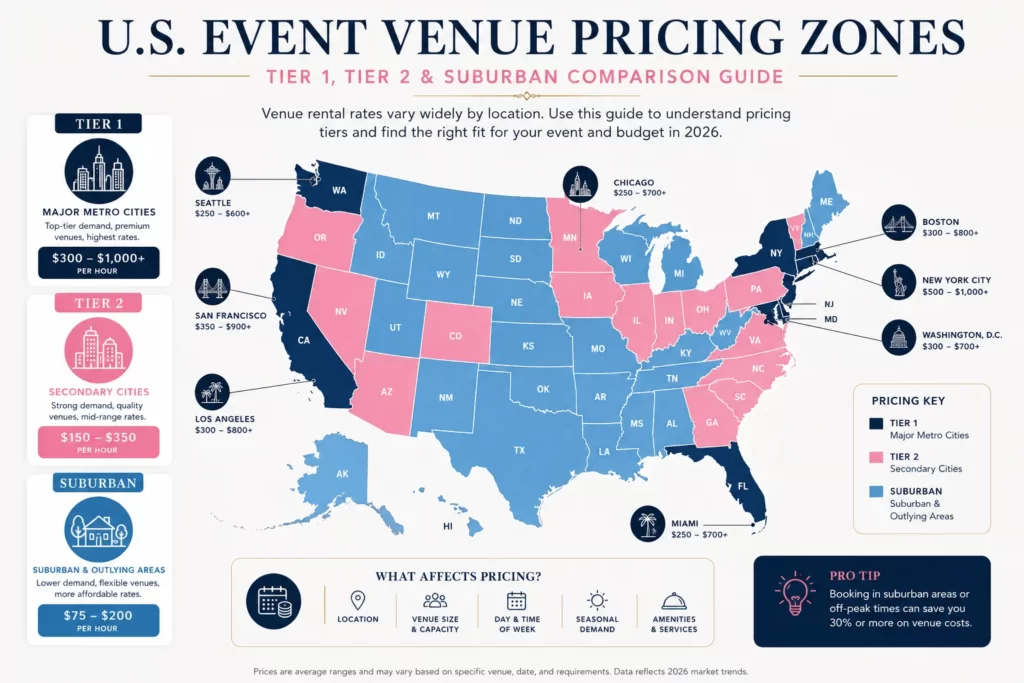
How Location Affects Event Venue Cost Per Hour
Location is one of the biggest pricing variables in the U.S. event industry. Even if two venues are nearly identical in size and amenities, their hourly rates can differ dramatically depending on the city.
According to the research, venues in Tier 1 metropolitan markets typically cost two to three times more than comparable venues in suburban or regional locations.
Tier 1 Cities (Highest Costs)
| City | Typical Pricing Trend |
|---|---|
| New York City | $$$$ |
| Los Angeles | $$$$ |
| San Francisco | $$$$ |
| Washington, D.C. | $$$$ |
| Boston | $$$$ |
| Chicago | $$$ |
If you’re hosting an event in the nation’s capital, comparing event venues in Washington DC can help you understand the range of venue styles and pricing available.
Tier 2 Cities (Moderate Costs)
- Atlanta
- Dallas
- Denver
- Nashville
- Seattle
- Austin
These cities often provide excellent value by offering high-quality venues at lower hourly rates than Tier 1 markets.
Smaller Cities & Suburban Areas
Suburban venues typically provide:
- Lower hourly rental costs
- Free parking
- Larger event spaces
- Longer rental windows
- Greater scheduling flexibility
For many private events, expanding your search just 20–30 minutes outside a major city can significantly reduce your venue budget without compromising the guest experience.
Pro Tip: If your event date is flexible, compare venues in nearby suburbs or secondary markets. The savings on rental fees, parking, and vendor costs can often offset additional travel time for guests.
Hidden Costs That Can Increase Your Event Venue Cost Per Hour
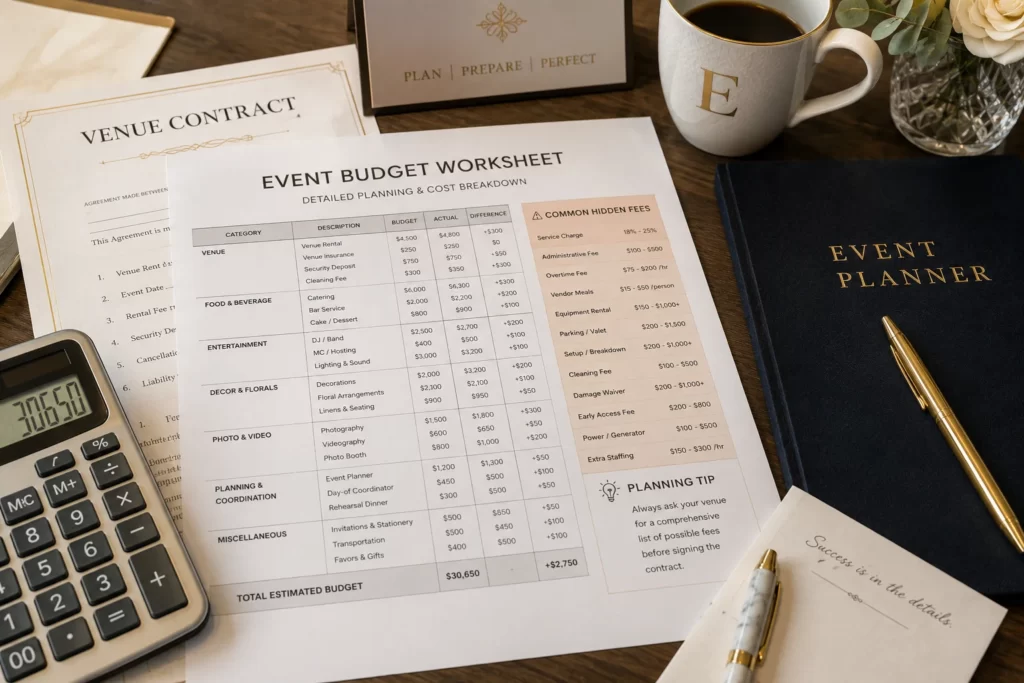
The advertised hourly rate is only part of the total expense. Many venues charge additional fees that aren’t always included in the initial quote, which can significantly increase your final bill.
Before signing a contract, ask for a detailed breakdown of every potential charge—not just the hourly rental fee.
Common Hidden Venue Costs
| Additional Cost | Typical Price | What It Covers |
|---|---|---|
| Cleaning Fee | $100–$500 | Post-event cleaning and trash removal |
| Security Deposit | $250–$2,000 | Refundable damage deposit |
| Event Liability Insurance | $200–$500 | Required coverage for many venues |
| Overtime Charges | 1.5× Hourly Rate | Extra time beyond contracted hours |
| Setup & Breakdown Time | Varies | Vendor setup and cleanup hours |
| Parking Fees | $10–$50 per vehicle | Guest or valet parking |
| Corkage Fee | $10–$40 per bottle | Bringing your own alcohol |
| Cake Cutting Fee | $2–$8 per guest | Wedding receptions |
| Service Charges | 18–25% | Staffing and venue operations |
Many of these costs aren’t reflected in the advertised hourly rate, which is why comparing quotes based solely on price can be misleading. According to your research, overtime charges, insurance requirements, catering minimums, and staffing are among the most common additional expenses that increase the total venue cost.
Pro Tip: Request an “all-in estimated invoice” before booking. This gives you a much clearer picture of the total event cost and helps you compare venues more accurately.
Peak Season vs. Off-Season Pricing
One of the easiest ways to reduce your event venue cost per hour is to choose your event date strategically.
Demand has a direct impact on pricing. When venues receive more booking inquiries, hourly rental rates often increase.
Typical Seasonal Pricing Trends
| Season | Average Pricing |
|---|---|
| January–March | Lower |
| April–June | Moderate to High |
| September–November | Highest |
| December Holidays | Premium Pricing |
Wedding season, holiday parties, graduation celebrations, and year-end corporate events all contribute to higher venue demand.
If you’re planning a wedding, understanding the average wedding cost can help you estimate how venue pricing fits into your overall celebration budget.
Weekend vs. Weekday Pricing
The day of the week also affects hourly rental rates.
| Day | Typical Cost |
|---|---|
| Monday–Thursday | Lower |
| Friday | Moderate |
| Saturday | Highest |
| Sunday | Moderate to High |
Weekend evenings are often the most expensive because they’re the most popular event times.
According to the research, venues commonly charge 20–50% more for weekend bookings compared with weekdays.
Expert Tip: Hosting your event on a Thursday evening or Sunday afternoon can often save hundreds—or even thousands—of dollars while still providing a great guest experience.
Minimum Rental Hours
Many venues don’t allow one- or two-hour rentals.
Instead, they require minimum booking periods such as:
- Three hours
- Four hours
- Five hours
- Half-day packages
- Full-day rentals
For example:
A venue charging $250 per hour with a four-hour minimum actually starts at $1,000, even if your event lasts only two hours.
Always ask:
- Is setup included?
- Does cleanup count toward rental time?
- Can vendors arrive early?
- Is rehearsal time included?
These details can have a significant impact on your final invoice.
Catering Minimums & Vendor Restrictions
Many venues generate revenue beyond the rental fee through food and beverage requirements.
Instead of charging a higher hourly rate, they may require a minimum catering spend.
For example:
- Venue Rental: $300/hour
- Catering Minimum: $6,000
- Service Charge: 22%
- Sales Tax: Additional
A venue with a lower hourly rate may ultimately cost more than a venue that allows outside catering.
Before booking, ask:
- Is outside catering allowed?
- Can I bring my own bartender?
- Is there a preferred vendor list?
- Are there corkage fees?
- Is there a food and beverage minimum?
- Are outside decorators permitted?
These questions help prevent unexpected costs later in the planning process.
Insurance & Permit Costs
Many venues require proof of event liability insurance before your event.
Typical insurance costs include:
| Coverage | Estimated Cost |
|---|---|
| Small Private Event | $200–$350 |
| Wedding | $250–$500 |
| Corporate Event | $300–$750 |
Outdoor events may also require:
- City permits
- Park permits
- Noise permits
- Street closures
- Fire department approvals
Your research notes that these costs are generally fixed event expenses rather than hourly charges, but they should still be included in your overall venue budget.
How to Reduce Your Event Venue Cost Per Hour
Saving money doesn’t necessarily mean choosing the cheapest venue. It means getting the best value for your budget.
1. Book Early
Popular venues often increase prices as availability decreases.
Booking six to twelve months in advance typically provides:
- Better pricing
- More date options
- Greater room selection
2. Consider Alternative Venues
Instead of luxury hotels, consider:
- Community centers
- Museums
- Art galleries
- Restaurants
- Breweries
- Historic buildings
If you’re looking for something distinctive, explore unique wedding venues in Washington DC for inspiration on creative event spaces that offer memorable experiences.
3. Book During Off-Peak Hours
Morning brunches, weekday luncheons, and Sunday afternoon events often receive discounted pricing.
Even moving your event by one day can make a noticeable difference in your venue budget.
4. Bundle Services
Venues that include:
- Tables
- Chairs
- Linens
- AV equipment
- Setup
- Cleanup
- Parking
may provide better overall value than less expensive venues requiring separate rentals.
Always compare the total event cost, not just the hourly rate.
5. Negotiate
Many venue managers are open to negotiating:
- Setup time
- Additional hours
- Parking
- Furniture rentals
- Audio/visual equipment
- Cleaning fees
Especially for weekday or off-season events.
Common Mistake: Many planners assume venue pricing is fixed. While some costs are non-negotiable, extras like setup time, parking, or equipment rentals can often be adjusted.
Event Venue Budget Planning Checklist
Use this checklist before signing a venue contract.
Venue Cost Checklist
- Compare at least three venue quotes.
- Confirm the hourly rental rate.
- Verify the minimum rental hours.
- Ask whether setup and cleanup time are included.
- Request a complete list of additional fees.
- Confirm catering and alcohol policies.
- Verify parking availability and costs.
- Review cancellation and refund policies.
- Confirm insurance requirements.
- Read the contract carefully before paying a deposit.
Planning a celebration with invitations? Don’t forget to organize your guest list and send digital event invitations early so attendees have plenty of notice before the event.
Key Takeaways
- The advertised hourly rate rarely reflects the total event cost.
- Location, season, guest count, amenities, and venue policies all affect pricing.
- Weekday and off-season bookings often provide the best value.
- Always compare total costs—not just hourly rates.
- Ask for a detailed, itemized quote before making your final decision.
Event Venue Cost Per Hour by Event Type
Not every event has the same venue requirements. A corporate seminar has different priorities than a wedding reception, and a child’s birthday party requires a different setup than a fundraising gala.
Understanding how your event type influences venue pricing makes it easier to choose the right space without paying for features you don’t need.
Wedding Venues
Weddings typically have the highest venue costs because they often require larger spaces, premium décor, longer rental periods, and multiple vendors.
Average Hourly Cost
| Wedding Venue Type | Hourly Cost |
|---|---|
| Small Wedding Venue | $150–$400 |
| Banquet Hall | $300–$700 |
| Hotel Ballroom | $800–$1,800+ |
| Estate or Mansion | $1,000–$2,500+ |
Wedding venues may also include:
- Bridal suites
- Ceremony spaces
- Reception halls
- Dance floors
- Catering packages
- Event coordination
When estimating your total wedding expenses, it’s helpful to compare venue costs with the average wedding cost to understand how much of your budget should be allocated to the venue.
Corporate Events
Corporate events generally prioritize functionality over aesthetics.
Companies often look for:
- High-speed Wi-Fi
- Projectors
- LED screens
- Conference seating
- Parking
- Breakout rooms
Average Hourly Cost
| Venue | Hourly Cost |
|---|---|
| Meeting Room | $25–$100 |
| Conference Center | $80–$250 |
| Hotel Meeting Space | $100–$400 |
| Executive Ballroom | $500–$1,200 |
Corporate venues frequently include equipment that would otherwise require separate rentals, making them a strong value despite higher hourly rates.
Birthday Parties
Birthday celebrations offer one of the widest pricing ranges because they can be hosted almost anywhere—from community centers to private event spaces.
Typical Hourly Rates
- Community Center: $50–$150
- Restaurant Private Room: $100–$300
- Event Space: $150–$400
- Private Venue: $300–$700
If you’re hiring professional help, understanding birthday party planner costs can help you create a realistic budget before booking a venue.
Engagement Parties
Engagement celebrations usually involve smaller guest counts, making boutique venues, restaurants, wineries, and rooftop spaces popular choices.
Typical Hourly Rates
| Venue | Hourly Cost |
|---|---|
| Restaurant Private Room | $100–$300 |
| Boutique Event Space | $150–$400 |
| Rooftop Venue | $250–$700 |
Planning the celebration also involves deciding who covers various expenses. Our guide on who pays for an engagement party explains common etiquette and budgeting expectations.
Baby Showers & Bridal Showers
These events are often held during daytime hours, making them more affordable than evening celebrations.
Popular venue choices include:
- Tea rooms
- Restaurants
- Gardens
- Community halls
- Boutique event spaces
Typical hourly pricing ranges from $75 to $300, depending on location and amenities.
Event Venue Cost Comparison by Event Type
| Event Type | Typical Hourly Cost | Recommended Venue |
|---|---|---|
| Wedding | $300–$1,800+ | Ballroom, Estate, Banquet Hall |
| Corporate Meeting | $25–$250 | Meeting Room, Conference Center |
| Birthday Party | $50–$400 | Community Hall, Event Space |
| Engagement Party | $100–$700 | Rooftop, Restaurant, Boutique Venue |
| Baby Shower | $75–$300 | Garden, Tea Room, Event Space |
| Fundraiser | $250–$1,000 | Ballroom, Museum |
| Networking Event | $150–$600 | Rooftop, Loft, Hotel |
Venue Selection Scorecard
Use this simple framework to compare multiple venues before making your decision.
| Evaluation Factor | Weight | Score (1–5) |
|---|---|---|
| Hourly Cost | ⭐⭐⭐⭐⭐ | |
| Location | ⭐⭐⭐⭐⭐ | |
| Guest Capacity | ⭐⭐⭐⭐⭐ | |
| Parking | ⭐⭐⭐⭐ | |
| Accessibility | ⭐⭐⭐⭐ | |
| Included Amenities | ⭐⭐⭐⭐⭐ | |
| Vendor Flexibility | ⭐⭐⭐⭐ | |
| Reviews & Reputation | ⭐⭐⭐⭐⭐ | |
| Cancellation Policy | ⭐⭐⭐⭐ | |
| Overall Value | ⭐⭐⭐⭐⭐ |
Rather than choosing the venue with the lowest price, compare the overall value each location provides.
Questions to Ask Before Booking an Event Venue
Before signing any contract, ask the venue manager these important questions.
Pricing
- Is the hourly rate fixed?
- Is there a minimum rental period?
- Are taxes included?
- Are service charges included?
- What happens if the event runs late?
Vendors
- Can I hire outside caterers?
- Is there a preferred vendor list?
- Can I bring my own decorator?
- Is outside entertainment permitted?
Logistics
- How early can vendors arrive?
- Is cleanup included?
- Are tables and chairs provided?
- Is Wi-Fi available?
- Is there backup power?
Guest Experience
- Is parking free?
- Is the venue ADA accessible?
- Are children allowed?
- Is there a noise restriction?
- Is security required?
Expert Tip: A detailed conversation with the venue manager today can prevent expensive surprises on event day.
Final Thoughts
Choosing an event venue is about much more than finding the lowest hourly price. The right venue balances cost, location, guest comfort, amenities, and flexibility while supporting the overall goals of your event.
As you’ve seen throughout this guide, hourly venue rates can range from under $50 for simple community spaces to more than $1,800 per hour for luxury ballrooms. The best choice depends on your guest count, event style, preferred location, and the services included in the rental package. By comparing complete pricing—not just the advertised hourly rate—you’ll be better equipped to make a confident booking decision.
Whether you’re planning an intimate celebration or a large corporate gathering, investing time in comparing venues today can save money, reduce stress, and create a better experience for your guests.
Find the Right Venue for Your Budget
Finding the perfect venue doesn’t have to be overwhelming.
Browse event venues across the United States to compare capacities, amenities, locations, and pricing for weddings, corporate events, parties, and special occasions. If you have questions about booking or need assistance choosing the right space, contact our team for personalized guidance.
Got your budget?
Now find the right space
Browse event venues near you and send one request to several venues at once.
Frequently Asked Questions
What is the average event venue cost per hour? ▾
Most event venues in the United States charge between $50 and $1,800+ per hour, depending on the venue type, location, guest capacity, and included amenities. Smaller community spaces are generally the most affordable, while luxury hotel ballrooms command premium rates.
Is it cheaper to book an event venue on a weekday? ▾
Yes. Weekday events typically cost less than Friday or Saturday bookings because demand is lower. Many venues also offer discounts for daytime or off-season events.
What additional fees should I expect when renting an event venue? ▾
Common additional costs include cleaning fees, security deposits, insurance, overtime charges, catering minimums, parking, service charges, and taxes. Always request an itemized quote before signing a contract.
How many hours should I book an event venue? ▾
Most events require 4–8 hours, depending on setup, guest arrival, the event itself, and cleanup. Be sure to confirm whether setup and breakdown time are included in your rental.
How can I save money on an event venue? ▾
Booking during off-peak seasons, choosing weekday dates, comparing multiple venues, selecting bundled packages, and negotiating included services are all effective ways to reduce your overall venue costs.
How much does a hotel ballroom cost per hour? ▾
Plan on about $600 to $1,800 or more an hour. Where you land depends on the city, the hotel, and how many guests you’re bringing. Ballrooms usually hold 150 to 500+ people. Before you compare quotes, ask about service charges, which often add 18 to 25%.
How much is a meeting room per hour? ▾
Meeting rooms run about $25 to $160 an hour. Coworking rooms sit at the low end, around $25 to $60. Hotel meeting rooms are more like $70 to $160, and an executive boardroom can cost $100 to $250 an hour.
Compare vendors for your next event
Search caterers, photographers, florists, planners, and rentals — then send one request to several vendors at once.