Outdoor Event Venue Space Guide: How Much Room 100 Guests Need
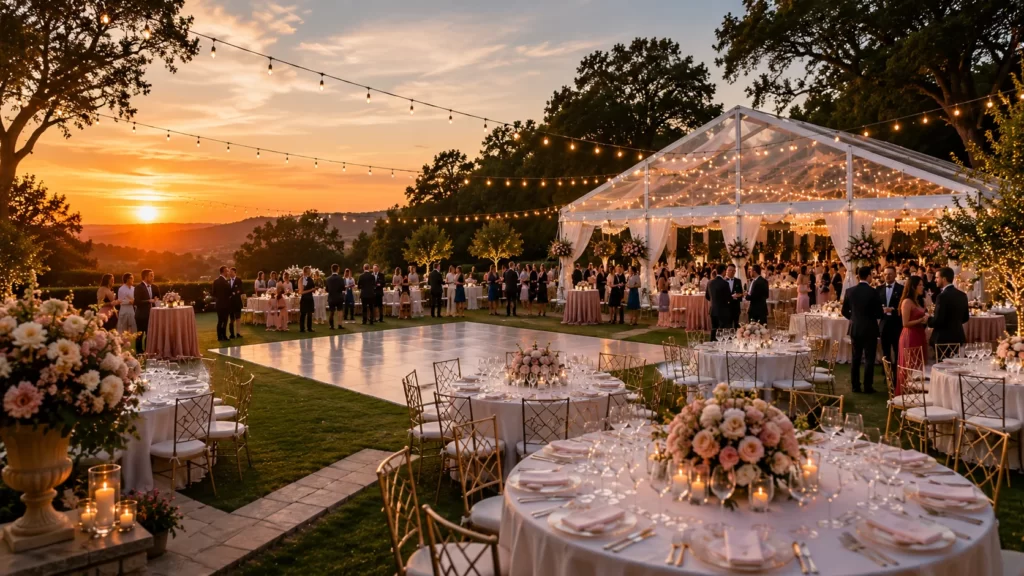
There’s a moment during outdoor event planning when excitement suddenly turns into math.
You’ve found a beautiful property. The views are perfect. The lighting at sunset feels cinematic. But then the real question appears: Will this outdoor event venue actually fit 100 guests comfortably?
Too little space creates crowded walkways, long buffet lines, and uncomfortable seating. Too much space can make even a lively celebration feel empty and disconnected. Whether you’re planning a wedding reception, milestone birthday, engagement party, corporate mixer, or outdoor gala, understanding space requirements is one of the most important planning decisions you’ll make.
According to planners and venue layout standards, most 100-person outdoor events require somewhere between 2,000 and 6,000 square feet depending on the style of the gathering. The right layout depends on seating arrangements, entertainment, catering setup, accessibility, and weather protection.
If you’re currently comparing an outdoor event venue in DC or exploring hidden gem event venues in Washington DC, this guide will help you calculate space realistically before signing a contract.
The Base Space Requirement for 100 Guests
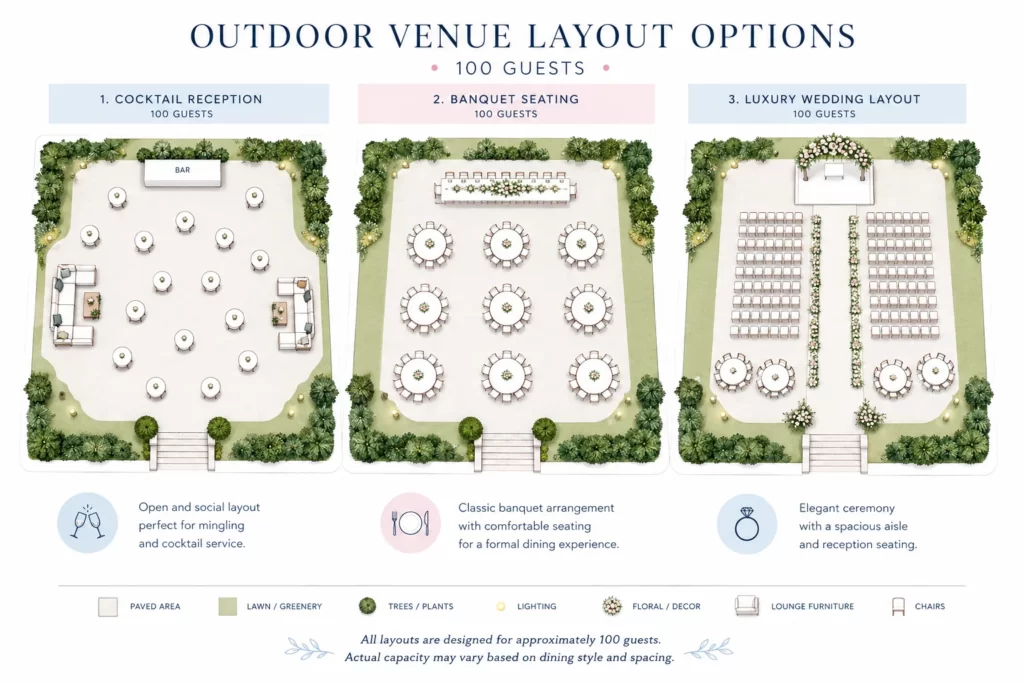
The first step is identifying the type of event you’re hosting because different formats require dramatically different footprints.
| Event Style | Recommended Space Per Guest | Total Space for 100 Guests |
|---|---|---|
| Cocktail Reception | 5–10 sq ft | 500–1,000 sq ft |
| Theater Seating | 7–9 sq ft | 700–900 sq ft |
| Banquet Seating | 12–15 sq ft | 1,200–1,500 sq ft |
| Fully Loaded Wedding Setup | 20–30 sq ft | 2,000–3,000+ sq ft |
A cocktail-style networking event naturally fits more guests into a smaller footprint because guests remain mobile. A seated wedding reception, on the other hand, requires room for round tables, servers, aisles, decor installations, and guest circulation.
For example, couples researching unique wedding venues in Washington DC often underestimate how much space dining layouts and dance floors actually consume once rentals arrive onsite.
Insider Tip
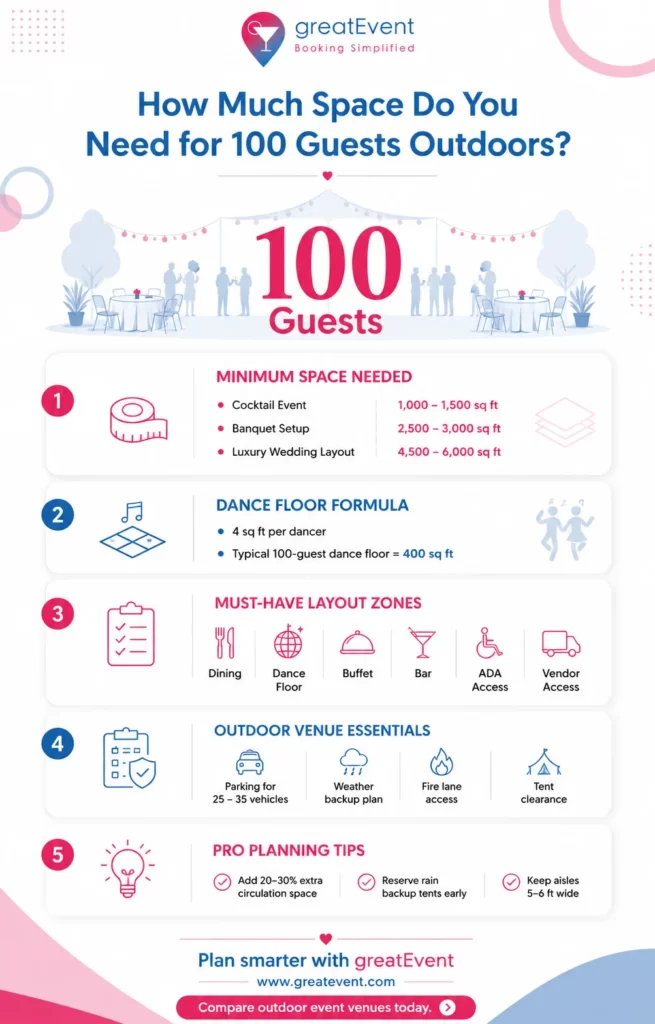
Always add an additional 20–30% buffer beyond your minimum calculations. Venues feel significantly more luxurious when guests can move naturally without bottlenecks.
How Much Space Does a Dance Floor Need?
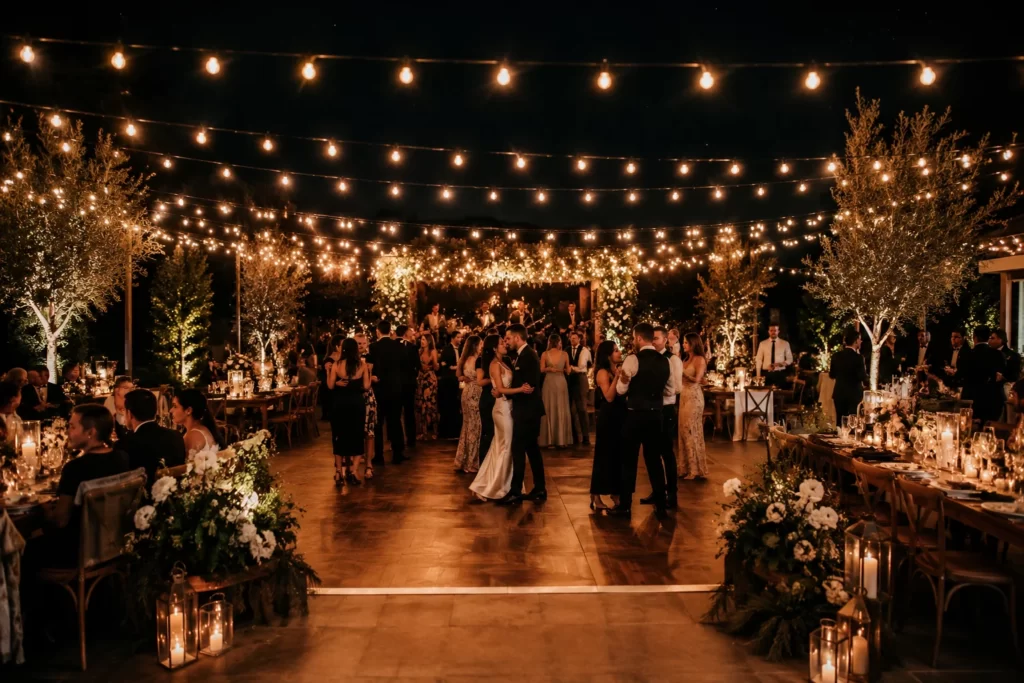
Dance floors change the entire geometry of an outdoor event venue.
Industry planners typically allocate around 4 square feet per active dancer. Since roughly half of guests dance at any given time, a 100-person event usually needs a dance floor around 400 square feet.
That’s approximately:
- 20’ × 20’
- 15’ × 25’
- 16’ × 24’
The type of event matters too.
A formal wedding with a DJ and open dance floor will require substantially more room than a networking cocktail reception with background music. If you’re planning a celebration inspired by trendy pop-up party venues in DC, flexible open layouts become especially important because guests move continuously between lounge areas, bars, and entertainment zones.
Seating Layouts That Work Best Outdoors
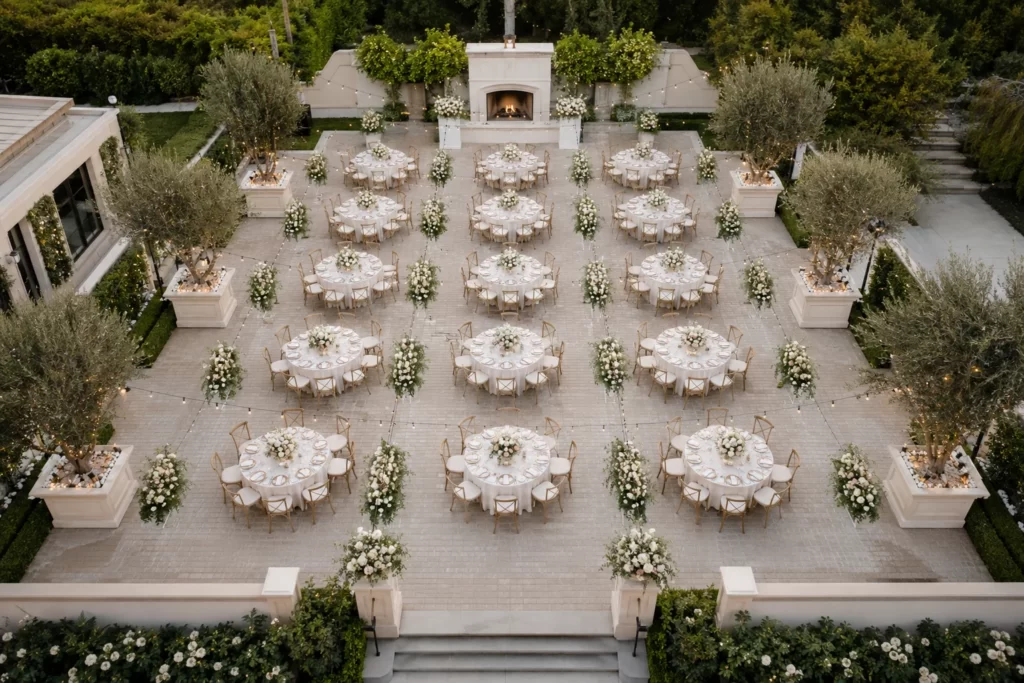
Outdoor layouts should feel intentional rather than overcrowded.
Banquet Style Seating
This is the most common format for weddings and large dinners.
Typical layout includes:
- Round tables seating 8–10 guests
- Central or offset dance floor
- Wide service aisles
- Buffet or plated service access
A 100-guest banquet setup typically requires:
- 1,500 sq ft for tables/chairs
- 300–500 sq ft for circulation
- 400 sq ft dance floor
- 200+ sq ft catering/bar support
Estimated Total:
Approximately 2,500–3,000 sq ft minimum.
Cocktail Reception Layout
Cocktail events are more space-efficient because they rely on:
- Standing tables
- Lounge furniture
- Fewer assigned seats
- Open circulation
Typical requirement:
- 1,000–1,500 sq ft total
These layouts are popular for product launches, engagement parties, and rooftop-style social events.
Ceremony + Reception Combination
Outdoor weddings that host both ceremony and reception onsite need transition space.
Common additions include:
- Ceremony aisle
- Altar or arch
- Cocktail transition area
- Vendor staging
- Guest flow between zones
This often pushes total requirements closer to 4,000–6,000 sq ft depending on complexity.
Before finalizing a venue budget, many couples compare resources like average wedding costs in 2026 to understand how venue size influences rentals, catering, staffing, and decor expenses.
Don’t Forget ADA Accessibility and Guest Comfort
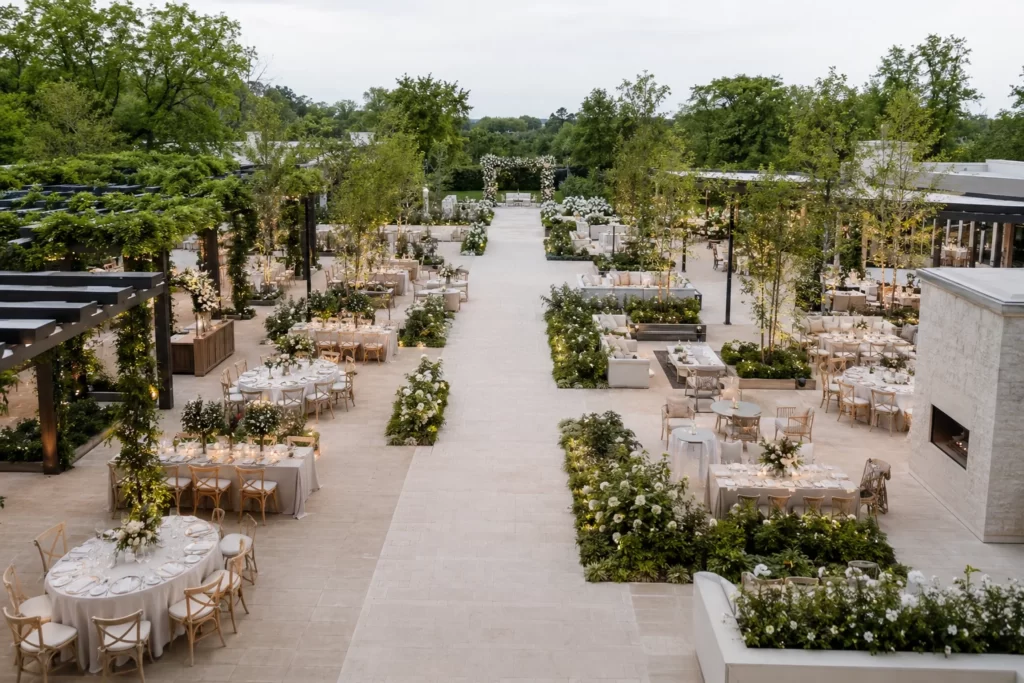
One of the biggest mistakes planners make is calculating only seating space.
A professionally planned outdoor event venue must also include:
- 36-inch accessible pathways
- Wheelchair turning space
- Accessible restroom access
- Companion seating
- Clear emergency exits
For 100 guests, ADA guidance generally requires at least four wheelchair-accessible seating spaces integrated naturally into the layout.
Comfort matters just as much as compliance.
Guests carrying drinks, servers balancing trays, photographers moving through crowds, and families with strollers all need circulation room. The difference between a stressful event and an elegant experience often comes down to spacing.
Pro Tip
Main guest aisles should ideally be 5–6 feet wide even if local code allows narrower dimensions. Wide walkways instantly make events feel more premium.
Space Needed for Catering, Bars, and Vendors
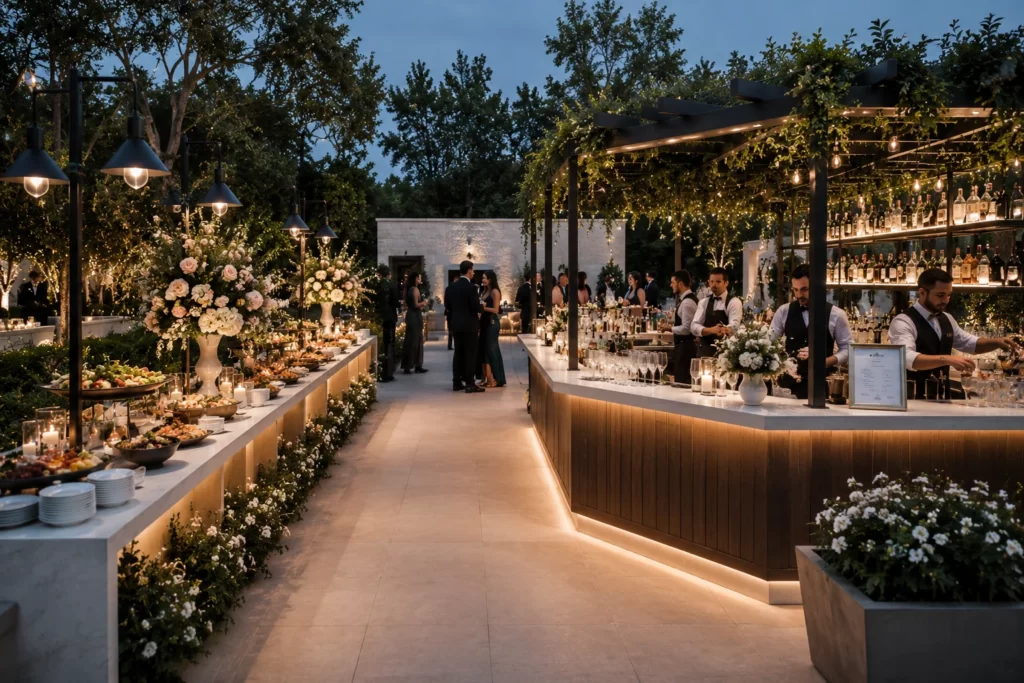
Support zones quietly consume more space than most hosts expect.
Buffet Stations
Buffets generally require:
- 100–200 sq ft
- Queueing space
- Staff access behind serving lines
Double-sided buffets reduce congestion significantly for events over 75 guests.
Bars
Each bar setup typically needs:
- 100 sq ft
- Queue space
- Backstock storage
- Bartender movement area
For 100 guests, most planners recommend:
- One full-service bar minimum
- Two bars for weddings or high-volume receptions
Vendor Zones
Professional vendors also require operational space:
- DJs
- Photographers
- Videographers
- Catering prep
- Floral staging
- Power distribution
When comparing venues through greatEvent’s event booking platform, always ask vendors for setup dimensions before finalizing your floor plan.
If you’re hiring planning professionals for larger outdoor celebrations, reviewing how much event planners charge can help you budget more accurately.
Tent Planning for Outdoor Events
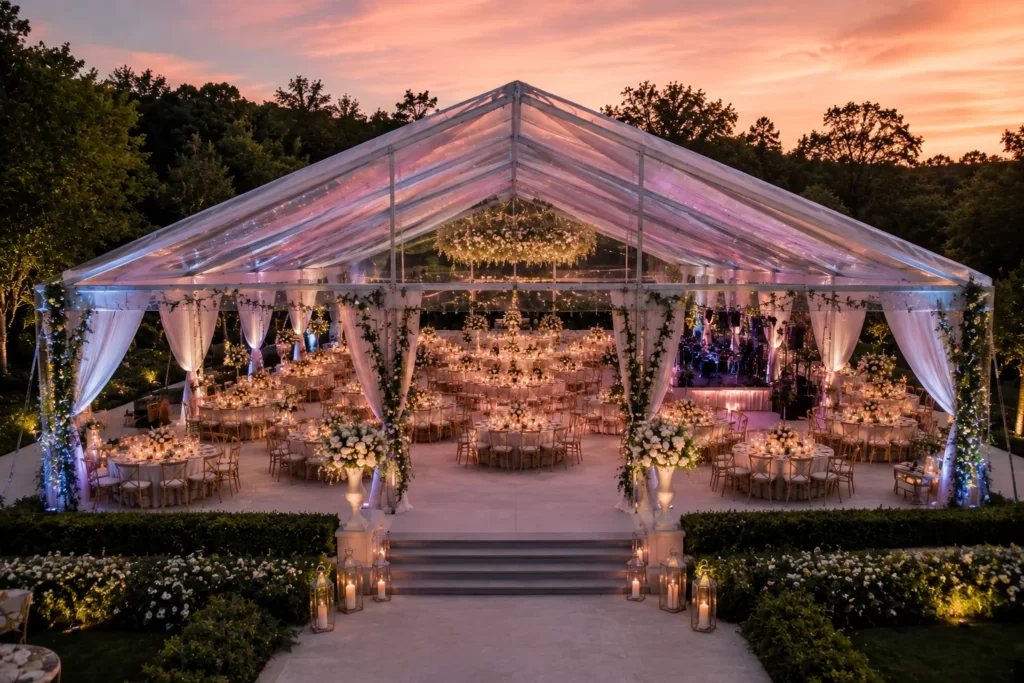
Tents dramatically affect spatial calculations because support poles, sidewalls, entrances, and emergency clearances all reduce usable area.
Typical tent estimates:
- Standing cocktail event: 800–1,000 sq ft
- Seated dinner: 1,000–1,500 sq ft
- Wedding reception with dance floor: 2,000+ sq ft
Professional planners also recommend:
- 5–10 feet perimeter clearance
- Generator placement away from tent walls
- Separate catering prep tent if possible
Outdoor weddings especially benefit from weather backup planning. Even a beautiful summer forecast can change quickly.
Insider Tip
Reserve a “rain hold” tent option early during peak wedding season. Last-minute weather tent rentals become dramatically more expensive and harder to secure.
Parking and Transportation Space
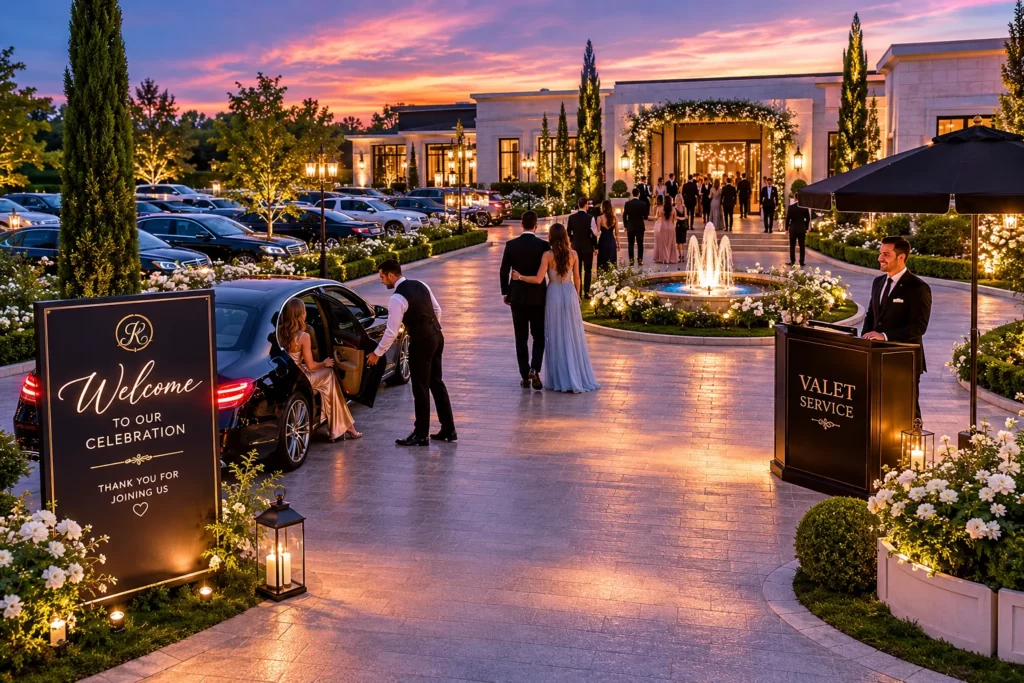
Parking is frequently overlooked during outdoor event venue planning.
For 100 guests:
- Expect 25–35 vehicles
- Add rideshare drop-off area
- Include vendor loading access
- Reserve ADA-accessible parking
Valet operations may also require additional staging room depending on venue access roads.
This becomes especially important at countryside venues, vineyards, estates, and private properties where infrastructure may not already exist.
Hosts planning birthdays and milestone celebrations may also benefit from reviewing how much birthday party planners charge before choosing their final venue layout.
Sample Outdoor Event Venue Space Breakdown
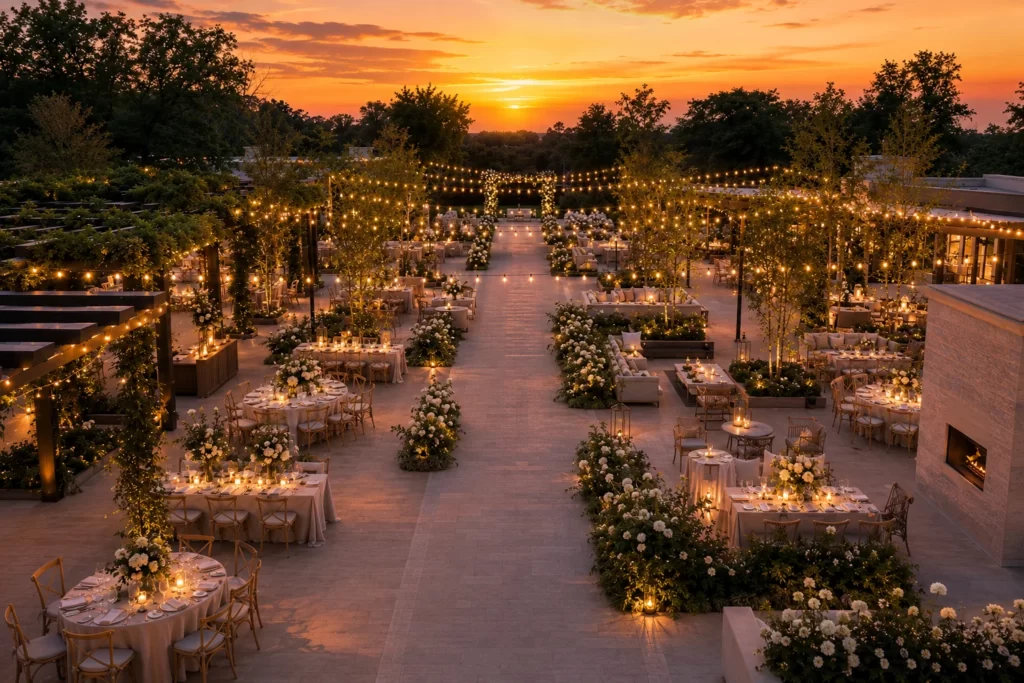
Here’s a realistic example for a 100-guest outdoor wedding reception:
| Area | Estimated Space |
| Dining Tables | 1,500 sq ft |
| Dance Floor | 400 sq ft |
| Buffet Area | 150 sq ft |
| Bar Area | 100 sq ft |
| Stage/DJ | 200 sq ft |
| Guest Circulation | 600 sq ft |
| Total | ~2,950 sq ft |
For elevated luxury layouts with lounge seating, oversized decor installations, or multiple entertainment zones, planners often increase layouts to 4,500–6,000 sq ft.
Hosts comparing venue budgets often explore event space cost breakdowns for party venues before committing to a property.
Outdoor Event Venue Planning Checklist
Before booking your venue, confirm:
Site Measurements
- Total usable square footage
- Flat vs sloped terrain
- Tent staking restrictions
- Tree placement
- Drainage conditions
Utilities
- Power access
- Water access
- Generator placement
- Lighting capability
Safety & Permits
- Fire lane access
- Tent permits
- Noise ordinances
- ADA accessibility
- Emergency exits
Guest Experience
- Parking flow
- Restroom access
- Shade coverage
- Weather backup plan
- Vendor loading access
If you’re organizing a wedding-related event alongside the main celebration, guides like who pays for an engagement party can also help streamline overall planning logistics.
Why Space Planning Impacts the Entire Guest Experience
Guests may never notice exact square footage numbers — but they absolutely feel the difference.
A well-planned outdoor event venue creates:
- Smooth guest flow
- Faster bar service
- Comfortable dining
- Better photos
- Easier vendor operations
- Safer emergency access
- More relaxed social energy
That’s why professional planners spend so much time refining layouts before event day.
At greatEvent, venue discovery goes beyond aesthetics. The platform helps hosts compare venues based on event style, guest count, vendor compatibility, and logistical fit — helping reduce costly planning mistakes early in the process.
Final Thoughts
The ideal outdoor event venue for 100 guests usually requires far more than just enough room for chairs and tables. Once you factor in dance floors, catering access, ADA pathways, parking, entertainment zones, weather coverage, and guest comfort, most events need between 2,000 and 6,000 square feet to operate smoothly.
Whether you’re planning an elegant wedding reception, milestone celebration, or corporate gathering, thoughtful space planning directly impacts how your guests experience the event from arrival to final sendoff.
Peak outdoor event dates book quickly — especially during spring and fall wedding seasons. If you’re comparing venues now, it’s smart to finalize layouts before availability tightens.
Browse curated outdoor event venue options, compare layouts, and start planning your celebration today with greatEvent.
Frequently Asked Questions
How much outdoor space do I need for 100 wedding guests? ▾
Most 100-person outdoor weddings require approximately 2,500–4,000 square feet depending on seating style, dance floor size, catering setup, and entertainment needs. Luxury weddings with lounges and large installations may require even more space.
What is the best outdoor event venue layout for 100 guests? ▾
Banquet-style layouts work best for weddings and formal dinners, while cocktail layouts are ideal for networking events and parties. The best layout depends on guest movement, entertainment plans, and catering style.
How do I book an outdoor event venue for a large party? ▾
Start by identifying your guest count, event style, parking needs, and backup weather plan. Platforms like greatEvent allow you to compare venues, amenities, and layouts before booking.
Where can I find outdoor event venues in Washington DC? ▾
You can explore curated event venues in DC including gardens, rooftops, estates, and flexible outdoor venues suitable for weddings and private events.
What is the best season for outdoor events in the United States? ▾
Spring and fall are typically the most popular seasons because of milder temperatures and lower humidity. However, the ideal timing depends on your city’s climate, rainfall patterns, and venue availability.
Related Post

Search by Category

Contact Us
Please provide your contact information with event details. You will be contacted soon.

Thank You for your submission