TL;DR
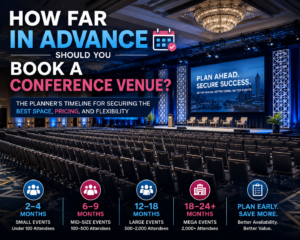
Most conferences should secure venues between 6 and 18 months in advance depending on attendee count, destination, and season. Small meetings can often be booked within a few months, while large conferences and trade shows frequently require a year or more of lead time. Early booking provides more venue choices, stronger negotiating power, and lower risk.
Starting your venue search?
Compare conference venues near you
See capacity and availability early, while you still have choices.
How Far in Advance to Book a Conference Venue: The Planner’s Timeline for Securing the Best Space
Picture this: your executive team finally approves the conference budget. The dates are selected, the attendee targets are finalized, and excitement is building. Then you start reaching out to venues only to discover that your preferred properties are already booked.
This scenario has become increasingly common across the United States. As conferences, trade shows, leadership summits, and association meetings continue to grow, competition for premium meeting space has intensified. For planners, one of the most important decisions is understanding exactly how far in advance to book a conference venue.
Booking too late can lead to higher costs, fewer venue choices, restrictive contracts, and unnecessary stress. Booking strategically, however, can unlock better rates, greater flexibility, and a stronger attendee experience.
Whether you’re organizing a corporate leadership summit, annual association conference, educational symposium, or multi-day trade show, having a clear venue sourcing timeline can dramatically improve your outcomes.
Many planners use platforms like greatEvent to streamline venue research, compare options, and simplify the sourcing process when evaluating multiple destinations.
In this guide, you’ll learn the ideal booking windows for different event types, the factors influencing venue availability, and the planning strategies that help professional event organizers secure the right space at the right time.
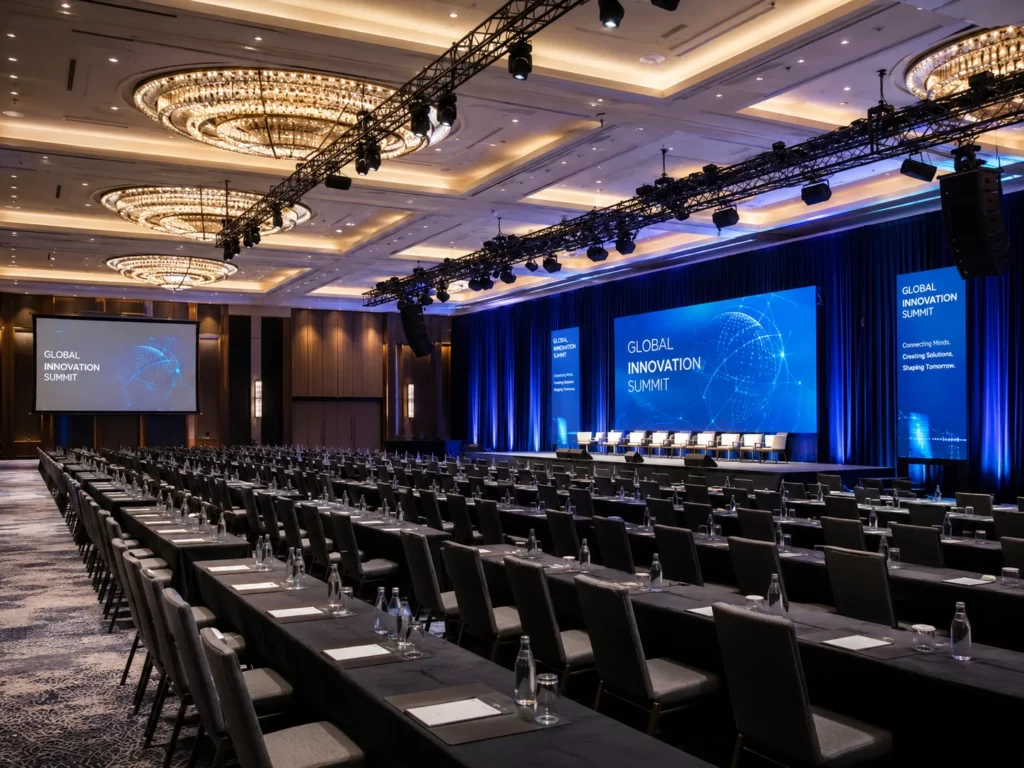
How Far in Advance Should You Book a Conference Venue?
The ideal booking timeline depends on several variables, including attendee count, destination, venue type, and event complexity. However, industry guidance consistently shows one trend: larger events require significantly more lead time.
For many conference planners, the venue search should begin before major marketing campaigns, registration launches, or sponsorship outreach. The venue often becomes the foundation upon which every other planning decision is built.
Recommended Conference Venue Booking Windows
| Conference Size | Corporate Events | Academic & Association Events | Trade Shows & Expos |
|---|---|---|---|
| Under 100 Attendees | 2–4 Months | 3–6 Months | 6–9 Months |
| 100–500 Attendees | 6–9 Months | 6–12 Months | 12–18 Months |
| 500–2,000 Attendees | 12–18 Months | 12–18 Months | 18–24 Months |
| 2,000+ Attendees | 18–24+ Months | 18–24+ Months | 24–36+ Months |
These timelines represent general planning benchmarks rather than rigid rules. A 500-person conference in a secondary market may secure space faster than a 200-person conference in Manhattan during peak season.
The key takeaway is simple: the larger the event, the earlier venue sourcing should begin.
Why Early Booking Creates More Opportunities
Starting early gives planners access to:
- Preferred event dates
- Larger venue inventory
- Better room block availability
- Stronger negotiating leverage
- More favorable contract terms
- Greater flexibility for attendee growth
It also reduces the likelihood of having to compromise on location, layout, guest experience, or budget.
Pro Tip: Many experienced planners begin preliminary venue conversations 18 months before major conferences, even if internal approvals are still pending. Early market intelligence helps avoid unpleasant surprises later.
Why Conference Venues Are Booking Earlier Than Ever
A decade ago, planners could often secure quality conference space with relatively short lead times. Today’s market looks very different.
Several factors have changed venue availability across the United States.
Growing Demand for In-Person Events
After years of uncertainty and virtual event adoption, organizations have renewed investments in face-to-face experiences. Leadership summits, industry conferences, customer events, and educational programs are once again filling convention calendars.
As a result, venues in major conference destinations are seeing increased competition for prime dates.
Peak Season Compression
Many organizations prefer hosting conferences during:
- Spring (March–May)
- Fall (September–November)
This concentration creates intense demand for meeting space during limited windows.
Conference planners targeting these periods often find themselves competing against corporate meetings, association conferences, trade shows, and incentive programs simultaneously.
Popular destinations such as New York, Chicago, Orlando, Las Vegas, San Diego, and Washington, DC continue attracting significant event demand.
While these cities offer substantial venue inventory, premium properties and convention spaces can still sell out surprisingly far in advance.
Increased Expectations from Attendees
Modern attendees expect:
- Convenient locations
- Updated meeting technology
- Flexible workspaces
- Premium networking environments
- High-quality hospitality experiences
Because of these expectations, planners are competing for a smaller subset of highly desirable venues rather than simply searching for available meeting rooms.
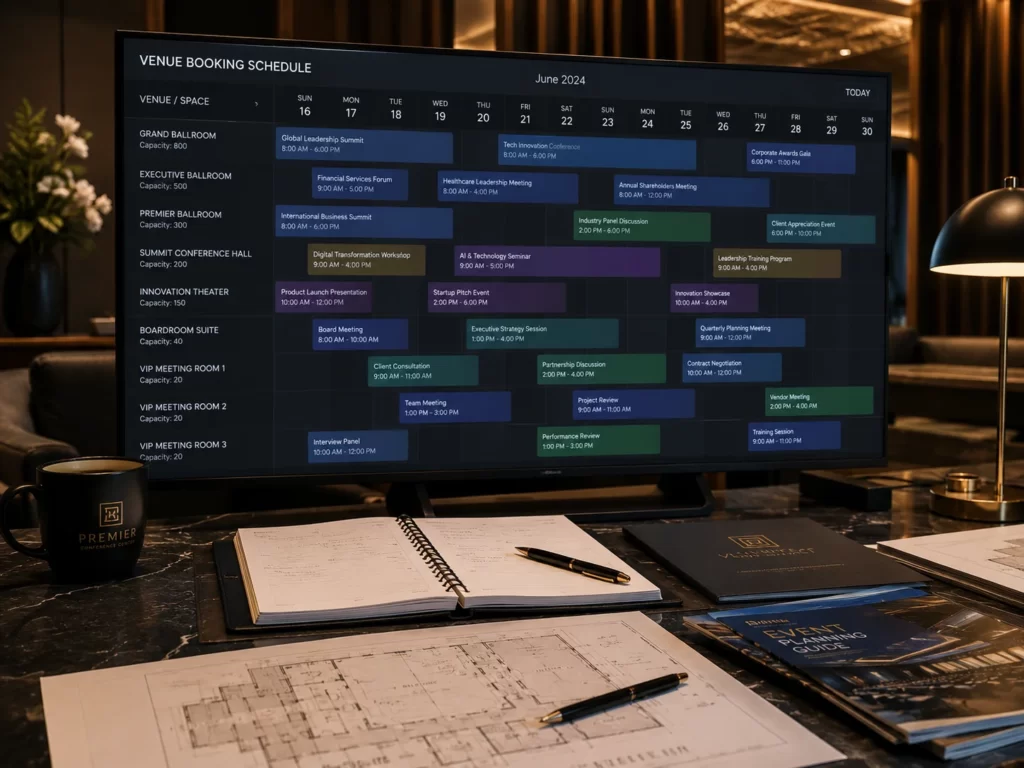
Conference Venue Booking Timeline by Event Size
Not all conferences face the same planning challenges. A 75-person executive retreat operates very differently from a 2,000-attendee trade show.
Understanding where your event falls on the spectrum helps establish realistic expectations.
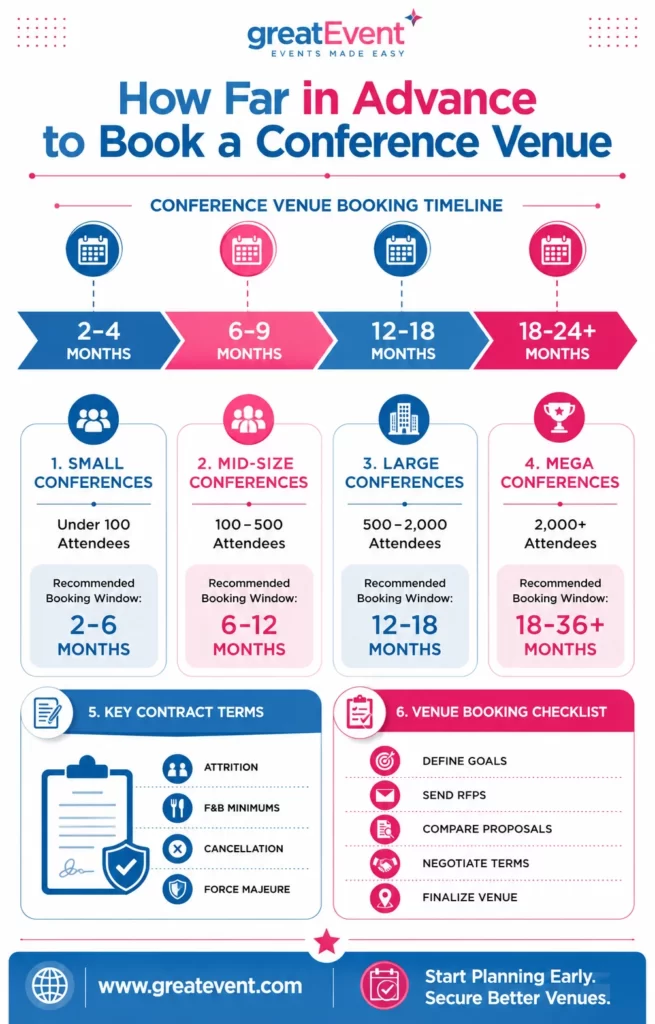
Small Conferences (Under 100 Attendees)
Smaller conferences generally enjoy the greatest flexibility.
Hotels, boutique venues, university facilities, and meeting centers often have more availability for these events, especially during weekdays.
Recommended booking window:
- Corporate meetings: 2–4 months
- Association meetings: 3–6 months
- Small educational events: 3–6 months
However, planners targeting high-demand cities or luxury properties should still start earlier whenever possible.
Mid-Size Conferences (100–500 Attendees)
This category represents one of the most competitive segments in the market.
These events require:
- Multiple breakout rooms
- Guest room blocks
- Food and beverage commitments
- Expanded AV requirements
Recommended booking window:
- Corporate conferences: 6–9 months
- Association events: 6–12 months
- Specialized industry meetings: 9–12 months
Budget planning becomes increasingly important at this stage. Before committing to venue proposals, many organizers evaluate broader event expenses to understand overall investment requirements. Reviewing how much event planners charge can help teams establish realistic planning budgets and avoid underestimating operational costs.
Large Conferences (500–2,000 Attendees)
Large conferences often require:
- Significant meeting space
- Extensive room blocks
- Dedicated exhibit areas
- Complex logistics coordination
Recommended booking window:
- 12–18 months minimum
For events occurring during peak conference seasons, planners frequently begin sourcing even earlier.
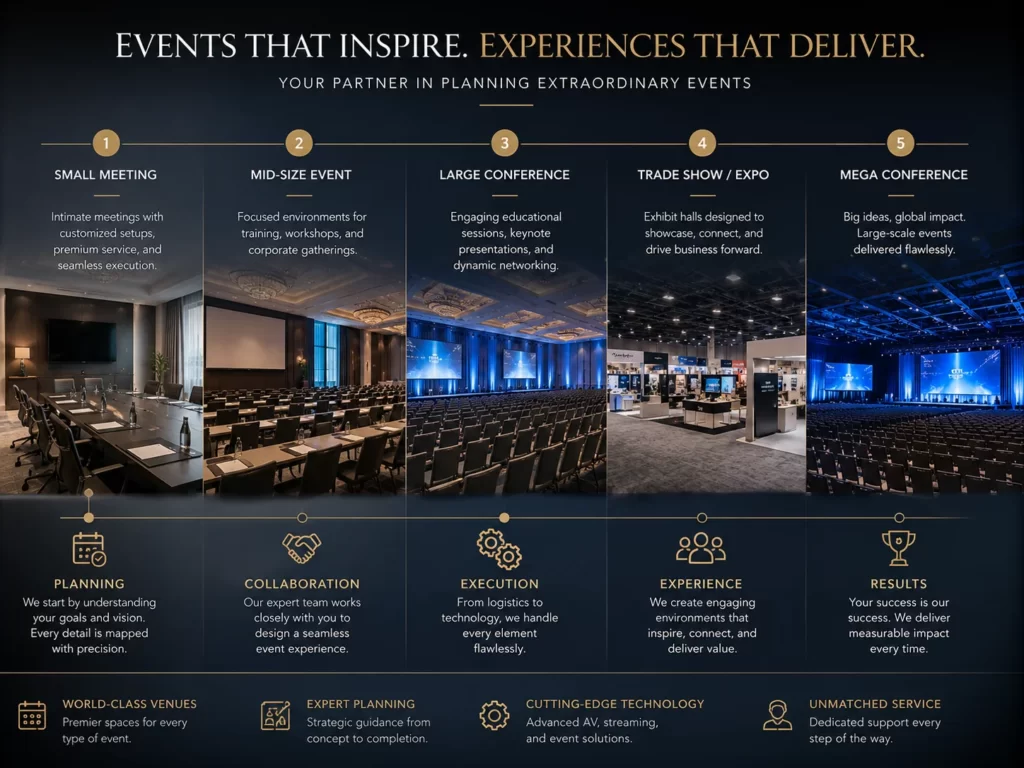
Conference Venue Booking Timeline by Event Size (Continued)
Mega Conferences and Trade Shows (2,000+ Attendees)
Mega-events face a completely different level of complexity.
These events often require:
- Convention centers
- Multiple hotels
- Extensive room block commitments
- Exhibit halls
- Transportation coordination
- Sponsor activations
- Dedicated production infrastructure
Recommended booking window:
- 18–24+ months for major conferences
- 24–36+ months for large trade shows and expos
For flagship industry events, some organizations reserve future dates years in advance to guarantee continuity and availability.
The earlier you begin, the more negotiating power you’ll retain throughout the process.
Factors That Affect How Early You Need to Book
Even events with identical attendee counts can require dramatically different booking timelines.
Here are the biggest variables influencing venue availability.
Destination Popularity
Location remains one of the strongest drivers of venue demand.
Cities like:
- New York
- Las Vegas
- Orlando
- Chicago
- Washington, DC
- San Diego
host thousands of conferences every year.
A 300-person conference in a secondary market may secure excellent space six months out, while the same event in Manhattan may require a year or more of lead time.
Venue Type
Not all venues operate on the same booking cycle.
Examples include:
- Convention centers
- Luxury conference hotels
- Boutique hotels
- University campuses
- Museums
- Historic venues
- Resort properties
Unique venues often have limited inventory and may book earlier than traditional conference facilities.
Event Season
Peak conference periods include:
- March through May
- September through November
During these windows, demand is highest and availability becomes increasingly limited.
Meanwhile, summer and early winter often provide:
- Better venue availability
- Lower room rates
- More contract flexibility
Room Block Requirements
Large guest room blocks significantly reduce venue options.
Hotels prioritize groups that generate substantial overnight revenue, making room block projections an important part of venue negotiations.
Conference Complexity
Events requiring:
- General sessions
- Breakout rooms
- Exhibitor space
- VIP functions
- Sponsor activations
typically need more planning time than straightforward meeting programs.

What Happens When You Wait Too Long?
Many planners underestimate the hidden costs of delaying venue sourcing.
The consequences extend far beyond simply having fewer venue choices.
Higher Venue Costs
As availability decreases, pricing typically increases.
Premium venues know that late-stage planners have fewer alternatives, reducing negotiating leverage.
This can affect:
- Venue rental
- Guest room rates
- Catering minimums
- AV pricing
- Service fees
Reduced Date Flexibility
Popular conference dates disappear quickly.
Instead of selecting ideal dates, planners often find themselves choosing from whatever remains available.
This can impact:
- Attendance
- Speaker availability
- Sponsor participation
- Hotel inventory
Increased Operational Stress
Every delayed venue decision compresses the planning timeline.
Marketing, registration, sponsorship sales, exhibitor outreach, and attendee communication all become more difficult when venue details remain uncertain.
Compromised Attendee Experience
Last-minute venue decisions may force organizers to accept:
- Poor room layouts
- Limited breakout space
- Inferior locations
- Reduced networking opportunities
Ultimately, attendees notice these compromises.
Pro Tip: If you’re within six months of your event and still searching for venues, immediately create a shortlist of backup destinations and alternative dates. Flexibility becomes your greatest asset during compressed timelines.
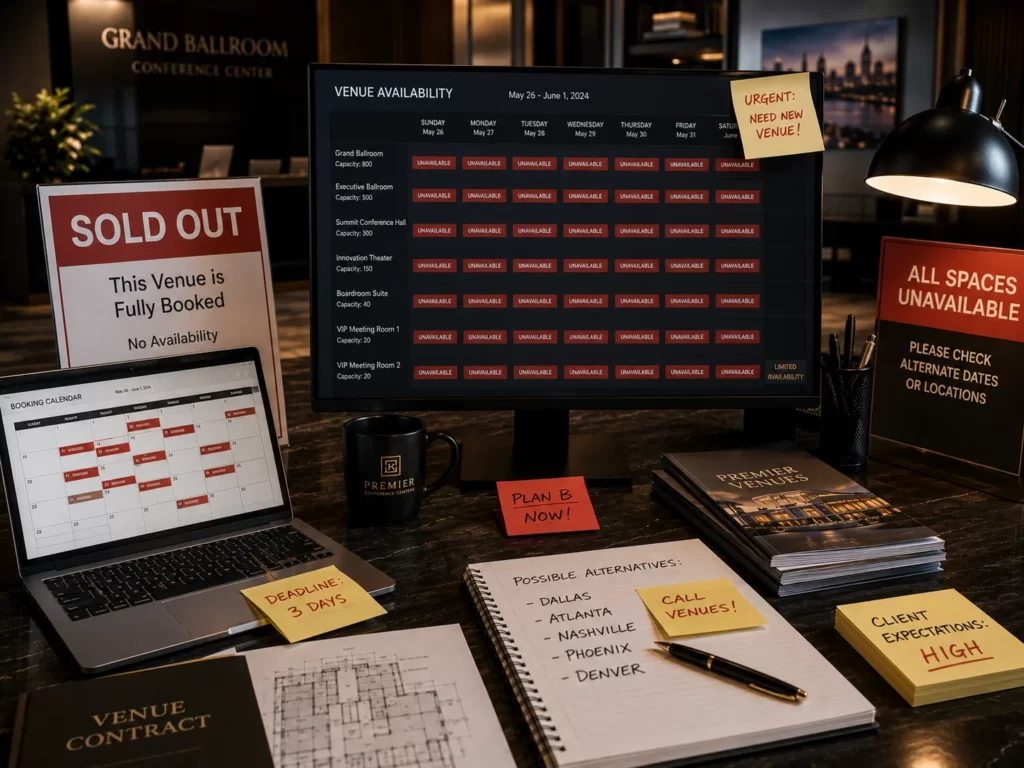
Conference Venue Contract Terms Every Planner Should Negotiate
Securing a venue isn’t just about availability.
The contract often has a greater financial impact than the venue itself.
Experienced planners know that negotiation begins long before signatures.
Attrition Clauses
Attrition penalties can become one of the largest unexpected expenses in conference planning.
Whenever possible, negotiate:
- Lower room pickup thresholds
- Flexible room block reductions
- Extended adjustment periods
A more forgiving attrition clause protects your budget if attendance projections change.
Food and Beverage Minimums
Many planners focus heavily on room rates while overlooking food and beverage commitments.
Always clarify:
- What counts toward the minimum
- Whether taxes are included
- Whether service charges apply
- Penalties for shortfalls
A seemingly attractive venue can become expensive if F&B requirements exceed realistic attendee spending.
Cancellation Provisions
No planner expects to cancel an event.
However, unforeseen circumstances occur.
Seek contract language that allows:
- Future event credits
- Deposit transfers
- Reasonable cancellation schedules
Flexibility today can save substantial costs tomorrow.
Force Majeure Clauses
This section deserves careful legal review.
Ensure the language clearly addresses:
- Natural disasters
- Government restrictions
- Travel disruptions
- Major emergencies
Ambiguous wording often creates disputes when organizations need protection most.
Room Block Cutoff Dates
Many attendees book accommodations late.
Negotiating later cutoff dates can improve pickup performance while reducing attrition exposure.
Insider Tip
When negotiating, focus on your event’s total economic impact.
Hotels evaluate far more than room revenue.
Consider highlighting:
- Catering spend
- Meeting room utilization
- Ancillary events
- Sponsor receptions
- Future event opportunities
The larger your overall value proposition, the stronger your negotiating position becomes.
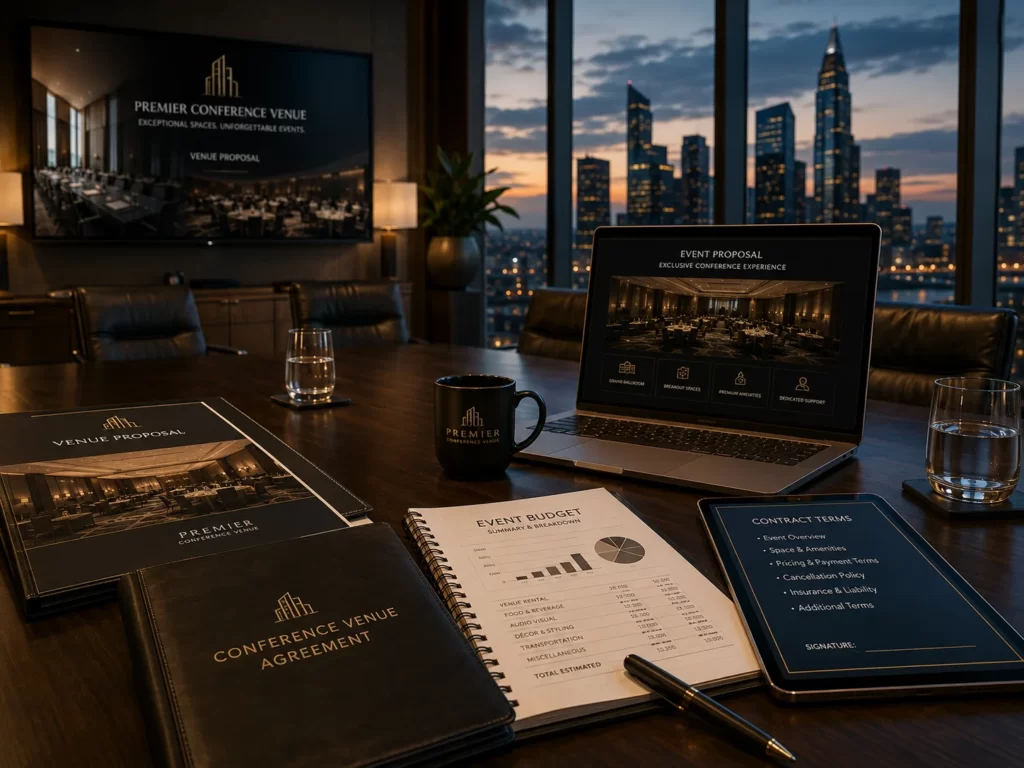
Managing Registration and Attendance Forecasting
Venue contracts become significantly easier to manage when attendance projections are accurate.
One of the most common causes of room block penalties and catering overages is poor forecasting.
Modern planners increasingly rely on invitation and registration platforms to monitor attendee engagement long before final guarantees are due.
Solutions like GE Invite help organizers manage invitations, track confirmations, automate reminders, and maintain more accurate attendance forecasts throughout the planning cycle.
Attendance forecasting also improves when planners establish clear RSVP deadlines and communication expectations early in the registration process.
Understanding proper RSVP etiquette and response management can improve response rates and provide more reliable attendee data before contractual deadlines arrive.
Why Early Venue Planning Creates Better Events
The benefits of early venue sourcing extend beyond logistics.
Starting earlier allows planners to:
- Secure better speakers
- Attract more sponsors
- Improve attendee experiences
- Increase registration confidence
- Reduce planning stress
- Strengthen financial forecasting
Organizations that plan proactively spend less time reacting to problems and more time creating memorable conference experiences.
Successful conferences rarely happen because of last-minute heroics.
They happen because critical decisions—especially venue selection—were made early and strategically.
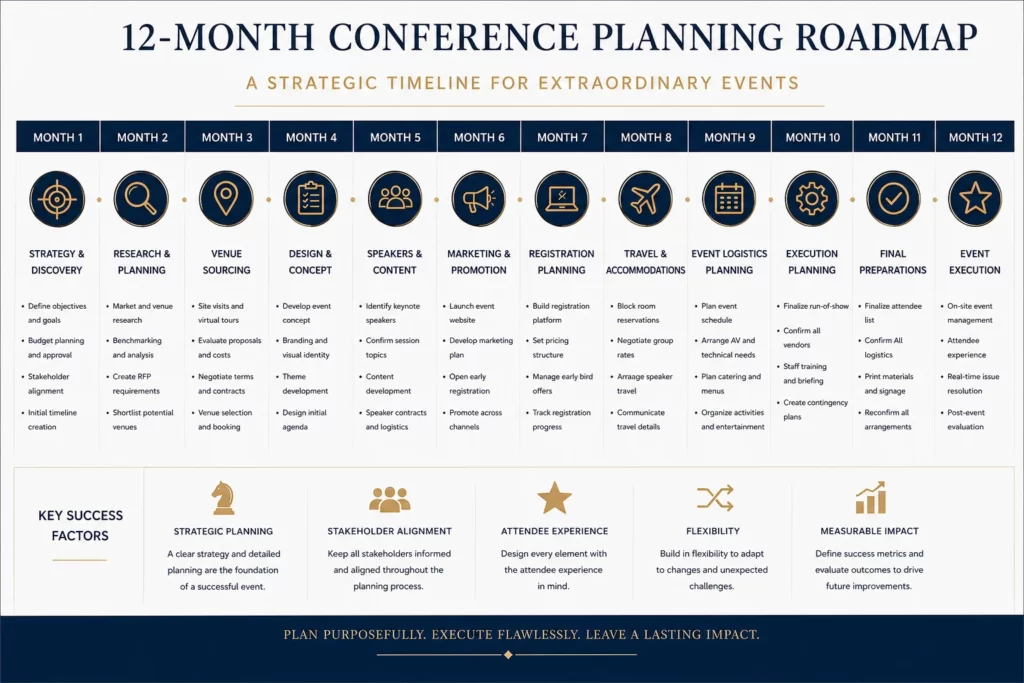
A 12-Month Conference Venue Planning Timeline
While every event is different, a structured timeline helps planners avoid rushed decisions and costly mistakes.
The following roadmap assumes a conference with approximately 300–1,000 attendees.
| Timeline | Key Actions |
|---|---|
| 12 Months Out | Define goals, establish budget, estimate attendance, identify destination preferences |
| 11 Months Out | Research venues, create RFP, develop venue shortlist |
| 10 Months Out | Send RFPs, review proposals, begin site inspections |
| 9 Months Out | Compare venues, negotiate pricing, evaluate room blocks |
| 8 Months Out | Finalize venue selection and contract |
| 7 Months Out | Secure catering, AV, transportation vendors |
| 6 Months Out | Launch registration and sponsorship sales |
| 5 Months Out | Finalize agenda structure and speaker commitments |
| 4 Months Out | Review registration pace and room block performance |
| 3 Months Out | Confirm attendee counts and catering estimates |
| 2 Months Out | Conduct venue walkthrough and operational review |
| 1 Month Out | Final confirmations, staff briefings, attendee communications |
Organizations that follow structured planning timelines generally experience fewer budget surprises and smoother event execution.
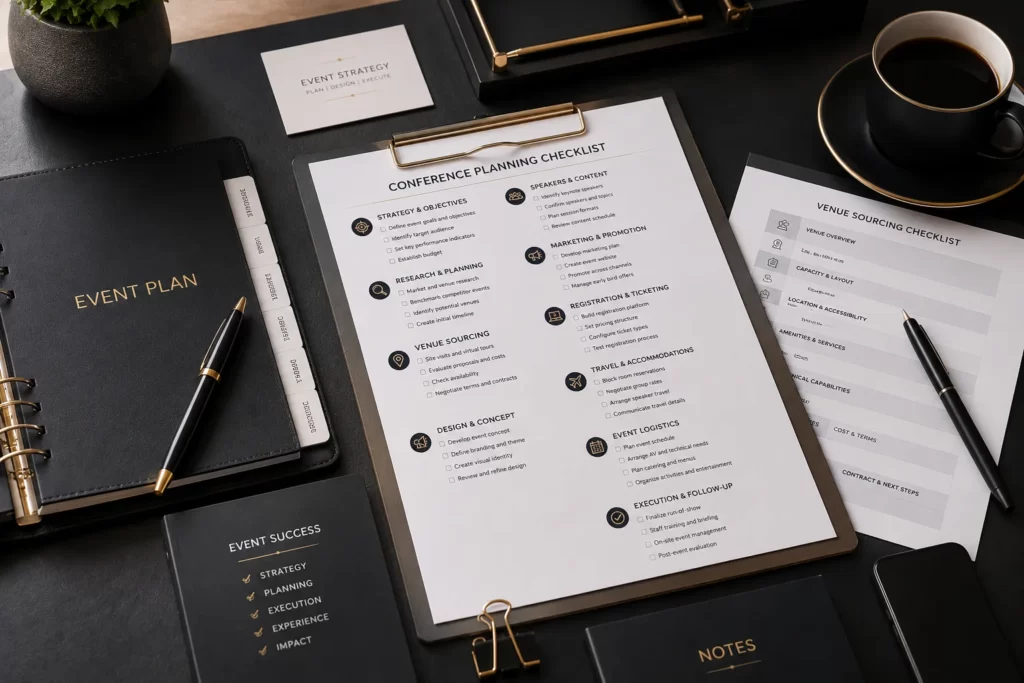
Conference Venue Booking Checklist
Before signing a venue contract, confirm that every major planning element has been reviewed.
Venue Selection Checklist
Event Strategy
✔ Define event objectives
✔ Establish budget
✔ Determine attendee profile
✔ Confirm target attendance
✔ Identify preferred destinations
Venue Research
✔ Create venue requirements list
✔ Develop RFP
✔ Compare multiple proposals
✔ Review venue layouts
✔ Verify meeting space capacity
✔ Review accessibility requirements
Contract Review
✔ Negotiate attrition clauses
✔ Review cancellation terms
✔ Verify F&B minimums
✔ Review force majeure language
✔ Confirm room block commitments
✔ Verify service fees and taxes
Operational Planning
✔ Secure AV provider
✔ Confirm catering requirements
✔ Launch registration
✔ Develop attendee communications
✔ Schedule venue walkthrough
✔ Finalize staffing plans
Pro Tip: Create a second checklist specifically for venue contract review. Many conference budget overruns originate from overlooked contract language rather than operational mistakes.
Sample Venue Inquiry Email
Subject:
RFP – [Conference Name] ([Preferred Dates])
Dear [Venue Sales Manager],
I am organizing [Conference Name], a [corporate/association/academic] event expected to attract approximately [X] attendees.
We are currently evaluating venues in [City] for [Month, Year] and require meeting space, breakout rooms, guest room accommodations, and catering services.
Could you please provide availability, room rates, meeting space pricing, food and beverage minimums, and any information regarding room block commitments?
We aim to finalize venue selection by [Date].
Thank you for your time and assistance.
Best regards,
[Your Name]
[Organization]
Sample Negotiation Email
Subject:
Contract Review for [Conference Name]
Dear [Venue Sales Manager],
Thank you for providing your proposal.
Before moving forward, we would appreciate clarification regarding the following items:
- Room block attrition requirements
- Room release deadlines
- Food and beverage minimum calculations
- Cancellation provisions
- Rebooking flexibility
- Force majeure protections
Our goal is to establish terms that support a successful partnership while providing reasonable flexibility should attendance projections change.
We look forward to discussing these points further.
Best regards,
[Your Name]
[Organization]
How greatEvent Helps Conference Planners Book Smarter
Conference venue sourcing often involves comparing dozens of proposals, evaluating room block commitments, reviewing contracts, and coordinating multiple vendors simultaneously.
This process becomes increasingly difficult as event size grows.
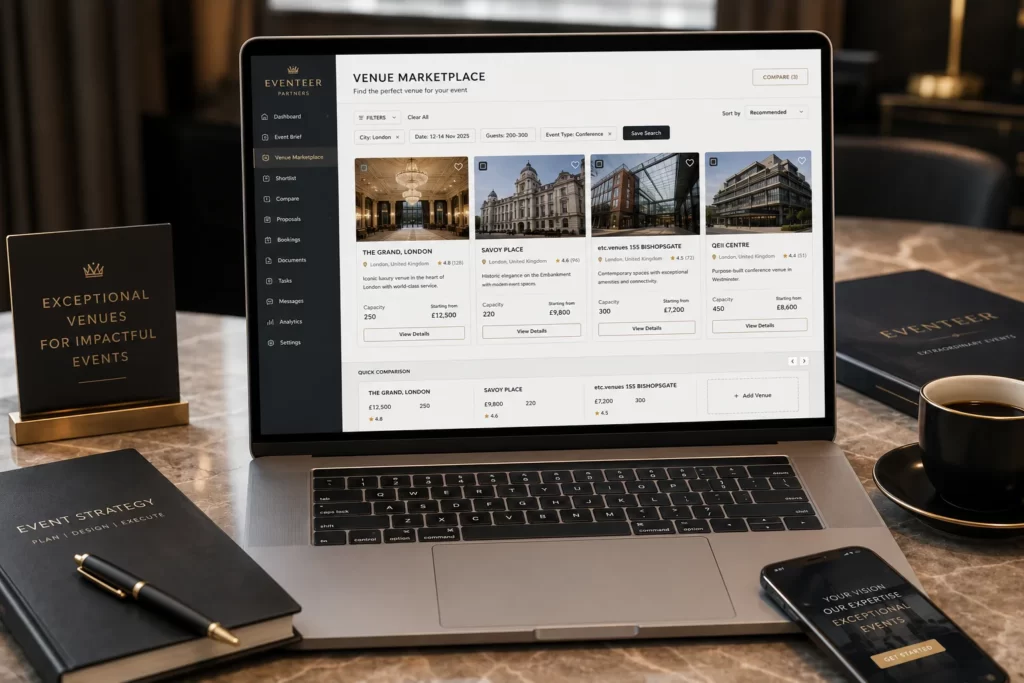
At greatEvent, planners can simplify venue discovery, compare event spaces more efficiently, and streamline the sourcing process across multiple destinations.
Many organizations begin by learning more about greatEvent’s event booking platform and how it supports venue selection, vendor management, and event planning workflows.
For conference teams evaluating multiple venue options, centralized planning tools can significantly reduce administrative workload while improving decision-making.
Conclusion
Choosing the right venue is one of the most important decisions in conference planning, and timing plays a critical role in securing the best outcome.
For smaller meetings, a few months may be sufficient. For larger conferences, industry events, and trade shows, planners should often begin venue sourcing 12 to 24 months in advance.
Early planning delivers more than venue availability. It provides stronger negotiating leverage, greater flexibility, better attendee experiences, and reduced operational risk.
The most successful conferences are rarely the result of last-minute decisions. They are the result of strategic planning, informed venue selection, and careful execution.
If you’re preparing for an upcoming conference and want to simplify venue sourcing, contract evaluation, and event planning, the team at greatEvent is ready to help. Visit the platform or contact the greatEvent team to explore venue options and start planning with confidence.
Ready to book?
Secure your conference venue
Browse conference venues near you and request dates.
Frequently Asked Questions
How far in advance should I book a conference venue? ▾
Most conferences should begin venue sourcing 6–18 months before the event. Larger conferences and trade shows often require 18–36 months of lead time.
What factors affect conference venue availability? ▾
Event size, destination popularity, seasonality, room block requirements, and venue type all influence how early you should begin the booking process.
How do I choose the right conference venue? ▾
Start by defining attendee needs, event objectives, budget, room requirements, and preferred location. Then compare multiple proposals and evaluate both venue features and contract terms.
Where can I find conference venues for corporate events? ▾
Conference venues can be sourced through venue marketplaces, destination management companies, convention bureaus, hotel sales teams, and event planning platforms such as greatEvent.
What is the best season to host a conference? ▾
Spring and fall remain the most popular conference seasons in the United States. However, summer and winter often provide better availability and more favorable pricing.
Compare vendors for your next event
Search caterers, photographers, florists, planners, and rentals — then send one request to several vendors at once.