TL;DR
A corporate offsite is designed for collaboration, strategic planning, and team building, while a conference focuses on education, networking, product launches, or large-scale communication. Choosing the right venue depends on your event objectives, attendee count, technology requirements, budget, and desired experience. Understanding these differences helps organizations maximize engagement and return on investment.
Not every business event needs a ballroom filled with keynote speakers. Likewise, not every leadership meeting belongs in a secluded mountain lodge.
The success of a corporate event often depends less on the agenda and more on whether the venue supports the purpose of the gathering. An executive strategy retreat requires privacy and collaboration, while a customer conference demands accessibility, technology, and space for larger audiences.
This is where many organizations make an expensive mistake. They choose a venue based on appearance or price instead of selecting one that aligns with the event’s objectives.
Whether you’re planning a leadership retreat, an annual sales kickoff, employee training, or an industry conference, understanding the differences between a corporate offsite and a conference helps you make better decisions from the start.
If you’re beginning your venue search, exploring corporate event venues is a practical first step. Comparing venue types early helps narrow your options before requesting proposals or building a budget.
In this guide, you’ll learn how corporate offsites and conferences differ, which venues work best for each format, how budgets compare, and what factors to consider before booking your next business event.
What Is a Corporate Offsite?
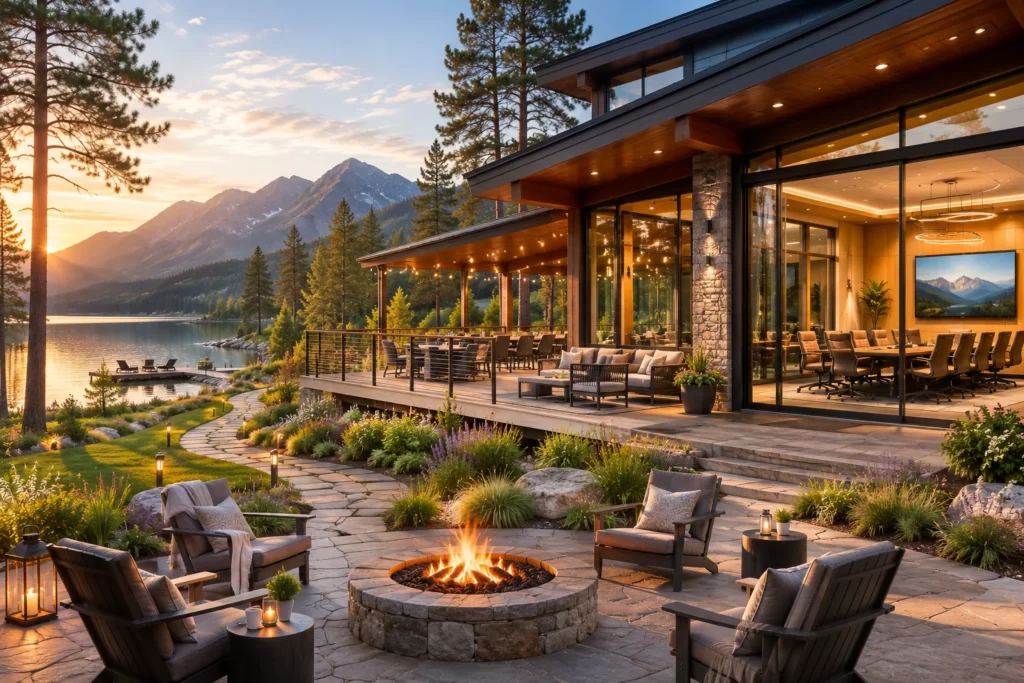
A corporate offsite is an internal business gathering held away from the company’s regular workplace. Rather than focusing on presentations or formal business sessions, these events are designed to encourage collaboration, strategic thinking, leadership development, and stronger relationships among employees.
Changing the environment is one of the biggest advantages of an offsite. By removing teams from their everyday routines, organizations create space for focused discussions, creative problem-solving, and long-term planning that would be difficult to achieve in a traditional office setting.
Corporate offsites commonly include:
- Leadership retreats
- Annual strategy sessions
- Department planning
- Innovation workshops
- Team-building activities
- Company culture initiatives
- Executive planning meetings
Popular venues include mountain lodges, lakeside resorts, ranches, boutique hotels, and dedicated retreat centers where meeting rooms are complemented by outdoor spaces and overnight accommodations. According to the research document, these environments are particularly effective for strengthening alignment, collaboration, and team connection.
If you’re evaluating venues that combine meeting facilities with accommodations and recreational amenities, learning more about the greatEvent booking platform can simplify your search.
What Is a Corporate Conference?
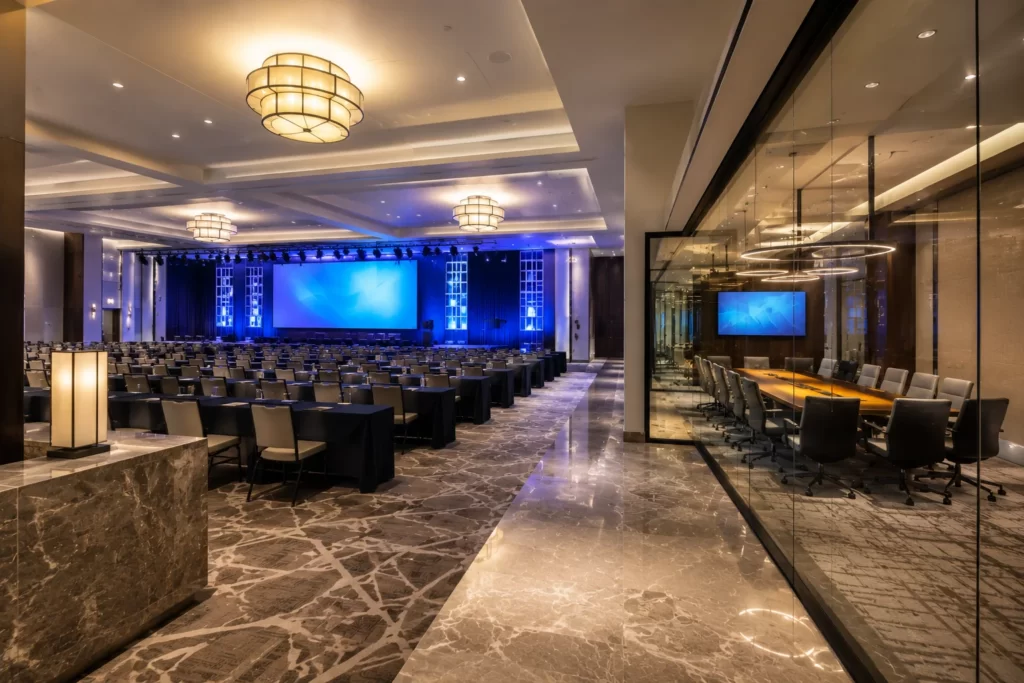
A corporate conference is a structured business event designed to educate, inform, or connect a larger audience. Unlike an offsite, a conference emphasizes presentations, professional networking, training sessions, and company-wide communication.
These events typically follow a detailed agenda that includes keynote speakers, breakout sessions, panel discussions, workshops, networking receptions, and product demonstrations. Many conferences also incorporate sponsor exhibitions, certification programs, or hybrid streaming for virtual attendees.
Because conferences often accommodate hundreds or even thousands of participants, they require venues with advanced audiovisual capabilities, flexible meeting spaces, reliable internet connectivity, registration areas, and professional event support.
Hotels, conference centers, and convention venues are the most common choices because they provide these services under one roof while offering convenient access to airports, public transportation, and nearby accommodations.
If your conference includes attendee invitations and RSVP management, tools like gE Invite can help simplify event communication before attendees arrive.
Corporate Offsite vs. Conference: Quick Comparison
| Feature | Corporate Offsite | Corporate Conference |
|---|---|---|
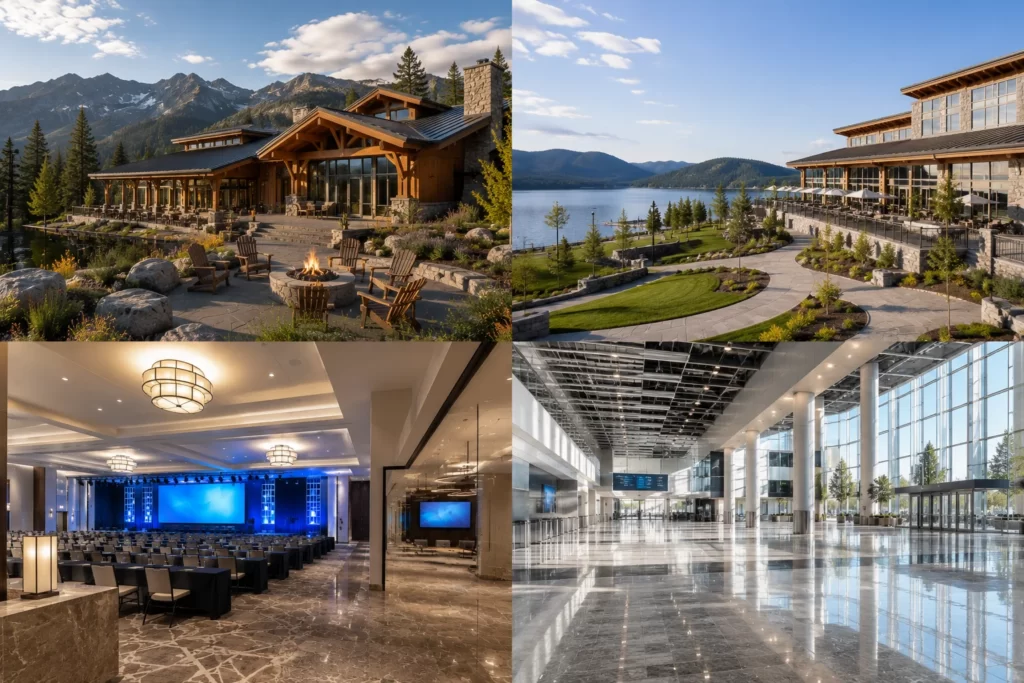
| Primary Purpose | Strategic planning and collaboration | Education and large-scale communication |
| Typical Audience | Internal employees and leadership | Employees, customers, partners, vendors |
| Group Size | 20–200 attendees | 100–5,000+ attendees |
| Venue Types | Retreat centers, resorts, lodges | Hotels, conference centers, convention venues |
| Technology | Standard meeting AV | Advanced production and hybrid technology |
| Atmosphere | Relaxed and collaborative | Professional and structured |
| Best For | Team alignment, leadership, innovation | Product launches, networking, training |
When Should You Choose a Corporate Offsite?
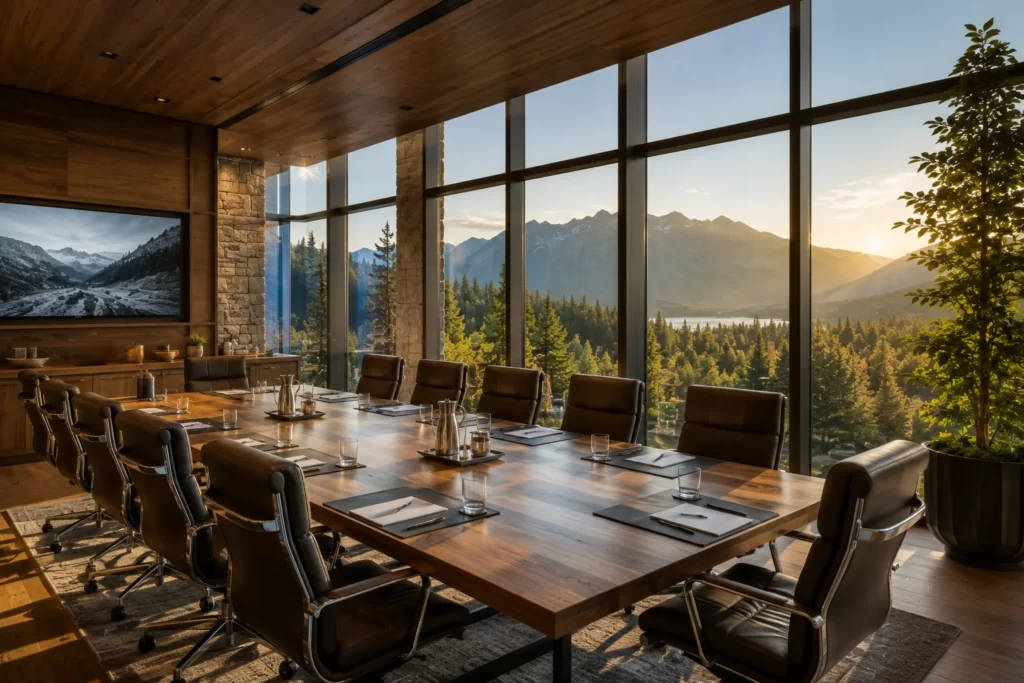
A corporate offsite is the right choice when your primary objective is to improve how people work together rather than simply share information. These events are intentionally designed to encourage meaningful conversations, creative thinking, and strategic planning in an environment free from everyday workplace distractions.
Unlike a conference, where attendees typically spend most of their time listening to presentations, an offsite emphasizes active participation. Teams collaborate through workshops, brainstorming sessions, leadership discussions, and informal networking that help strengthen relationships across departments.
Organizations often see the greatest value from an offsite when they’re navigating change, launching a new initiative, or investing in leadership development. The more collaborative your goals, the more beneficial an offsite becomes.
A Corporate Offsite Is Ideal For:
- Annual strategic planning
- Leadership retreats
- Company vision workshops
- Team-building initiatives
- Department planning sessions
- Cross-functional collaboration
- Innovation and brainstorming workshops
- Executive decision-making meetings
- Organizational culture development
Expert Tip: Choose a venue that minimizes distractions while still providing comfortable meeting spaces, overnight accommodations, and opportunities for informal conversations outside scheduled sessions.
When Is a Corporate Conference the Better Choice?
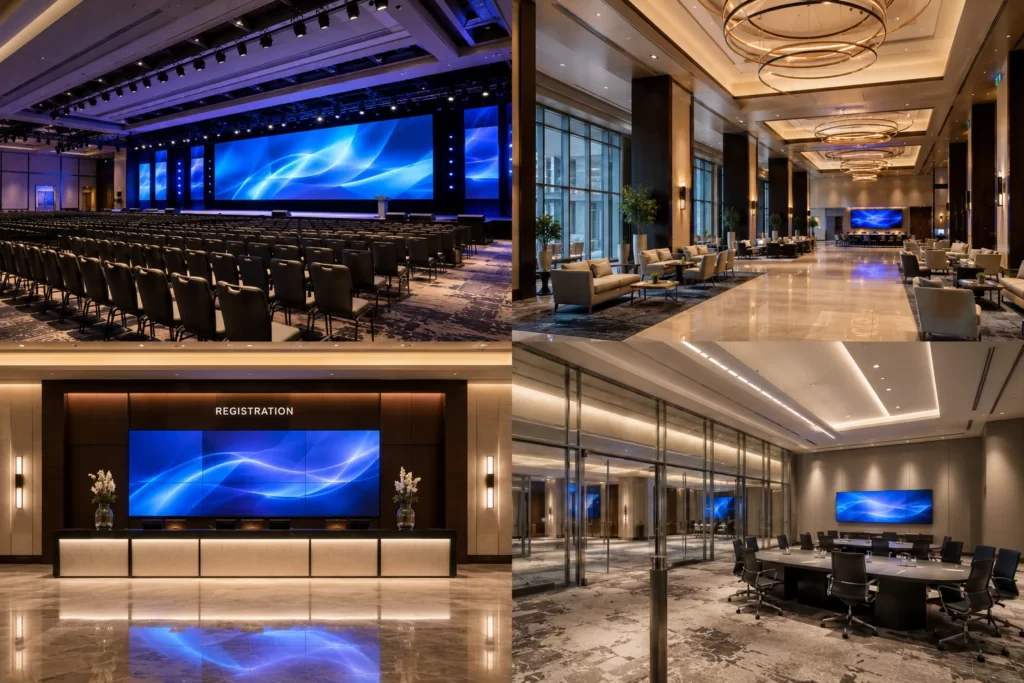
A conference is better suited for organizations that need to communicate information to a larger audience, provide structured education, or facilitate professional networking.
Because conferences are built around presentations, breakout sessions, keynote speakers, and scheduled agendas, they require venues capable of supporting larger attendee numbers and more sophisticated event production.
Whether you’re introducing a new product, hosting an annual company meeting, or bringing together customers and partners, a conference creates an organized environment where attendees can learn, connect, and share ideas efficiently.
A Conference Is Best For:
- Annual company meetings
- Sales kickoffs
- Customer conferences
- Product launches
- Professional training
- Industry networking events
- Partner summits
- Investor presentations
- Multi-day educational events
If your conference requires multiple meeting rooms, large-capacity spaces, and professional event infrastructure, comparing event venues can help you identify venues that support larger business gatherings.
Comparing Popular Venue Types
Choosing the right venue is about more than capacity. Layout, technology, accessibility, lodging, and overall guest experience all influence whether a venue supports your event objectives.
| Venue Type | Best For | Advantages | Considerations |
|---|---|---|---|
| Retreat Center | Leadership retreats | Quiet setting, outdoor activities, collaboration | Often farther from airports |
| Resort | Executive offsites | Lodging, recreation, premium amenities | Higher per-person cost |
| Business Hotel | Conferences | Convenient location, meeting rooms, accommodations | Less privacy |
| Conference Center | Large conferences | Extensive AV, breakout rooms, exhibition space | Can feel formal for small groups |
| University Campus | Training programs | Affordable classrooms and auditoriums | Seasonal availability |
| Unique Venue | Product launches | Memorable experience and branding opportunities | May require outsourced AV and catering |
According to the uploaded research, retreat centers and resorts generally provide the most immersive environments for strategy and team alignment, while hotels and conference centers excel at accommodating larger audiences with extensive technology and event support.
Pro Tip
Don’t compare venues solely by rental price. Evaluate what’s included, such as:
- Wi-Fi
- Projectors and screens
- On-site technical support
- Catering
- Parking
- Overnight accommodations
- Breakout rooms
- Transportation options
An all-inclusive package often delivers better value than a lower rental fee with multiple additional charges.
Venue Features to Evaluate Before Booking
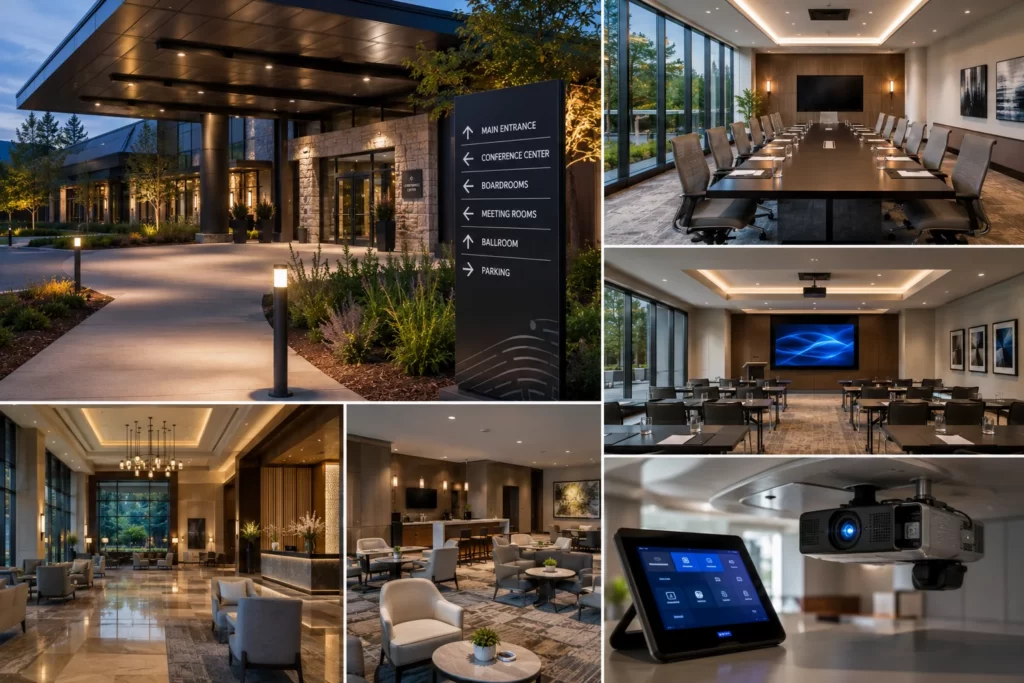
Regardless of whether you’re planning an offsite or conference, every venue should be evaluated against the same core planning criteria.
Capacity
Choose a venue that comfortably accommodates your attendees while leaving room for networking, breakout sessions, and circulation.
Meeting Room Layout
Consider how presentations, workshops, and collaborative discussions will take place.
Technology
Reliable Wi-Fi, microphones, projection systems, hybrid meeting capabilities, and dedicated AV support are essential for most corporate events.
Accessibility
Ensure the venue complies with ADA accessibility standards and provides convenient transportation options.
Parking
Free or nearby parking reduces attendee stress and improves arrival logistics.
Catering
Determine whether catering is provided in-house or requires outside vendors.
Overnight Accommodations
For multi-day events, on-site lodging minimizes travel time and keeps attendees engaged throughout the program.
Outdoor Spaces
Offsites especially benefit from outdoor breakout areas that encourage informal collaboration and creative thinking.
Planning Insight: Before requesting proposals, estimate your overall event space costs so you can compare venues using a realistic budget rather than rental price alone.
Corporate Offsite vs. Conference Budget Comparison
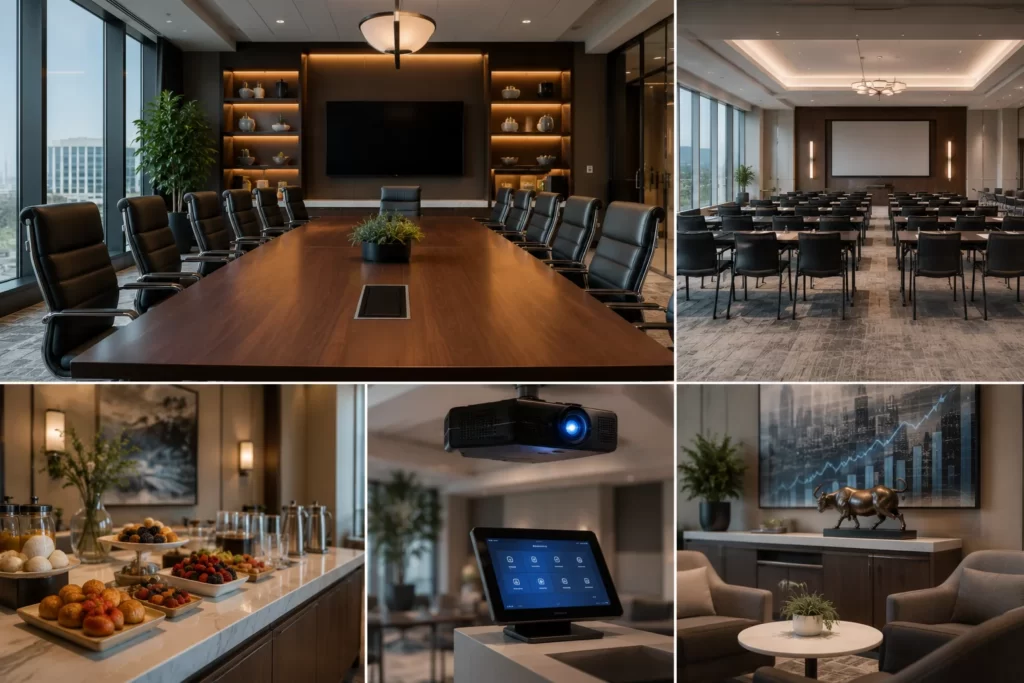
Venue costs vary significantly depending on location, season, amenities, and event complexity. While every event is different, the research provides realistic budgeting benchmarks for planning purposes.
| Expense | Corporate Offsite | Corporate Conference |
|---|---|---|
| Venue Rental | Moderate | High |
| Lodging | Usually Included | Hotel Block |
| Catering | Included in many packages | Often separate |
| AV Equipment | Basic | Advanced Production |
| Team Activities | Higher investment | Minimal |
| Registration | Limited | Significant |
| Staffing | Small planning team | Larger event team |
| Overall Budget | Moderate | Higher |
Typical Budget Drivers
- Destination
- Seasonality
- Catering
- Room block requirements
- Production quality
- Speaker fees
- Transportation
- Entertainment
Corporate Offsite vs. Conference: Which Business Goals Does Each Support?
Before comparing venues, define what success looks like for your event. A corporate offsite and a conference may both bring people together, but they achieve very different outcomes.
The research consistently shows that offsites are most effective for strategic alignment, collaboration, and strengthening company culture, while conferences excel at knowledge sharing, networking, and reaching larger audiences.
| Business Goal | Corporate Offsite | Corporate Conference |
|---|---|---|
| Strategic Planning | ⭐⭐⭐⭐⭐ | ⭐⭐☆☆☆ |
| Leadership Development | ⭐⭐⭐⭐⭐ | ⭐⭐☆☆☆ |
| Team Building | ⭐⭐⭐⭐⭐ | ⭐☆☆☆☆ |
| Product Launch | ⭐⭐☆☆☆ | ⭐⭐⭐⭐⭐ |
| Employee Training | ⭐⭐⭐☆☆ | ⭐⭐⭐⭐⭐ |
| Sales Kickoff | ⭐⭐⭐⭐☆ | ⭐⭐⭐⭐☆ |
| Networking | ⭐⭐☆☆☆ | ⭐⭐⭐⭐⭐ |
| Client Engagement | ⭐☆☆☆☆ | ⭐⭐⭐⭐⭐ |
| Recruiting | ⭐⭐☆☆☆ | ⭐⭐⭐⭐☆ |
| Company Culture | ⭐⭐⭐⭐⭐ | ⭐⭐☆☆☆ |
Key Takeaway
If your event is focused on people working with one another, an offsite is usually the better fit. If your priority is presenting information to a larger audience, a conference delivers greater value.
Corporate Offsite vs. Conference Planning Timeline
Successful corporate events begin months before attendees arrive. The earlier you define your objectives and secure the right venue, the more flexibility you’ll have with budgeting, scheduling, and vendor selection.
The uploaded research recommends beginning venue selection 4–6 months in advance for most corporate events, while larger conferences often require 6–12 months of planning.
| Timeline | Recommended Tasks |
|---|---|
| 6–12 Months Before | Define objectives, estimate budget, shortlist venues |
| 5–8 Months Before | Visit venues, compare proposals, negotiate contracts |
| 4–6 Months Before | Confirm venue, reserve hotel blocks, begin event marketing |
| 2–3 Months Before | Finalize agenda, catering, speakers, breakout sessions |
| 1 Month Before | Confirm attendee registrations, transportation, room layouts |
| Event Week | AV testing, signage, registration setup, final walkthrough |
If you’re working with multiple stakeholders or external vendors, understanding how much professional event planners charge can help determine whether outsourcing certain planning tasks fits your budget.
Corporate Event Venue Selection Checklist
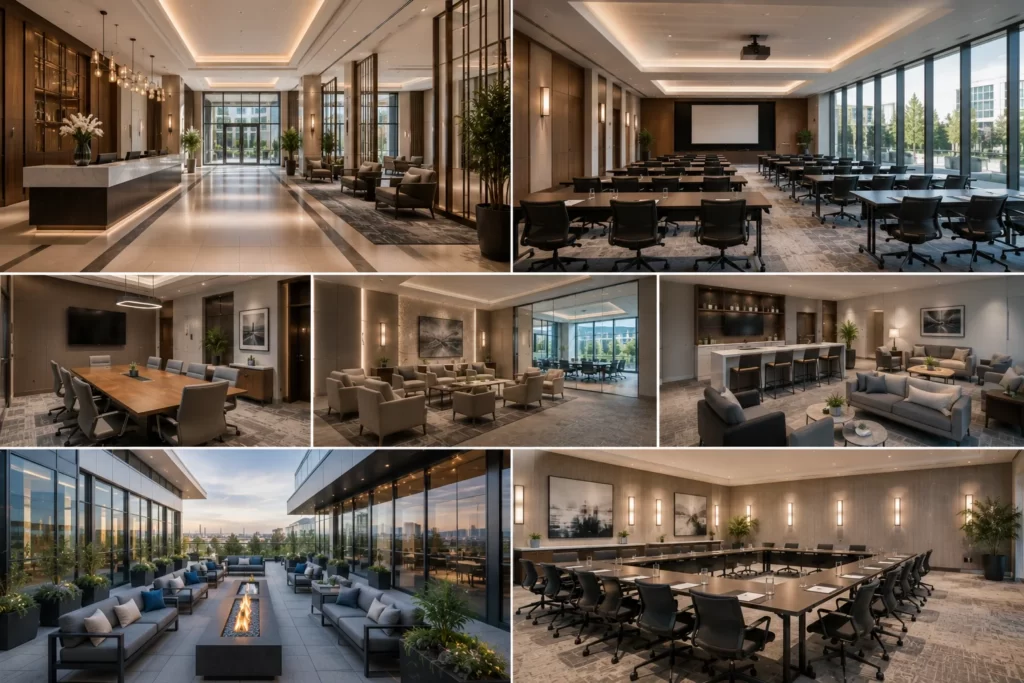
Before signing any venue agreement, evaluate every location using the same criteria. A structured checklist makes it easier to compare options objectively instead of relying on first impressions.
Location
- Easy airport access
- Nearby hotels
- Public transportation
- Local dining options
Capacity
- Comfortable seating
- Room for networking
- Flexible layouts
- Expansion options
Meeting Spaces
- Main presentation room
- Breakout rooms
- Private meeting areas
- Outdoor collaboration spaces
Technology
- High-speed Wi-Fi
- Projectors
- LED screens
- Hybrid meeting support
- Technical staff
Food & Beverage
- Catering flexibility
- Dietary accommodations
- Coffee breaks
- Reception options
Guest Experience
- Comfortable accommodations
- Accessibility
- Parking
- Wayfinding signage
- Recreational amenities
Pro Tip: Always request a detailed proposal listing exactly what’s included. Two venues with similar rental prices may differ significantly once AV equipment, catering, service fees, and labor costs are added.
Expert Tips for Choosing Between an Offsite and a Conference
Selecting the right venue isn’t just about availability—it should support the way attendees interact throughout the event.
Match the Venue to the Agenda : If your schedule includes brainstorming sessions, leadership workshops, and collaborative discussions, prioritize venues with flexible meeting rooms and informal gathering spaces.
Don’t Overlook Travel Logistics : A scenic retreat may sound appealing, but if attendees spend most of the day traveling, productivity suffers. Balance destination appeal with accessibility.
Evaluate Technology Early : Conference venues often include built-in audiovisual systems, while retreat venues may require additional equipment rentals. Clarify these costs before signing a contract.
Think Beyond Meeting Rooms : Outdoor patios, networking lounges, wellness spaces, and casual seating areas often become the most valuable locations for relationship-building during multi-day events.
Visit Before Booking : Virtual tours are helpful, but an in-person site visit allows you to evaluate room layouts, lighting, acoustics, and guest flow much more effectively.
Conclusion
Both corporate offsites and conferences play an important role in business growth, but they solve different challenges.
If your objective is to strengthen leadership, improve collaboration, encourage innovation, or align teams around long-term goals, a corporate offsite provides the focused environment needed for meaningful discussions and relationship-building.
If your priority is educating a larger audience, launching a product, delivering company-wide updates, or creating networking opportunities, a conference offers the structure, technology, and capacity to support those objectives.
Rather than asking which format is better, ask which one best supports your business goals.
Before selecting a venue, clearly define your objectives, attendee experience, budget, technology requirements, and logistical needs. When those factors align with the venue, your event becomes more productive, engaging, and memorable for everyone involved.
Whether you’re organizing a small executive retreat or a large-scale conference, investing time in choosing the right venue is one of the most important decisions you’ll make.
Ready to Find the Right Corporate Event Venue?
The right venue sets the tone for your entire event—from productive strategy sessions to successful conferences and networking experiences.
Browse corporate event venues to compare meeting spaces, resorts, hotels, conference venues, and unique event locations that match your business objectives. If you have questions or need assistance with your search, contact our team for guidance.
Frequently Asked Questions
What’s the difference between a corporate offsite and a conference? ▾
A corporate offsite is an internal event focused on collaboration, strategic planning, leadership development, and team building. A conference is a larger event designed for presentations, education, networking, product launches, or company-wide communication.
What type of venue is best for a corporate offsite? ▾
Retreat centers, resorts, mountain lodges, boutique hotels, and private estates are popular choices because they provide meeting spaces, overnight accommodations, outdoor activities, and a distraction-free environment.
How far in advance should I book a corporate conference venue? ▾
Most conferences should be planned at least 6–12 months in advance, especially if they’re scheduled during peak business seasons or require large venues. Smaller corporate meetings may only require 4–6 months of lead time.
How much does a corporate offsite typically cost? ▾
Costs vary depending on destination, accommodations, catering, transportation, and activities. Mid-range corporate offsites generally have lower production costs than conferences but often include overnight lodging and team-building experiences.
Should I hire an event planner for a corporate event? ▾
If your event includes multiple venues, speakers, vendors, or several hundred attendees, working with an experienced event planner can simplify logistics and improve the attendee experience. Smaller internal offsites may be managed successfully by an internal planning team.
Compare vendors for your next event
Search caterers, photographers, florists, planners, and rentals — then send one request to several vendors at once.