TL;DR
The right product launch event venue does more than accommodate guests—it shapes your brand’s first impression. From AV capabilities and venue layout to accessibility, branding opportunities, and logistics, this guide explains how to evaluate, compare, and book a venue that supports a successful product launch. You’ll also find expert planning tips, venue comparisons, negotiation strategies, and a practical checklist based on real-world event planning practices.
Table of Contents
- Why Your Product Launch Venue Matters
- What Makes a Great Product Launch Event Venue?
- How to Plan a Product Launch Event
- Product Launch Venue Checklist
- Venue Types Compared
- Budget Planning
- Venue Walkthrough Guide
- Questions to Ask Venue Managers
- Contract Negotiation Tips
- Common Mistakes to Avoid
- Risk & Contingency Planning
- Final Venue Checklist
- FAQs
Introduction
Launching a new product is one of the most important moments for any business. It’s your opportunity to introduce an innovation, generate excitement, build credibility, and create memorable experiences for customers, media representatives, investors, and business partners. While the product itself takes center stage, the product launch event venue plays an equally important role in shaping how your audience experiences your brand.
The best product launches aren’t defined by extravagant décor or the largest guest lists—they’re remembered because every detail works together seamlessly. From the moment attendees arrive to the final product reveal, your venue should support presentations, demonstrations, networking, media coverage, and guest comfort without creating unnecessary logistical challenges. According to industry best practices, successful venue selection extends beyond capacity and focuses on accessibility, technical infrastructure, branding opportunities, attendee flow, vendor logistics, and overall experience design.
Before comparing venues, it’s helpful to understand how much event spaces typically cost so you can build a realistic budget, compare rental options, and avoid unexpected expenses during the planning process.
If your launch requires multiple vendors, media coordination, or a complex production schedule, learning how much it costs to hire a corporate event planner can help you determine whether professional planning support fits your event goals and budget.
Throughout this guide, you’ll discover how to compare venue types, conduct productive site visits, negotiate contracts, and use a practical product launch venue checklist that helps you avoid common mistakes while creating an exceptional launch experience.
Key Takeaway
The best product launch venues don’t simply host events—they enhance your product story. Every decision, from venue layout and audiovisual capabilities to accessibility and branding opportunities, should support the experience you want guests to remember.
Why Your Product Launch Venue Matters
A product launch is often the first in-person interaction that customers, journalists, influencers, investors, and business partners have with your newest offering. The venue becomes an extension of your brand, influencing how attendees perceive your company long before the presentation begins.
An effective venue should support far more than seating arrangements. It should create an environment where presentations feel polished, product demonstrations run smoothly, networking happens naturally, and media teams can comfortably capture photos and video. The right setting also helps reinforce your brand identity—whether you’re introducing cutting-edge technology, unveiling a luxury product, or showcasing an innovative consumer service.
When evaluating venues, it’s equally important to understand the operational side of event planning. Knowing the difference between event planners and event coordinators can help you decide which type of professional support best matches the complexity of your launch.
Venue selection should also account for practical considerations that guests may never notice when everything runs smoothly, including:
- Convenient parking and transportation access
- ADA accessibility
- High-speed Wi-Fi and reliable power
- Flexible staging and presentation areas
- Loading docks and vendor access
- Backstage preparation rooms
- Catering flexibility
- Comfortable networking spaces
- Security and emergency planning
Each of these elements contributes to a seamless guest experience and reduces the likelihood of last-minute operational issues. As highlighted throughout your source document, successful product launches prioritize both experience design and logistical planning rather than focusing solely on venue aesthetics.
Businesses looking for inspiration beyond traditional hotel ballrooms can also explore event venues in Washington, DC or browse hidden gem event venues in Washington, DC to see how different venue styles support networking events, product launches, and corporate gatherings.
Expert Insight
Choosing a venue based only on capacity is one of the most common planning mistakes. Instead, evaluate how well the space supports your product demonstrations, technical requirements, guest journey, and brand story. A venue that aligns with your event objectives will almost always deliver a stronger experience than one chosen solely for its size or prestige.
What Makes a Great Product Launch Event Venue?
Selecting a product launch event venue is about far more than finding a space that fits your guest list. The right venue becomes part of your launch strategy, helping you tell your brand story, support product demonstrations, encourage networking, and ensure every technical and logistical element runs smoothly. Industry guidance consistently emphasizes that successful venue selection balances attendee experience with operational planning, from accessibility and staging to internet reliability and vendor logistics.
Instead of asking, “Can this venue hold 200 people?” ask, “Can this venue deliver the experience our audience expects?”
The 10 Essentials Every Product Launch Venue Should Offer
Use this checklist before shortlisting or booking any venue.
| Venue Requirement | Why It Matters | Priority |
|---|---|---|
| Location & Accessibility | Makes it easier for guests, media, and vendors to attend | ⭐⭐⭐⭐⭐ |
| Flexible Layout | Supports presentations, networking, and product demos | ⭐⭐⭐⭐⭐ |
| High-Speed Internet | Essential for live streaming, demos, and guest connectivity | ⭐⭐⭐⭐⭐ |
| AV & Lighting | Creates a professional presentation experience | ⭐⭐⭐⭐⭐ |
| Branding Opportunities | Reinforces your brand identity throughout the event | ⭐⭐⭐⭐☆ |
| Vendor Access | Simplifies setup and teardown | ⭐⭐⭐⭐☆ |
| Catering Options | Enhances guest satisfaction | ⭐⭐⭐⭐☆ |
| Parking & Transportation | Improves attendee convenience | ⭐⭐⭐⭐☆ |
| Green Rooms & Storage | Supports presenters and event staff | ⭐⭐⭐⭐☆ |
| Backup Plans | Reduces risks from unexpected issues | ⭐⭐⭐⭐⭐ |
1. Choose a Venue That Supports Your Brand Story
Every product launch tells a story. Your venue should reinforce that narrative rather than compete with it.
For example:
- A luxury watch launch feels more authentic inside a boutique hotel or museum.
- A SaaS product benefits from a sleek technology-focused venue with advanced digital infrastructure.
- A sustainable consumer brand may align better with an eco-certified venue featuring natural materials and energy-efficient operations.
The venue itself should communicate your brand values before guests even see the product.
For inspiration, browse unique event venues in Washington, DC that showcase a variety of spaces suitable for corporate launches, networking events, and executive presentations.
Expert Tip
If the venue looks impressive but doesn’t support your presentation style, product demonstrations, or guest journey, it’s probably the wrong choice.
2. Prioritize Location and Accessibility
Even the most impressive venue loses value if attendees struggle to reach it.
When evaluating locations, consider:
- Nearby airports
- Public transportation
- Hotel availability
- Parking capacity
- Ride-share accessibility
- ADA compliance
- Safe surrounding neighborhood
Remember that journalists, influencers, executives, vendors, and VIP guests often arrive on different schedules. Convenient access improves attendance and creates a better first impression. The source material also recommends confirming ramps, elevators, accessible restrooms, and other ADA features early in the selection process.
3. Look Beyond Capacity
One of the biggest mistakes businesses make is choosing a venue based solely on guest count.
Instead, evaluate how the space functions throughout your event.
Ask yourself:
- Where will guests register?
- Where will networking happen?
- Is there room for product demonstrations?
- Can media record interviews without disrupting attendees?
- Is there enough backstage space?
- Can guests move comfortably between different areas?
A venue with room for 250 people may still feel cramped if there are no breakout areas or dedicated networking spaces.
Venue Evaluation Scorecard
Print or save this scorecard when visiting venues.
| Category | Score (1–5) |
|---|---|
| Brand Fit | ☐ |
| Accessibility | ☐ |
| Parking | ☐ |
| AV Equipment | ☐ |
| Internet Quality | ☐ |
| Stage Visibility | ☐ |
| Acoustics | ☐ |
| Networking Space | ☐ |
| Vendor Access | ☐ |
| Catering Flexibility | ☐ |
| Overall Experience | ☐ |
4. Technology Can Make or Break Your Launch
Modern product launches rely heavily on technology.
Your venue should comfortably support:
- Large LED displays
- Wireless microphones
- Product demonstrations
- Hybrid presentations
- Live streaming
- Interactive displays
- High-speed Wi-Fi
- Charging stations
- Backup power
Testing every technical component before signing a contract is just as important as testing it on event day. Industry recommendations suggest verifying internet bandwidth, available power circuits, lighting systems, sound quality, and backup power solutions before confirming a venue.
Planning Insight
If you’re budgeting for staging, audiovisual equipment, and venue rental, understanding typical corporate event costs per attendee can help you estimate your overall event investment more accurately.
5. Don’t Overlook Vendor Logistics
Guests may never notice efficient logistics—but they’ll definitely notice when something goes wrong.
During your site visit, inspect:
- Loading docks
- Freight elevators
- Vendor entrances
- Equipment storage
- Setup timelines
- Delivery restrictions
- Union labor requirements (if applicable)
If vendors struggle to unload equipment or access the venue, setup delays can affect the entire event schedule. Your source document specifically recommends reviewing loading dock dimensions, elevator sizes, delivery windows, and vendor staging areas before booking.
Common Mistakes to Avoid
- Choosing a venue because it “looks impressive”
- Assuming Wi-Fi is fast enough without testing it
- Ignoring loading dock access
- Forgetting backup power requirements
- Underestimating networking space
- Not reviewing vendor restrictions
- Waiting until event day to test AV equipment
- Overlooking accessibility requirements
Pro Tip
Whenever possible, visit shortlisted venues during the same time of day your event will take place. You’ll get a much better understanding of natural lighting, parking availability, traffic patterns, and overall guest experience than you would during a standard daytime tour.
Looking for Flexible Venue Ideas?
Not every product launch needs a traditional ballroom. Many brands are choosing flexible spaces that create more immersive experiences for guests. Exploring pop-up event venues with hourly rentals can be a smart option for product showcases, media previews, or limited-time brand activations.
Similarly, if you’re planning an outdoor launch, reviewing an outdoor event venue guide can help you prepare for weather, power requirements, guest comfort, and contingency planning before making a final decision.
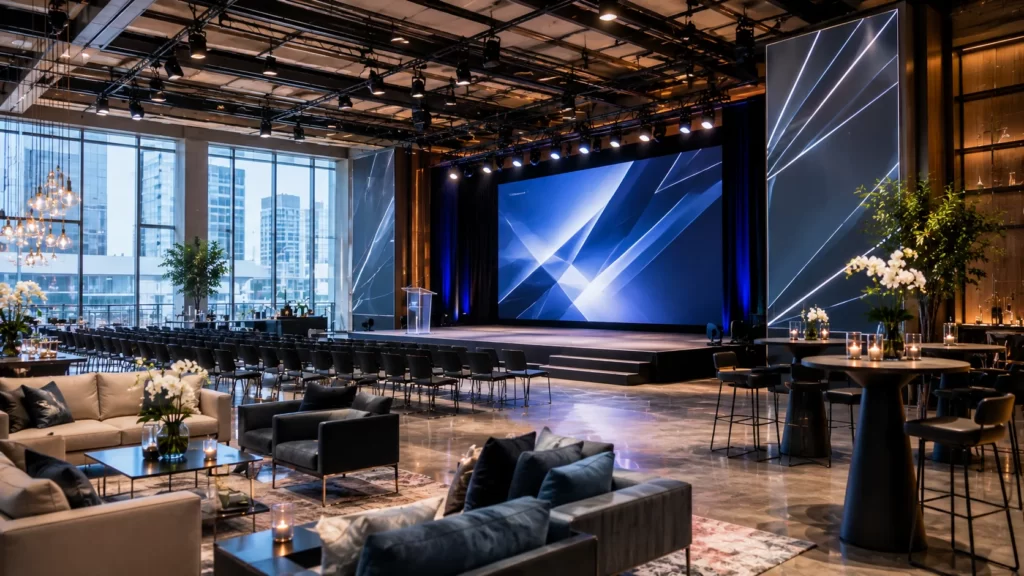
How to Plan a Product Launch Event: A Step-by-Step Guide
A successful product launch doesn’t happen overnight. Behind every memorable unveiling is a structured planning process that aligns marketing, operations, venue logistics, technology, and guest experience. Starting early gives your team enough time to compare venues, coordinate vendors, test equipment, and adapt if unexpected challenges arise.
While every launch is different, the planning process generally follows the same progression: define objectives, set a budget, secure the right venue, coordinate vendors, prepare your event experience, and execute with confidence. The venue selection checklist in your source document reinforces the importance of addressing logistics, technical infrastructure, accessibility, and contingency planning from the very beginning rather than treating them as last-minute tasks.
Product Launch Planning Timeline
| Timeline | Primary Focus |
|---|---|
| 4–6 Months Before | Set goals, budget, shortlist venues |
| 3–4 Months Before | Book venue, hire vendors, develop branding |
| 2 Months Before | Finalize AV, catering, event schedule |
| 1 Month Before | Site visit, technical rehearsals, confirm logistics |
| 1 Week Before | Vendor confirmations, attendee communication |
| Event Day | Execute the launch and monitor operations |
| After the Event | Review performance and gather feedback |
Step 1: Define Your Launch Objectives
Every decision that follows should support a clearly defined objective.
Ask your team:
- Are you introducing a brand-new product?
- Generating media coverage?
- Attracting investors?
- Building customer awareness?
- Strengthening relationships with partners?
- Demonstrating product capabilities?
When objectives are clear, selecting the right corporate launch event space becomes much easier because you’ll know exactly what your venue needs to support.
Goal Planning Checklist
✔ Product awareness
✔ Lead generation
✔ Media exposure
✔ Customer engagement
✔ Investor relations
✔ Brand positioning
✔ Product demonstrations
✔ Networking opportunities
Planning Tip
If you’re hiring outside help to coordinate vendors, production schedules, and event logistics, reviewing how much it costs to hire a corporate event planner can help you determine whether professional planning support fits your budget and event complexity.
Step 2: Build a Realistic Budget
One of the biggest planning mistakes is focusing only on venue rental costs.
Instead, create a comprehensive event budget that includes every major expense.
| Budget Category | Considerations |
|---|---|
| Venue Rental | Daily or hourly rates |
| Catering | Meals, refreshments, dietary accommodations |
| AV Equipment | LED walls, microphones, lighting, staging |
| Internet | Dedicated bandwidth for streaming and demos |
| Furniture | Lounge seating, registration tables, displays |
| Décor & Branding | Banners, backdrops, signage |
| Photography & Video | Event documentation and marketing assets |
| Security | Crowd management and VIP access |
| Insurance | Venue and liability requirements |
| Contingency Fund | Unexpected expenses |
Remember that some venues include services like furniture, parking, Wi-Fi, or in-house AV, while others charge separately. Requesting an itemized proposal makes it much easier to compare venues fairly. The source document also recommends comparing venues based on total cost rather than rental price alone to avoid overlooking service charges, taxes, internet fees, labor, or overtime costs.
Before requesting proposals, familiarize yourself with event space costs and common venue pricing structures so you know which fees are standard and which are negotiable.
Expert Insight
The least expensive venue isn’t always the most affordable option. Hidden fees for internet upgrades, security, overtime, furniture rentals, or mandatory vendors can significantly increase your final cost.
Step 3: Shortlist the Right Venues
With your goals and budget established, you can begin evaluating potential venues.
Instead of selecting the first venue that meets your capacity requirements, compare multiple locations using consistent criteria.
Your shortlist should evaluate:
- Brand compatibility
- Capacity
- Accessibility
- Parking availability
- AV capabilities
- Internet reliability
- Product demonstration space
- Networking areas
- Vendor access
- Catering policies
- Security
- Backup options
Creating a standardized evaluation process makes it easier to compare venues objectively instead of relying on first impressions.
If you’re looking for inspiration, browsing event venues in Washington, DC can help you explore how different venue styles accommodate corporate gatherings, networking events, and product launches.
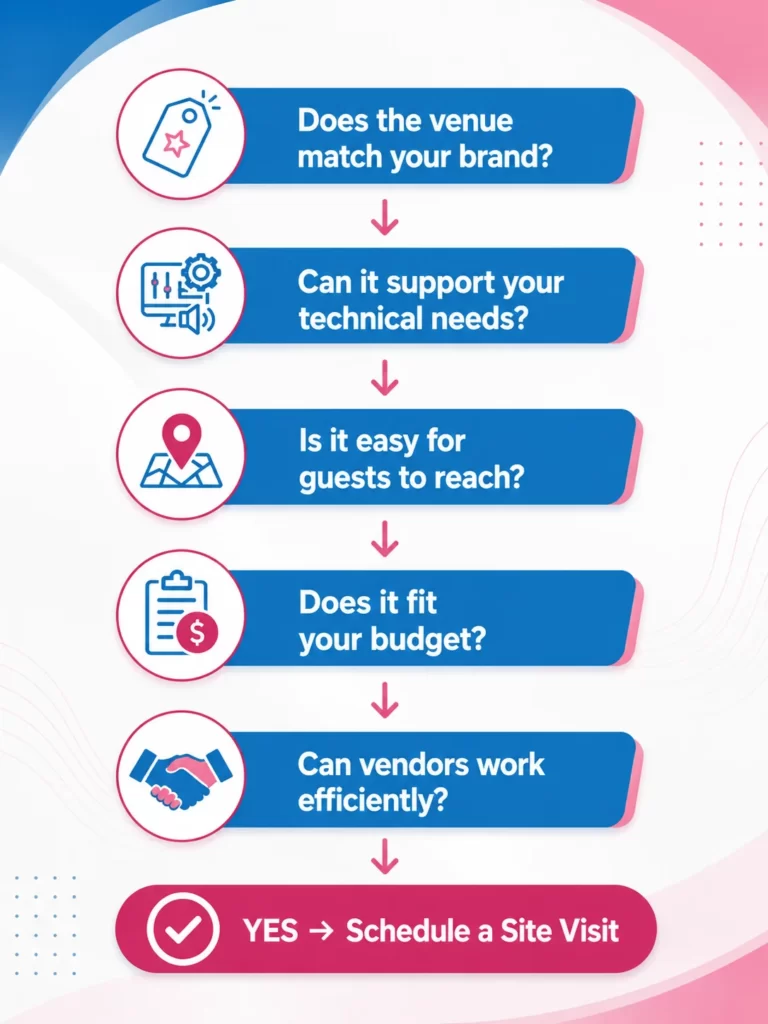
Product Launch Venue Decision Framework
Use this simple framework before moving any venue to your final shortlist.
Step 4: Coordinate Vendors Early
Your venue is only one piece of the overall experience.
Other vendors often include:
- Caterers
- AV production teams
- Photographers
- Videographers
- Florists
- Furniture rental companies
- Entertainment providers
- Registration teams
Before confirming vendors, review the venue’s policies regarding approved suppliers, exclusive contracts, outside catering, insurance requirements, and setup schedules. According to your source material, these restrictions should be clarified before signing the venue agreement to prevent scheduling conflicts or unexpected fees later in the planning process.
If you’re unsure who should oversee these moving parts, understanding the responsibilities of event planners versus event coordinators can help you assign responsibilities more effectively.
Common Planning Mistakes
Avoid these issues during the planning phase:
- Booking a venue before defining event goals
- Ignoring attendee experience
- Underestimating setup time
- Waiting too long to reserve vendors
- Forgetting backup internet
- Assuming every venue includes AV equipment
- Overlooking accessibility requirements
- Not reviewing cancellation policies
Pro Tip
Reserve your venue before launching your marketing campaign. Promoting an event before confirming the venue can create unnecessary complications if availability changes or contracts fall through.
Key Takeaway
The planning stage lays the foundation for every successful product launch. Defining clear objectives, building a realistic budget, comparing venues consistently, and coordinating vendors early will help you avoid last-minute surprises while creating a smoother experience for both your team and your guests.
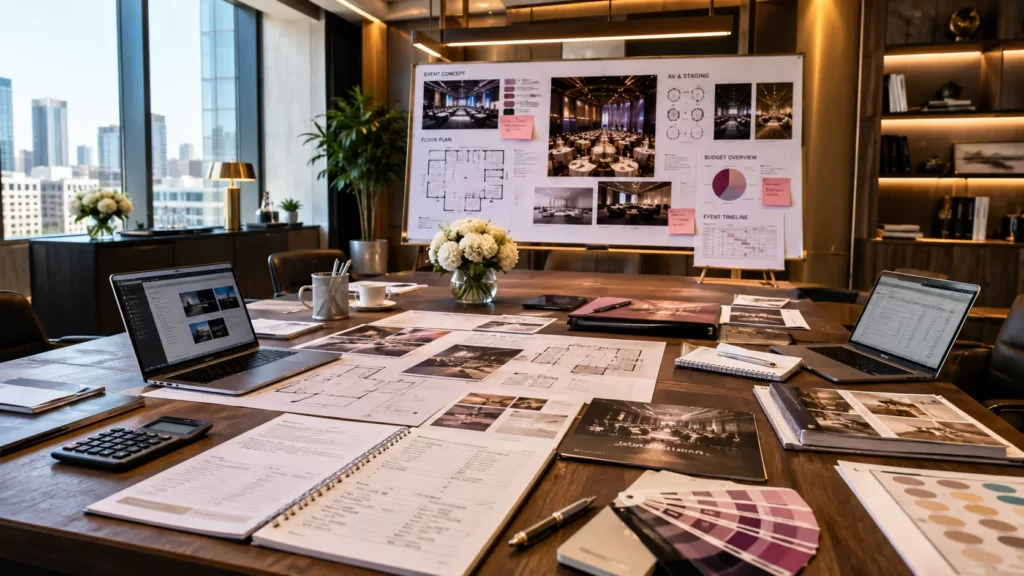
The Complete Product Launch Venue Checklist
Choosing the right product launch event venue involves much more than comparing prices or checking availability. A successful venue should support your brand, simplify logistics, accommodate technology, and create a comfortable environment for every attendee—from media representatives and investors to customers and internal teams.
The following checklist is based on industry best practices and the venue evaluation framework outlined in your source document. Instead of treating it as a simple to-do list, use it as a decision-making tool while comparing multiple venues.
Product Launch Venue Checklist
| Category | What to Check | Status |
|---|---|---|
| Brand Fit | Does the venue reflect your brand image? | ☐ |
| Capacity | Can it comfortably accommodate guests? | ☐ |
| Layout | Is there space for presentations and networking? | ☐ |
| Accessibility | ADA-compliant entrances, elevators, and restrooms | ☐ |
| Parking | Enough parking or nearby garages? | ☐ |
| Internet | High-speed Wi-Fi with backup options | ☐ |
| AV Equipment | Screens, microphones, lighting, speakers | ☐ |
| Vendor Access | Loading docks and setup areas | ☐ |
| Catering | Flexible food and beverage options | ☐ |
| Contracts | Transparent pricing and cancellation terms | ☐ |
1. Does the Venue Match Your Brand?
The venue should immediately reinforce the story you’re trying to tell.
Ask yourself:
- Would this space impress your target audience?
- Does it complement your product?
- Does the architecture match your brand personality?
- Can you customize the space with branding?
For example:
- Luxury Products
- Boutique hotels
- Museums
- Historic venues
- Premium resorts
- Technology Products
- Innovation centers
- Industrial lofts
- Convention centers
- Modern event studios
- Consumer Brands
- Lifestyle venues
- Outdoor venues
- Creative event spaces
- Mixed-use venues
The venue becomes part of your marketing. Every photograph, presentation, and social media post will include the environment you’ve chosen.
Businesses searching for premium venue inspiration can also browse unique corporate-friendly venues like Chateau Marmont to see how iconic hospitality spaces create memorable event experiences.
Expert Tip
Don’t ask,
“Is this venue beautiful?”
Ask,
“Does this venue make our product look better?”
Those are two very different questions.
2. Capacity Isn’t Everything
Many planners book venues based only on attendance numbers.
Instead, think about usable space.
Your guests need room for:
- Registration
- Networking
- Product demonstrations
- Media interviews
- Coffee breaks
- Sponsor booths
- Photo opportunities
A venue that holds 300 guests may actually provide a better experience than one designed for 600 if the layout supports natural movement.
The source document recommends evaluating breakout areas, networking zones, flexible floor plans, and overall attendee flow—not just maximum occupancy.
Space Planning Checklist
- Registration Area
- Welcome Zone
- Presentation Stage
- Product Demo Area
- Networking Lounge
- Catering Area
- Media Corner
- Storage Room
- Staff Workspace
- VIP Room
3. Test Technology Before Signing Anything
Technology failures can quickly overshadow even the best product launch.
Never assume the venue’s equipment meets your requirements.
Instead, verify:
- Internet speed
- Upload bandwidth
- Wi-Fi coverage
- Number of power outlets
- Backup generators
- Lighting controls
- LED screen compatibility
- Audio quality
- Projector brightness
- Stage visibility
If you’re planning hybrid presentations or live demonstrations, testing the venue’s technical infrastructure during your site visit is essential. The research document specifically highlights internet capacity, backup power, acoustics, lighting systems, and staging as critical evaluation criteria before booking.
Planning Insight
When estimating your technology budget, it’s useful to understand how much a corporate event typically costs per attendee because AV production, internet upgrades, and staging often increase as attendance grows.
Technology Readiness Checklist
☐ Test Wi-Fi yourself
☐ Test microphones
☐ Test projector
☐ Verify screen resolution
☐ Check lighting controls
☐ Inspect power outlets
☐ Confirm backup power
☐ Review livestream capability
☐ Meet the in-house AV technician
4. Evaluate Guest Accessibility
Great guest experiences begin before attendees enter the venue.
Visitors should never struggle with:
- Parking
- Directions
- Entrance access
- Registration
- Restrooms
- Elevators
- Seating
ADA accessibility isn’t just a legal requirement—it’s an important part of creating an inclusive and welcoming event. Your source document recommends confirming ramps, elevators, accessible restrooms, hearing assistance, and other accessibility features during the venue selection process.
Guest Experience Checklist
- Clear entrance signage
- Nearby hotels
- Public transportation
- Ride-share access
- Accessible entrances
- Accessible restrooms
- Comfortable seating
- Climate control
- Charging stations
5. Vendor Logistics Matter More Than You Think
Guests rarely notice efficient logistics—but they’ll certainly notice delays.
Before booking, inspect:
- Loading docks
- Freight elevators
- Vendor entrances
- Storage rooms
- Equipment staging areas
- Setup schedules
- Breakdown procedures
If vendors can’t move equipment efficiently, setup delays can affect presentations, demonstrations, catering, and media schedules.
Your source document also recommends asking about union labor rules, service elevators, delivery restrictions, and vendor access windows before signing the contract.
Planning Recommendation
If your event uses temporary exhibits or immersive brand activations, exploring flexible pop-up event venues may provide greater customization than traditional hotel ballrooms.
6. Review Catering Policies Carefully
Food and beverage service affects both guest satisfaction and your overall budget.
Before signing the contract, ask:
- Is outside catering allowed?
- Are there food and beverage minimums?
- Can dietary requests be accommodated?
- Is alcohol service permitted?
- Are service staff included?
- Are cleanup fees extra?
Many venues require in-house catering or approved vendors, so understanding these policies early can prevent unexpected costs later. The source document advises reviewing catering flexibility, minimum spend requirements, alcohol policies, kitchen access, and cleanup responsibilities before finalizing the agreement.
Common Mistakes
Avoid these common venue selection mistakes:
- Choosing style over functionality
- Forgetting internet testing
- Ignoring vendor access
- Assuming parking is sufficient
- Not checking catering restrictions
- Overlooking ADA accessibility
- Forgetting backup power
- Skipping a site visit
Pro Tip
Create a simple scoring sheet for every venue you visit. Rating each location against the same checklist makes it much easier to compare options objectively instead of relying on first impressions.
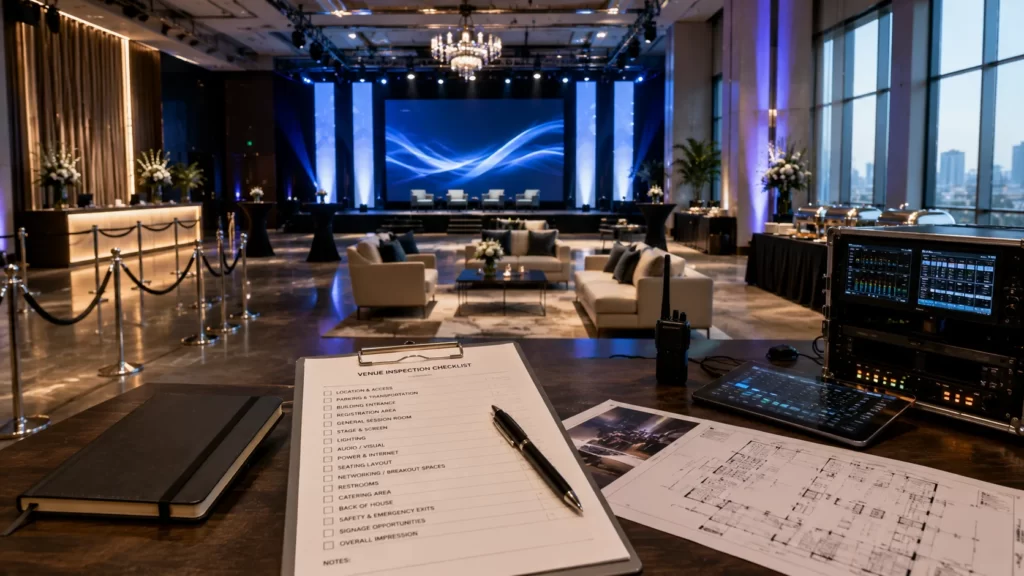
Compare the Best Product Launch Event Venue Types
Not every product launch has the same goals—and not every venue is designed to deliver the same experience. A startup unveiling a new SaaS platform has very different requirements than a luxury brand introducing a premium collection or a manufacturer showcasing a new product line.
Instead of searching for the “best” venue, focus on finding the one that aligns with your audience, presentation style, technical needs, and budget. Your source document compares several venue categories, highlighting their strengths, limitations, and ideal use cases for corporate product launches.
Product Launch Venue Comparison
| Venue Type | Best For | Advantages | Considerations |
|---|---|---|---|
| Hotel Ballroom | Corporate launches, press conferences | Built-in AV, catering, accommodations | Limited customization |
| Convention Center | Large product unveilings, expos | High capacity, advanced infrastructure | Can feel less personalized |
| Museum or Gallery | Luxury brands, premium launches | Memorable atmosphere, strong visual appeal | Strict installation guidelines |
| Warehouse or Industrial Loft | Tech startups, creative launches | Highly customizable, modern aesthetic | Requires additional production setup |
| Outdoor Venue | Lifestyle brands, automotive launches | Open space, unique guest experience | Weather contingency required |
| Dedicated Event Venue | Most corporate launches | Flexible layouts, experienced event staff | Availability varies by location |
Hotel Ballrooms
Hotel ballrooms remain one of the most popular choices for product launches because they combine convenience with professional event infrastructure.
They often include:
- Built-in audiovisual systems
- Professional event staff
- On-site catering
- Guest accommodations
- Valet parking
- Meeting rooms
- Business amenities
For companies welcoming executives, media representatives, or out-of-town guests, hotels simplify travel logistics while offering a polished environment.
However, many hotel venues have restrictions on décor, outside vendors, or room customization. Before signing a contract, clarify branding guidelines, audiovisual capabilities, and catering policies. Your source material also notes that hotel ballrooms may include furniture and technical support but often have food-and-beverage minimums or exclusive vendor requirements.
For inspiration, explore venues such as Chateau Marmont to see how boutique hospitality spaces can create a memorable setting for premium brand launches.
Best For
- Corporate announcements
- Press conferences
- Investor meetings
- Executive networking events
Convention Centers
If you’re expecting hundreds—or even thousands—of attendees, convention centers offer the flexibility and infrastructure needed for large-scale product launches.
Advantages include:
- Massive presentation halls
- Multiple breakout rooms
- High-speed internet
- Professional staging
- Large loading docks
- Exhibition areas
- Extensive parking
Convention centers are especially useful when your launch includes:
- Product demonstrations
- Partner exhibitions
- Customer workshops
- Multiple presentation sessions
- Press briefings
Because these venues are purpose-built for major events, they typically provide strong technical infrastructure, including high-capacity internet, dedicated power supplies, and experienced production teams.
Expert Insight
Large venues create flexibility—but they can also feel empty if attendance falls short. Match the size of your venue to your expected audience, not your optimistic projections.
Museums and Art Galleries
For luxury products or design-focused brands, museums and galleries create an atmosphere that’s difficult to replicate elsewhere.
These venues naturally communicate:
- Exclusivity
- Creativity
- Prestige
- Sophistication
- Attention to detail
They’re particularly effective for:
- Luxury fashion launches
- Jewelry collections
- Automotive previews
- Art-inspired consumer products
- Premium lifestyle brands
However, many museums have strict rules regarding lighting, wall installations, catering, photography, and exhibit protection. Your source document recommends confirming signage restrictions, power availability, and installation guidelines during the planning process.
A great example is the Smithsonian National Postal Museum, where distinctive architecture and curated interiors can elevate the overall guest experience.
Pros
- Elegant atmosphere
- Strong visual branding
- Premium guest experience
- Excellent media backdrop
Considerations
- Limited customization
- Smaller capacities
- Strict venue regulations
- Additional production planning
Warehouses & Industrial Lofts
Creative brands increasingly choose converted warehouses and industrial venues because they offer complete creative freedom.
Unlike hotel ballrooms, these spaces often provide a blank canvas.
That means you can customize:
- Stage design
- Lighting
- Product displays
- Interactive experiences
- Branded installations
- Lounge areas
They’re ideal for:
- Technology launches
- Automotive displays
- Startup events
- Experiential marketing
- Product demonstrations
The trade-off is that many industrial venues require you to bring in your own lighting, sound systems, staging, furniture, and internet infrastructure. According to your research, warehouse venues also require careful planning for climate control, acoustics, restroom availability, and temporary utilities.
Planning Tip
Brands creating immersive experiences often benefit from exploring flexible pop-up event venues because they offer greater customization for product showcases, experiential marketing campaigns, and temporary brand activations.
Outdoor Event Venues
Outdoor launches create memorable experiences that indoor venues often can’t match.
Popular choices include:
- Rooftops
- Gardens
- Waterfront venues
- Courtyards
- Resort lawns
- Urban plazas
They’re especially effective for:
- Automotive launches
- Lifestyle brands
- Food & beverage products
- Health and wellness companies
- Consumer experiences
However, outdoor venues also introduce additional planning requirements.
Consider:
- Weather backup plans
- Temporary staging
- Generator power
- Tent rentals
- Lighting
- Sound systems
- Permits
- Guest comfort
Your source document highlights weather contingency planning, portable utilities, permitting, and temporary infrastructure as essential considerations for outdoor product launches.
Before choosing an outdoor location, reviewing an outdoor event venue planning guide can help you anticipate weather-related logistics, equipment needs, and guest comfort.
Dedicated Event Venues
Purpose-built event venues combine many of the advantages found in hotels, convention centers, and creative spaces.
These venues are designed specifically for events and often include:
- Flexible layouts
- Integrated lighting
- Modern audiovisual systems
- Experienced event managers
- Multiple room configurations
- High-speed internet
- Vendor-friendly loading areas
They’re often the best choice for businesses that want flexibility without building an event from scratch.
If you’re exploring options for an upcoming launch, browsing business-friendly event venues can help you compare spaces designed for meetings, conferences, product launches, and corporate events.
Which Venue Is Right for Your Product Launch?
Use this quick guide before scheduling venue tours.
| If You’re Launching… | Consider… |
|---|---|
| New software or SaaS platform | Industrial loft or dedicated event venue |
| Consumer electronics | Convention center |
| Luxury product | Museum, gallery, boutique hotel |
| Fashion collection | Gallery or luxury hotel |
| Startup product | Warehouse or flexible event venue |
| Food & Beverage Brand | Outdoor venue or lifestyle venue |
| Enterprise solution | Hotel ballroom or convention center |
Key Takeaway
The right venue isn’t necessarily the largest or most expensive—it’s the one that best supports your audience, presentation format, technical requirements, and brand experience. Comparing venue types side by side makes it easier to identify which space aligns with your product launch objectives instead of relying solely on appearance or price.
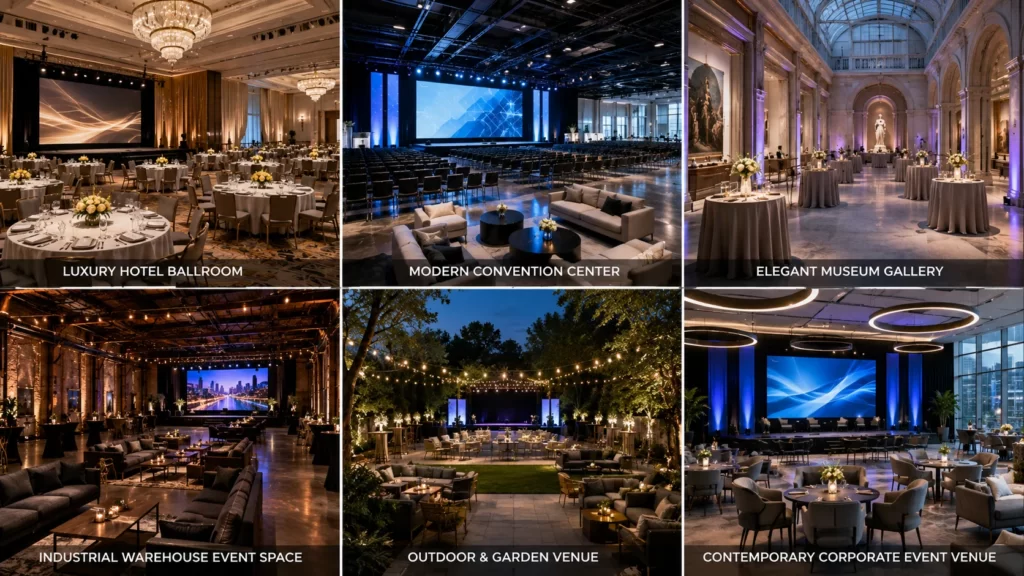
Venue Site Visit Walkthrough: What to Inspect Before You Book
A venue can look impressive in photos yet reveal several operational challenges during an in-person visit. That’s why scheduling a site walkthrough is one of the most valuable steps in the venue selection process. Beyond evaluating the atmosphere, your goal is to confirm that the space supports your event objectives, technical requirements, and guest experience.
Rather than relying on a sales presentation, inspect the venue as though your event were happening that day. The site visit recommendations below are based on industry best practices outlined in your source document, which emphasizes evaluating entrances, staging, technical infrastructure, accessibility, support spaces, and logistics before signing a contract.
Product Launch Venue Walkthrough Checklist
| Area | What to Inspect | Completed |
|---|---|---|
| Entrance | Signage, drop-off zone, guest flow | ☐ |
| Main Event Space | Layout, seating, stage visibility | ☐ |
| AV & Technology | Screens, speakers, lighting, internet | ☐ |
| Loading Area | Vendor access and equipment delivery | ☐ |
| Green Room | Presenter preparation space | ☐ |
| Catering Area | Kitchen access and serving logistics | ☐ |
| Networking Space | Lounge and breakout areas | ☐ |
| Accessibility | ADA entrances, elevators, restrooms | ☐ |
| Emergency Exits | Clearly marked evacuation routes | ☐ |
1. Start at the Entrance
The guest experience begins before anyone checks in.
Walk through the venue exactly as your attendees will.
Look for:
- Easy-to-find entrance
- Clear exterior signage
- Ride-share drop-off areas
- Parking availability
- Traffic flow
- Registration space
- Weather protection
Ask yourself:
Would a first-time visitor know exactly where to go?
Your research also recommends checking guest arrival patterns, parking access, and pickup locations during your venue inspection rather than relying solely on maps or marketing photos.
Expert Tip
Visit the venue during the same day and time your event will be held. Rush-hour traffic, limited parking, and lighting conditions can look very different than they do during a scheduled sales tour.
2. Evaluate the Main Presentation Space
This is where your product takes center stage.
Stand in different parts of the room and ask yourself:
- Can everyone clearly see the stage?
- Will cameras have unobstructed views?
- Is there enough room for demonstrations?
- Will attendees comfortably move between presentations and networking?
Inspect:
- Ceiling height
- Pillars blocking visibility
- Stage dimensions
- Seating flexibility
- Product display areas
- Walkways
- Emergency exits
According to the source document, sightlines, ceiling clearance, flexible layouts, and room dimensions should all be evaluated during your walkthrough to ensure every guest has a clear view of the presentation.
3. Test Every Piece of Technology
One of the biggest mistakes event planners make is assuming the venue’s technology works exactly as advertised.
Instead of asking if the venue has Wi-Fi…
Test it.
Instead of asking whether microphones work…
Use them.
Instead of asking if presentations display correctly…
Connect your own laptop.
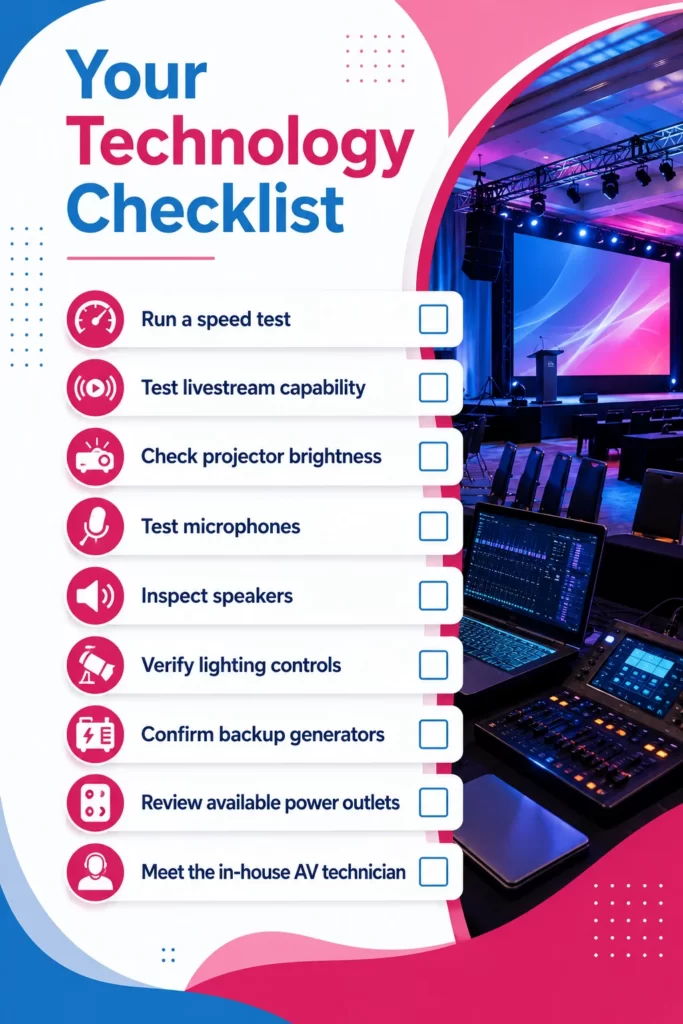
The source material specifically recommends testing internet bandwidth, acoustics, projectors, lighting controls, and power infrastructure before finalizing the venue agreement.
Planning Insight
If your launch includes live demonstrations, keynote presentations, or hybrid attendees, understanding how much corporate events typically cost per attendee can help you budget for dedicated internet, staging, and professional AV support.
4. Inspect Vendor Access
Your guests only see the finished event.
Your vendors see everything else.
Walk the exact route vendors will take.
Check:
- Loading dock location
- Service elevators
- Door widths
- Storage rooms
- Equipment staging areas
- Setup timing
- Breakdown schedule
If a vendor struggles to unload staging, lighting, or display equipment, your entire production schedule may be delayed.
The source document also recommends confirming delivery restrictions, elevator dimensions, dock access, and vendor staging locations before signing a contract.
5. Review Guest Comfort
Guests stay engaged when they’re comfortable.
Inspect:
- Restroom locations
- Air conditioning
- Heating
- Lounge furniture
- Charging stations
- Networking areas
- Coat check
- Noise levels
A beautiful venue can quickly lose its appeal if guests spend long periods standing in crowded spaces or searching for basic amenities.
Venue Comfort Scorecard
| Category | Excellent | Good | Needs Improvement |
|---|---|---|---|
| Temperature Control | ☐ | ☐ | ☐ |
| Seating Comfort | ☐ | ☐ | ☐ |
| Restroom Access | ☐ | ☐ | ☐ |
| Networking Space | ☐ | ☐ | ☐ |
| Guest Flow | ☐ | ☐ | ☐ |
| Accessibility | ☐ | ☐ | ☐ |
Questions Every Venue Manager Should Answer
Don’t leave your meeting without getting clear answers to these questions.
Venue Logistics
- What time can vendors begin setup?
- Are there overtime charges?
- Is overnight storage available?
- How many events happen here each day?
Technology
- Is dedicated internet available?
- Who provides technical support?
- Is backup power included?
- Can we bring our own AV company?
Catering
- Is outside catering permitted?
- Are there food and beverage minimums?
- Can dietary requests be accommodated?
- Are cleanup fees included?
Accessibility & Safety
- Is the venue fully ADA compliant?
- Where are the emergency exits?
- Is on-site security included?
- What emergency procedures are in place?
Contracts
- What’s included in the rental fee?
- What costs extra?
- What’s the cancellation policy?
- Are there penalties for changing guest counts?
These questions closely align with the recommendations in your source material, which advises confirming technical specifications, vendor policies, accessibility, security, insurance, and contract terms before committing to a venue.
Contract Negotiation Tips
A well-negotiated contract protects both your budget and your event.
Instead of focusing only on the rental price, review the total event cost.
Pay close attention to:
- Internet upgrade fees
- Power charges
- Security costs
- Cleaning fees
- Service charges
- Insurance requirements
- Overtime rates
- Vendor exclusivity
- Damage deposits
- Cancellation terms
The source document recommends comparing venues using an all-inclusive cost model, negotiating payment milestones, reviewing force majeure clauses, and documenting every agreed-upon concession in writing before signing.
Before negotiating, it’s worth understanding typical event space costs so you can identify which charges are standard and which may be negotiable.
Expert Tip
If a venue promises something verbally, ask for it to be included in the contract. Complimentary setup time, upgraded Wi-Fi, additional furniture, or waived overtime fees should always be documented in writing.
Common Contract Mistakes
- Reviewing only the rental fee
- Ignoring cancellation terms
- Forgetting force majeure clauses
- Not confirming setup hours
- Assuming Wi-Fi is included
- Overlooking vendor restrictions
- Forgetting overtime pricing
- Accepting verbal promises
Continue Planning Your Event
If you’re still comparing venues or building your launch budget, these resources can help:
- Learn how much event spaces typically cost before requesting proposals.
- Compare event planners and event coordinators to decide what level of support your launch requires.
- Explore business event venues for additional corporate event space ideas.
Risk Management & Contingency Planning for Product Launch Events
Even the most carefully planned product launch can face unexpected challenges. A delayed shipment, internet outage, severe weather, or technical issue can quickly disrupt presentations and affect the overall guest experience.
The goal isn’t to eliminate every risk—it’s to prepare for them before they happen. According to your source document, contingency planning should be built into the venue selection process rather than treated as an afterthought. Backup systems, emergency contacts, alternate plans, and clearly defined responsibilities help reduce disruption when unexpected situations arise.
Product Launch Risk Assessment Matrix
| Risk | Likelihood | Impact | Recommended Backup Plan |
|---|---|---|---|
| Internet Failure | Medium | High | Dedicated backup internet or mobile hotspot |
| AV Equipment Failure | Medium | High | Spare microphones, backup laptop, duplicate presentations |
| Speaker Delay | Low | High | Flexible agenda or backup presenter |
| Power Outage | Low | High | Backup generator and UPS systems |
| Weather (Outdoor Events) | Medium | High | Indoor backup venue or tented solution |
| Vendor Delay | Medium | Medium | Earlier vendor arrival schedule |
| Lower Attendance | Medium | Medium | Flexible seating layout |
| Medical Emergency | Low | High | On-site first aid and emergency contacts |
Prepare for Technology Failures
Technology powers nearly every modern product launch.
Protect yourself by preparing backup solutions for:
- Presentation laptops
- HDMI adapters
- Wireless clickers
- Microphones
- Speakers
- Internet connections
- Projectors
- LED walls
Never rely on a single device.
Keep duplicate copies of your presentation on:
- USB drive
- Cloud storage
- Backup laptop
- Presenter tablet
The source document also recommends testing equipment before guests arrive and having spare microphones, lighting components, and presentation equipment available throughout the event.
Pro Tip
Always assign one team member to monitor technology throughout the event instead of asking presenters to troubleshoot issues themselves.
Create a Weather Backup Plan
Outdoor product launches create memorable experiences—but they also introduce additional risks.
Before confirming an outdoor venue, ask:
- Is there an indoor backup location?
- Can tents be installed quickly?
- What happens if winds increase?
- Is temporary flooring available?
- Will vendors still have access?
If you’re considering an outdoor launch, reviewing an outdoor event venue planning guide can help you prepare for weather, utilities, guest comfort, and operational logistics before event day.
Build a Communication Plan
Everyone involved in the launch should know exactly who to contact if something changes.
Your communication plan should include:
| Team | Primary Contact |
|---|---|
| Venue Manager | __________________ |
| Event Planner | __________________ |
| AV Company | __________________ |
| Caterer | __________________ |
| Photographer | __________________ |
| Security | __________________ |
| Emergency Services | __________________ |
Share this contact sheet with your event staff before the venue opens.
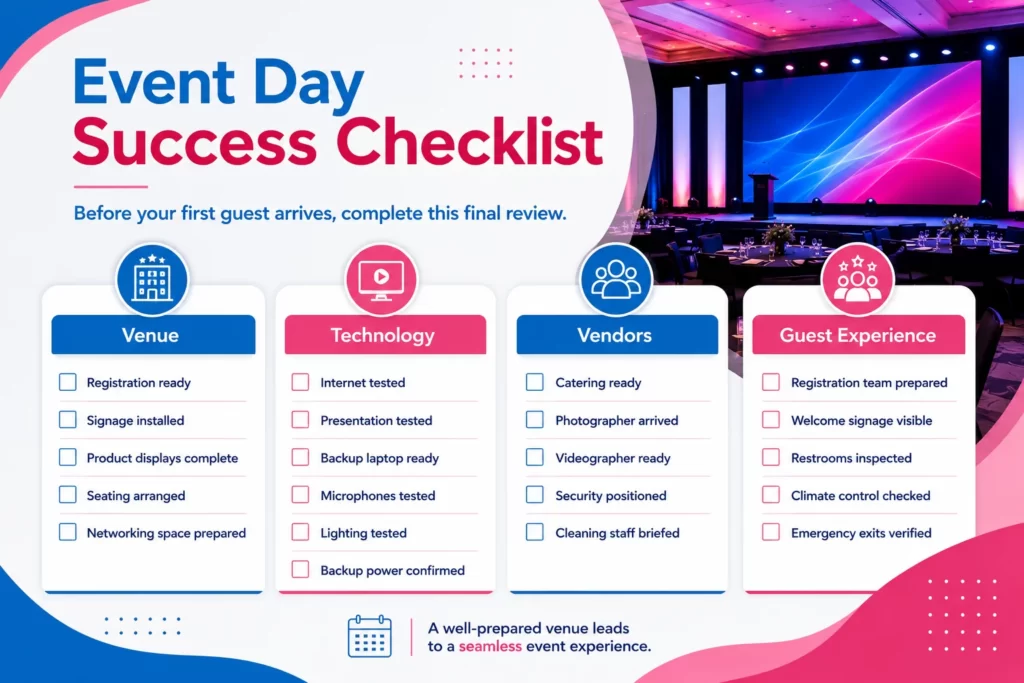
Key Takeaways
Choosing the right product launch event venue is one of the most important decisions you’ll make during the planning process. A well-selected venue supports your product story, simplifies logistics, enhances guest engagement, and helps your team deliver a polished, professional event.
Before making your final decision, remember to:
- Define your event objectives before touring venues.
- Compare venues based on total value—not just rental price.
- Test internet, AV equipment, and power infrastructure.
- Evaluate guest flow, accessibility, and networking spaces.
- Confirm vendor policies and setup requirements.
- Review contracts carefully, including cancellation and overtime terms.
- Prepare contingency plans for technology, weather, and operational issues.
Following these best practices helps reduce surprises while creating a launch experience that reflects your brand and supports your business goals.
Ready to Find the Right Product Launch Venue?
The right venue can turn a product announcement into a memorable brand experience. Whether you’re planning a media event, investor presentation, executive briefing, or large-scale product unveiling, taking the time to compare venues, evaluate logistics, and prepare thoroughly will help you deliver a smoother and more successful event.
Start exploring business-friendly event venues to compare spaces that match your launch goals, or browse event venues in Washington, DC for inspiration if you’re planning an event in one of the country’s leading business destinations.
Frequently Asked Questions
What is the best venue for a product launch event?▾
The best product launch event venue depends on your audience, product type, and event goals. Hotel ballrooms, dedicated event venues, convention centers, museums, and industrial lofts each offer different advantages depending on the experience you want to create.
How far in advance should I book a product launch venue?▾
For larger corporate launches, booking your venue three to six months in advance is generally recommended. High-demand venues and peak event seasons may require even earlier reservations.
What should be included in a product launch venue checklist?▾
A comprehensive checklist should include:
- Venue capacity
- Layout flexibility
- AV equipment
- Internet connectivity
- Accessibility
- Parking
- Vendor access
- Catering policies
- Contract terms
- Backup plans
Can I host a product launch outdoors?▾
Yes. Outdoor venues can create memorable experiences, particularly for automotive, lifestyle, and consumer brands. However, they require additional planning for weather, power, staging, permits, and guest comfort to ensure a successful event.
How do I choose the right product launch event venue?▾
Start by defining your event goals, expected attendance, and budget. Then compare venues based on accessibility, layout, audiovisual capabilities, internet reliability, branding opportunities, vendor access, and guest experience. Visiting shortlisted venues in person is the best way to evaluate whether a space supports your launch objectives.
What size venue should I book for a product launch?▾
Choose a venue that comfortably accommodates your expected attendance while leaving room for presentations, networking, product displays, and media coverage. A venue that is too large can feel empty, while one that is too small may create congestion and reduce guest comfort.
What’s included in a corporate launch event space?▾
Most corporate launch event spaces include the event hall, seating, restrooms, climate control, and basic utilities. Some venues also provide audiovisual equipment, high-speed Wi-Fi, furniture, parking, security, and catering, while others charge separately for these services. Always request a detailed list of inclusions before signing a contract.
Should I choose a hotel ballroom or a dedicated event venue?▾
It depends on your event goals. Hotel ballrooms often provide built-in services such as catering, guest accommodations, and audiovisual support, making them convenient for corporate launches. Dedicated event venues usually offer greater flexibility for branding, custom layouts, and immersive product experiences.
How much time should I allow for venue setup before a product launch?▾
Most product launches require several hours for staging, audiovisual testing, branding installation, and vendor setup. Larger events may require access the day before the event. Confirm setup and teardown windows with the venue before finalizing your booking.
What are the most common hidden venue costs?▾
Hidden costs may include internet upgrades, overtime fees, cleaning charges, security, parking, furniture rentals, power usage, service fees, insurance requirements, and mandatory catering minimums. Request an itemized proposal so you can compare venues accurately.
Is high-speed Wi-Fi important for a product launch?▾
Yes. Reliable internet is essential for live demonstrations, hybrid events, livestreams, digital product presentations, media uploads, and guest connectivity. Always test the venue’s Wi-Fi and ask whether dedicated bandwidth is available for your event.
Can I bring my own vendors to a product launch venue?▾
Some venues allow outside caterers, decorators, photographers, and audiovisual providers, while others require you to use preferred or exclusive vendors. Review vendor policies carefully before signing your contract to avoid unexpected restrictions or additional fees.
What should I look for during a venue site visit?▾
Inspect the entrance, parking, registration area, presentation space, networking zones, audiovisual equipment, internet connectivity, loading docks, backstage areas, restrooms, accessibility features, and emergency exits. Taking notes and photos during the visit makes it easier to compare venues later.
How can I make my product launch more memorable?▾
Choose a venue that reflects your brand, create engaging product demonstrations, provide comfortable networking spaces, invest in professional lighting and audiovisual production, and ensure guests can interact with the product in meaningful ways. A memorable venue enhances the overall experience and strengthens your brand message.
What’s the best venue for a technology product launch?▾
Technology companies often benefit from modern event venues, convention centers, industrial lofts, or innovation hubs that provide high-speed internet, flexible presentation spaces, advanced audiovisual systems, and room for live demonstrations. The best venue should support both technical requirements and your overall brand image.
How do I compare multiple product launch venues?▾
Create a scoring system that evaluates each venue based on location, accessibility, capacity, layout flexibility, branding opportunities, internet reliability, audiovisual equipment, vendor access, catering policies, parking, and overall cost. Using the same criteria for every venue makes it easier to identify the best option for your event.
Compare vendors for your next event
Search caterers, photographers, florists, planners, and rentals — then send one request to several vendors at once.