TLDR
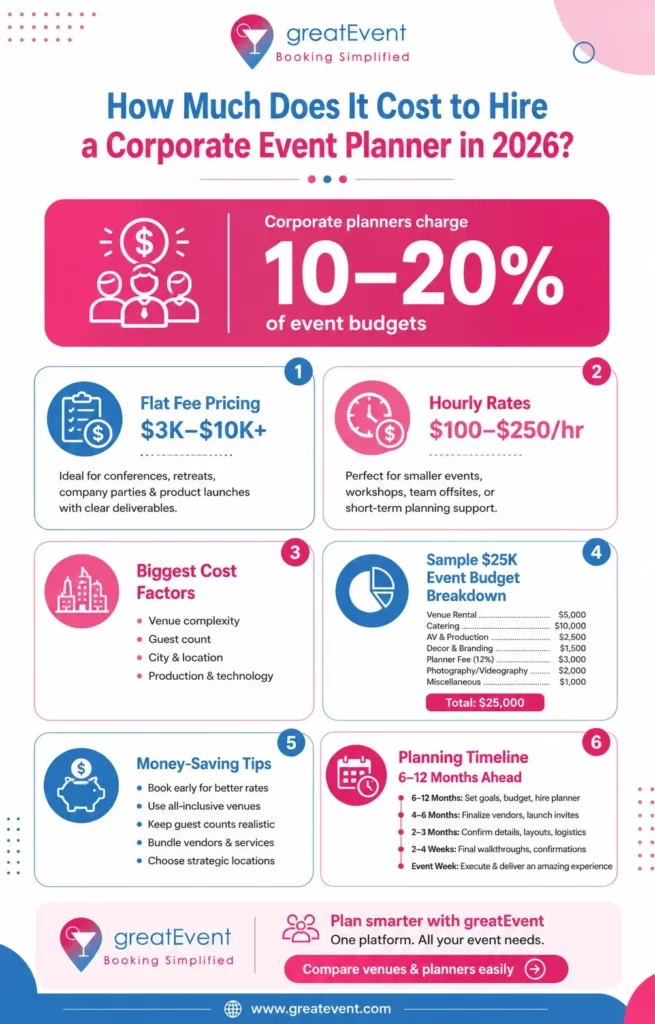
Corporate event planners in the U.S. typically charge either a flat fee ($3,000–$10,000+), an hourly rate ($100–$250/hour), or 10–20% of your total event budget. Your final cost depends on event size, city, venue, guest count, logistics, and vendor coordination needs. Booking early and understanding pricing structures can help companies save thousands while delivering a smoother guest experience.
Introduction
A corporate event can shape how clients view your brand, how employees remember your leadership, and how investors experience your company culture. But behind every seamless conference, gala dinner, networking mixer, or product launch is a planner managing dozens of moving parts simultaneously.
That’s why one of the most common questions businesses ask is: How Much Does It Cost to Hire a Corporate Event Planner?
In 2026, companies across the U.S. are investing more into experiential corporate events, hybrid conferences, executive retreats, and branded networking experiences. From venue sourcing to vendor coordination, event planners now handle far more than timelines and seating charts.
Whether you’re organizing a 50-person leadership retreat or a 500-guest corporate gala, understanding event planner pricing can help you avoid budget surprises and make smarter decisions from the start. If you’re still comparing overall event expenses, this guide on how much event planners charge provides additional insights into planning costs across different event types.
Let’s break down what corporate event planners actually charge, what impacts pricing, and how to budget strategically in 2026.
How Corporate Event Planners Typically Charge

Corporate event planners usually follow one of three pricing models depending on the event scope, complexity, and level of involvement required.
1. Flat Fee Pricing
A flat fee is common for conferences, company parties, product launches, and retreats with clearly defined deliverables.
Typical Range:
| Event Type | Estimated Planner Fee |
|---|---|
| Small Corporate Meeting | $3,000–$5,000 |
| Mid-Size Conference | $5,000–$10,000 |
| Large Corporate Gala | $10,000–$25,000+ |
This model works well when the event scope is predictable and timelines are clear.
Best For:
- Annual company events
- Executive retreats
- Internal conferences
- Networking dinners
Pros:
- Predictable budgeting
- Easier invoice management
- Clear expectations
Cons:
- Scope changes can increase fees
- Extra vendor coordination may cost more
Pro Tip: Ask planners whether revisions, vendor sourcing rounds, or onsite coordination hours are included in the flat fee before signing the contract.
2. Percentage-Based Pricing (10–20% of Event Spend)

Some planners charge a percentage of the total event budget instead of a fixed rate.
Typical Percentage:
Corporate planners generally charge 10–20% of the total event spend.
For example:
50000 \times 0.15 = 7500
A $50,000 corporate event with a 15% planning fee would include approximately $7,500 in planner fees.
Why Companies Choose Percentage Pricing
This model often benefits large-scale events where vendor management, logistics, sponsorships, and production needs constantly evolve.
Common Events Using This Model:
- Trade shows
- Multi-day summits
- Brand activations
- International conferences
Many businesses also combine planners with venue sourcing support through platforms like greatEvent to simplify vendor comparisons and reduce planning friction.
3. Hourly Rates for Corporate Event Planners in 2026
Smaller corporate events sometimes use hourly pricing instead of comprehensive packages.
Average Hourly Rates
| Experience Level | Hourly Rate |
| Entry-Level Planner | $100–$150/hr |
| Mid-Level Planner | $150–$200/hr |
| Senior Corporate Planner | $200–$250+/hr |
Ideal For:
- Team offsites
- Holiday dinners
- Small workshops
- Last-minute coordination help
Hourly pricing gives businesses flexibility, especially if they already have internal teams handling logistics.
However, hourly billing can increase quickly if revisions or vendor changes become frequent.
What Impacts Corporate Event Planner Costs?
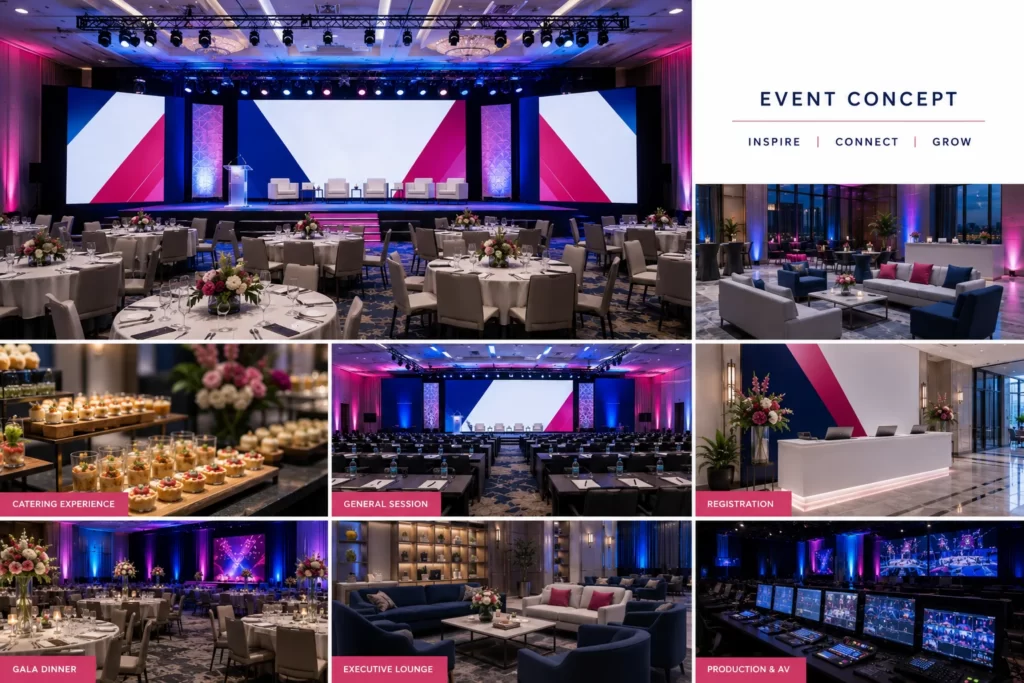
No two corporate events cost the same. Several factors influence pricing significantly.
Event Size
A 40-person executive dinner requires less coordination than a 1,000-person annual conference.
Larger guest counts increase:
- Registration management
- Vendor communication
- Staffing requirements
- Seating logistics
- AV coordination
Venue Complexity
A ballroom with in-house catering is far easier to manage than a raw industrial venue needing external vendors.
If you’re still comparing venue expenses, this breakdown of club house rental near me and hall rental pricing can help estimate overall venue-related costs.
Event Type
Some corporate events require more production management than others.
High-Complexity Events:
- Hybrid conferences
- Investor summits
- Award ceremonies
- Product launches
Lower-Complexity Events:
- Networking brunches
- Internal workshops
- Team dinners
City & Location
Major cities like New York, Washington DC, Los Angeles, and Miami generally have higher planner fees due to labor, venue, and vendor costs.
For example, premium spaces among event venues in Washington DC often require more advanced coordination compared to suburban venues.
Sample Corporate Event Budget Breakdown
Here’s a realistic example of a mid-sized corporate conference budget in 2026.
| Expense Category | Estimated Cost |
| Venue Rental | $5,000 |
| Catering | $10,000 |
| AV & Production | $2,500 |
| Decor & Branding | $1,500 |
| Photography/Videography | $2,000 |
| Planner Fee (12%) | $3,000 |
| Miscellaneous | $1,000 |
| Total | $25,000 |
This structure helps companies allocate funds strategically while preventing overspending in one category.

Insider Tip: Experienced planners often save companies money through vendor negotiation, timeline optimization, and avoiding costly logistical mistakes.
Are Corporate Event Planners Worth the Cost?
For many businesses, the answer is yes.
Corporate planners handle:
- Vendor sourcing
- Timeline management
- Contract negotiation
- Guest experience
- Production logistics
- Emergency troubleshooting
Without a planner, internal teams often lose productivity trying to manage dozens of vendors while handling their regular responsibilities.
According to industry trends in 2026, businesses are prioritizing immersive guest experiences, wellness-driven networking spaces, and branded personalization more than ever. This increased complexity makes professional coordination increasingly valuable.
Many planners also collaborate with curated venue marketplaces like about greatEvent to help businesses quickly compare spaces, vendors, and packages in one place.
Questions to Ask Before Hiring a Corporate Event Planner
Before signing any agreement, ask these questions:
Planning Experience
- Have you handled similar corporate events?
- Can you manage hybrid or multi-day events?
Vendor Relationships
- Do you receive commissions from vendors?
- Are vendor markups included?
Staffing
- Will you personally oversee the event day?
- How many onsite coordinators are included?
Payment Terms
- What is the deposit structure?
- What happens if the event date changes?
Communication
- How often are planning meetings scheduled?
- Who is the main point of contact?
If your event requires invitations and RSVP coordination, tools like GE Invite can simplify guest communication and attendance tracking.
How to Save Money on Corporate Event Planning
Hiring a planner doesn’t automatically mean overspending.
Here are smart ways businesses reduce costs:
Book Early
Popular venues and planners increase rates during peak seasons.
Use All-Inclusive Venues
Some venues bundle:
- Furniture
- AV
- Catering
- Staffing
This reduces external vendor costs significantly.
Keep Guest Counts Realistic
Even reducing attendance by 20 guests can dramatically lower catering and rental expenses.
Choose Strategic Cities
Secondary cities often offer better value than NYC or LA while still delivering excellent experiences.
Companies planning upscale private dinners or client entertainment events can also learn from budgeting strategies used in average wedding cost 2026 guides since many luxury hospitality costs overlap.
Corporate Event Planning Timeline

6–12 Months Before
- Define event goals
- Establish budget
- Hire planner
- Secure venue
4–6 Months Before
- Finalize vendors
- Launch registration
- Confirm sponsorships
2–3 Months Before
- Finalize layouts
- Confirm catering
- Schedule production walkthroughs
2–4 Weeks Before
- Confirm guest counts
- Test AV systems
- Review contingency plans
Event Week
- Final walkthrough
- Vendor confirmations
- Staff briefing
Pro Tip: High-demand spring and fall corporate event seasons often book out 6–12 months ahead in major U.S. cities.
Final Thoughts

Corporate event planner pricing in 2026 depends on far more than just guest count. Venue complexity, branding expectations, hybrid technology, production requirements, and city-specific logistics all influence the final investment.
The right planner doesn’t just organize timelines — they protect your budget, improve guest experience, and reduce operational stress for your team. Whether you’re planning an executive retreat, investor conference, or branded launch event, understanding planner pricing helps you allocate resources more confidently.
If you’re ready to simplify venue sourcing, vendor discovery, and event planning logistics, explore curated event spaces and services through greatEvent contact us and start planning your corporate event today.
Frequently Asked Questions
What does a corporate event planner do? ▾
A corporate event planner manages logistics, vendors, timelines, guest experiences, and production for business events. They coordinate everything from conferences and executive retreats to networking events and product launches.
How much should I budget for a corporate event planner? ▾
Most businesses should expect to allocate around 10–20% of the total event budget toward planning fees. Smaller corporate events may use hourly pricing, while larger conferences often use flat-fee or percentage-based models.
How do I book a corporate event planner? ▾
Start by defining your event goals, estimated guest count, and budget. Then compare planners based on experience, pricing structure, vendor relationships, and previous corporate event portfolios before signing a contract.
Where can I find corporate event venues and vendors? ▾
Platforms like greatEvent help businesses compare corporate event venues, planners, caterers, photographers, and other vendors in one convenient place, making the planning process faster and more organized.
What is the best time of year to book corporate events? ▾
Spring and fall are the busiest corporate event seasons in the United States. Booking venues and planners at least 6–12 months in advance typically provides better availability and pricing.
How much does a conference planner charge? ▾
A flat fee is common for conferences. Expect about $5,000–$10,000 for a mid-size conference and $3,000–$5,000 for a small corporate meeting. Planners who charge a percentage usually take 10–20% of the total event spend, so a $50,000 event at 15% comes to about $7,500 in planner fees.
Do corporate event planners add vendor markups? ▾
It depends on the planner, so ask before you sign. Find out whether they receive commissions from vendors and whether vendor markups are included in their pricing. Ask about the deposit structure and what happens if your event date changes, too.
Compare vendors for your next event
Search caterers, photographers, florists, planners, and rentals — then send one request to several vendors at once.