Quick answer: On a real-time platform, minutes. Through traditional sourcing, weeks. The difference is the RFP: sending one means waiting three to four days per venue response, inside a corporate sourcing cycle that averages about 75 days. Real-time availability skips that entirely.
Which route you take now decides more than it used to, because most planners no longer start with a phone call.
Why the search itself has changed
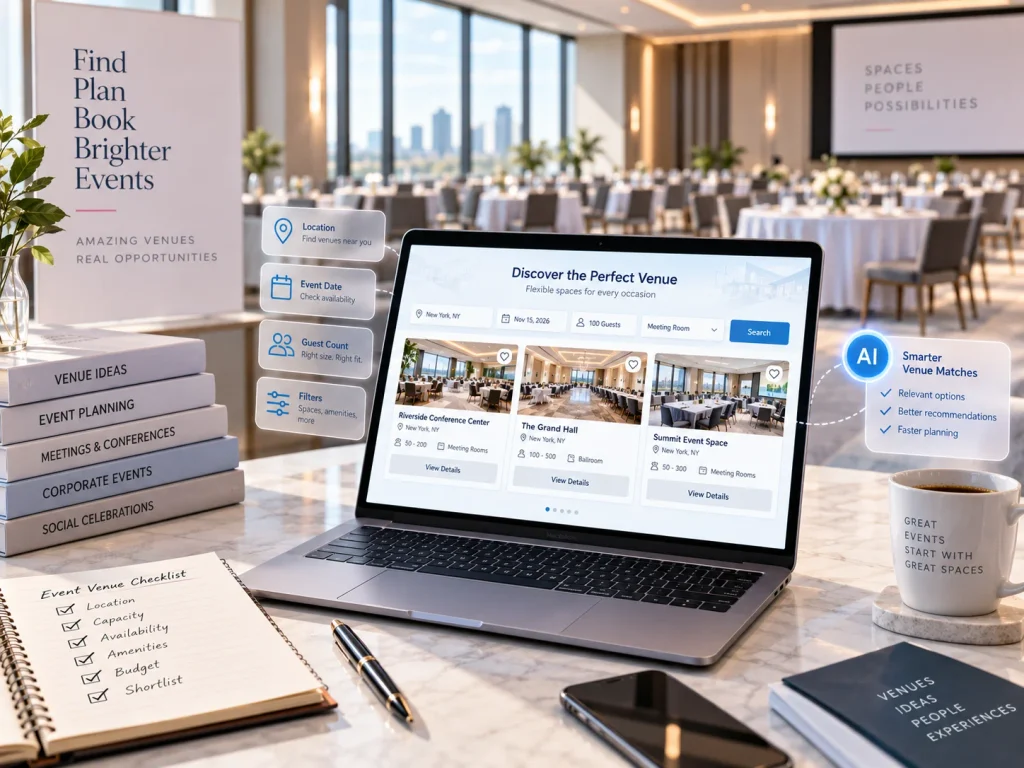
In 2026, 72 percent of event planners discover venues through online marketplaces or AI search before they contact anyone. A venue that is not in a booking platform may simply never enter the shortlist.
The money moved too. Corporate event spend now averages $169 per attendee per day, up 4.3 percent, driven by food, beverage, venue and labour costs. The corporate events market was worth $326.6 billion in 2025, and 89 percent of businesses say events are critical to their strategic goals.
Higher budgets and higher expectations, on shorter timelines. That is the squeeze a months-long RFP cycle no longer fits.
For planners comparing options, understanding meeting room rental costs in the USA can also help establish a realistic budget before the venue search begins.
What the RFP actually costs you
An RFP is not one delay, it is several stacked on top of each other.
You write the brief. You send it to a shortlist. Each venue takes three to four days to respond, and they do not respond in sync. You chase the ones that go quiet. You normalize five quotes that arrive in five different formats. Then you negotiate, and only then do you have a date.
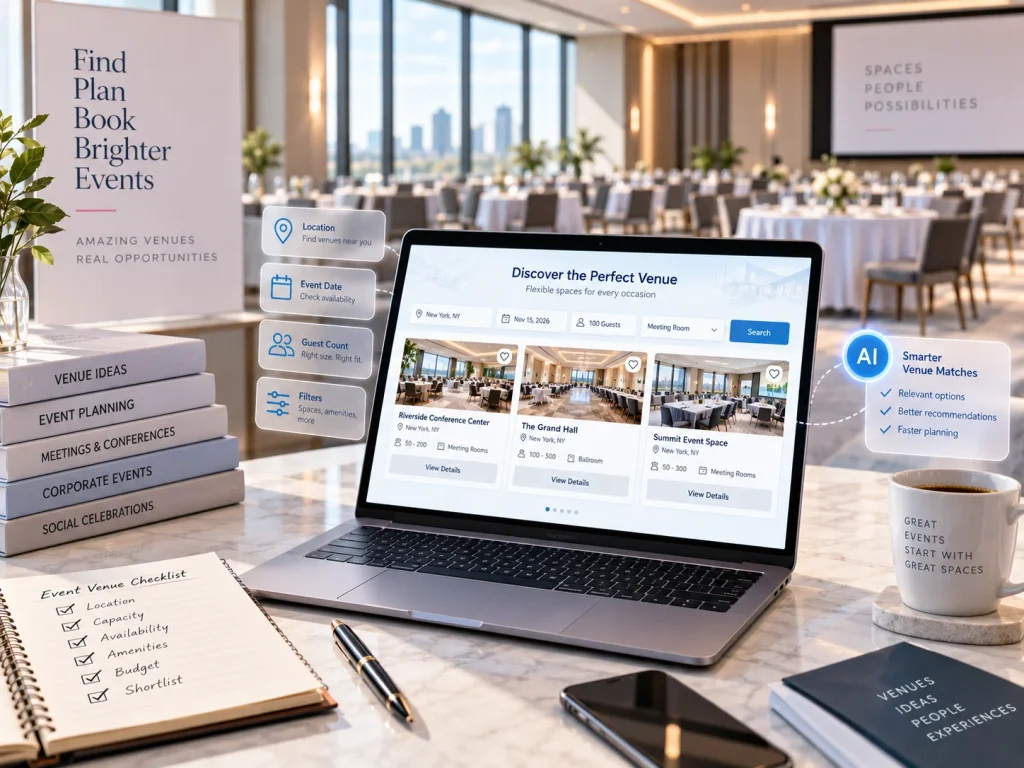
For hotel room blocks and group bookings, the same process can create additional delays. A detailed hotel RFP and group booking process can involve comparing rates, room blocks, policies and contract terms before the booking is finalized.
Across a corporate sourcing cycle that averages roughly 75 days, most of the elapsed time is waiting rather than deciding.
| RFP sourcing | Real-time booking |
|---|---|
| Time to a confirmed date: weeks, inside a cycle averaging ~75 days | Time to a confirmed date: minutes |
| Response per venue: 3 to 4 days, arriving out of sync | Response per venue: immediate where inventory is live |
| Quotes to compare: one format per venue, normalised by hand | Quotes to compare: one place, same format |
| Chasing required: yes | Chasing required: no |
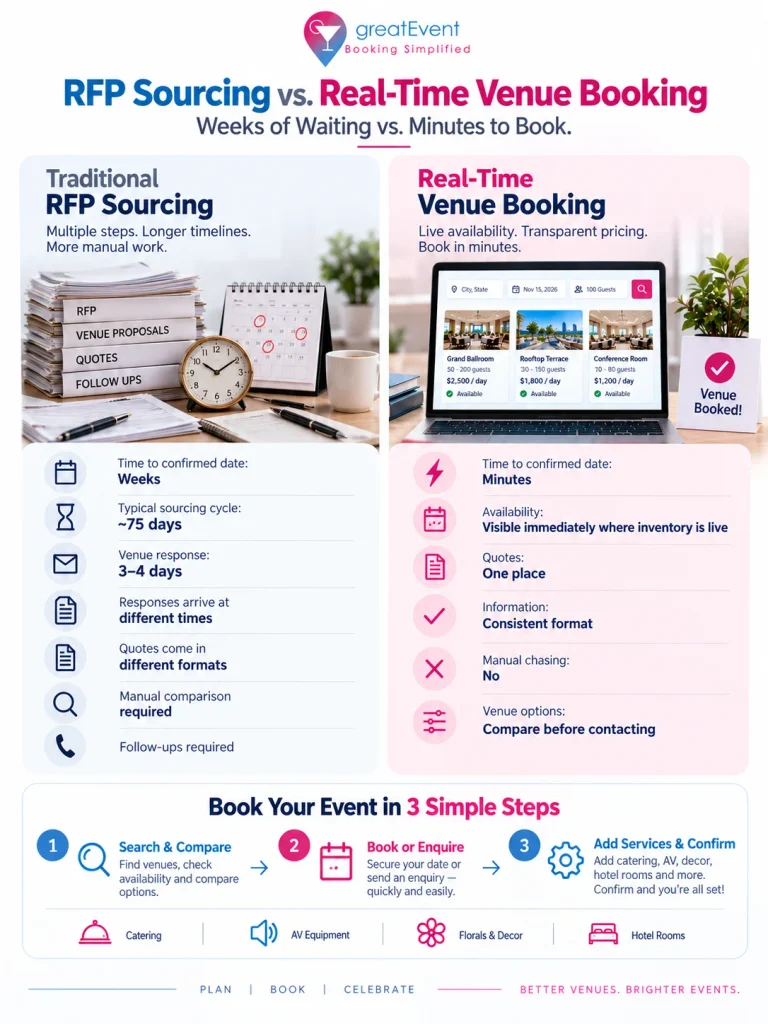
Real-time availability inverts that. If a venue publishes live inventory, you confirm the space the way you would confirm a flight. greatEvent’s patented real-time booking technology submits the request straight to the venue, which is what compresses the timeline from weeks to minutes.
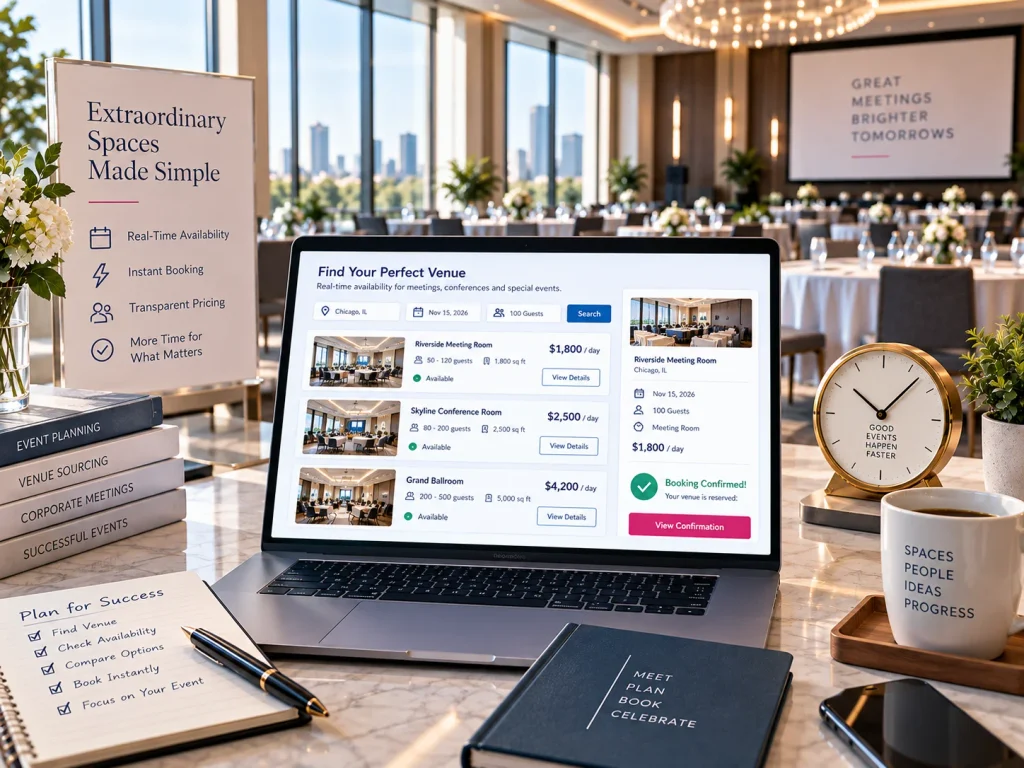
Where a venue does not publish live availability, one enquiry still goes to every relevant property at once rather than one RFP per venue, one at a time.
Booking a complete event in three steps
Search and compare
Filter by event type, location, dates, guest count and distance. Meeting room capacities sit side by side, so you can see which venues actually fit before contacting any of them.
If you’re evaluating a specific property, a venue listing such as DoubleTree by Hilton Reading shows how venue information can be presented in one place for easier comparison.
Book or enquire
If the venue shows live availability, confirm it. If it does not, one detailed enquiry reaches every venue on your list and the quotes come back to one place.
The how it works process explains how the platform connects venue discovery, enquiries and booking in a single workflow.
Add the rest and confirm
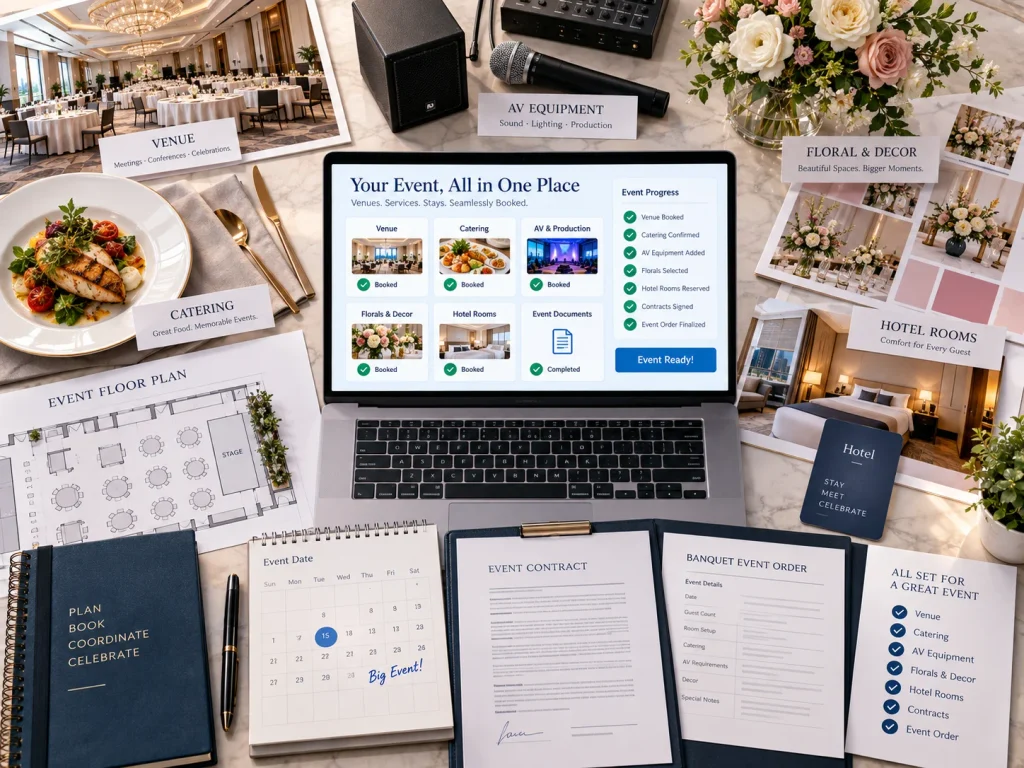
Catering, AV, decor and group hotel rooms attach to the same booking. Contracts and banquet event orders are generated in the platform, so the details live in one record instead of across an inbox.
What about vendors and hotel rooms?
This is where the time saving compounds, because most events are not one booking.
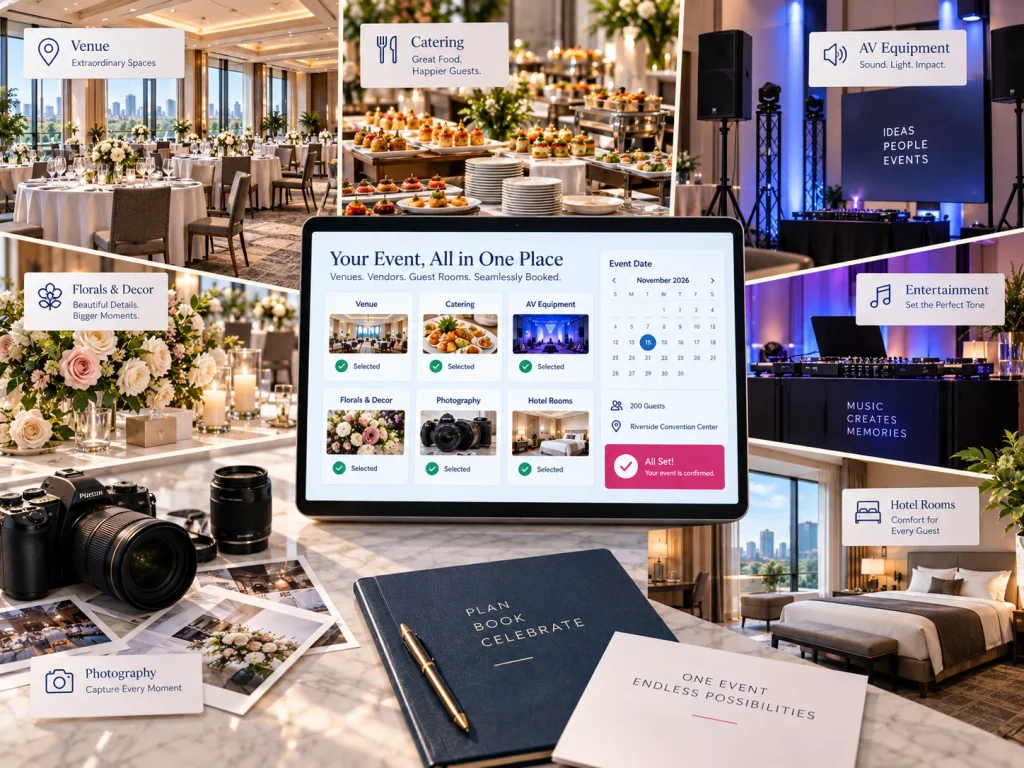
Caterers, DJs, florists, photographers and entertainment can be booked through the same platform as the venue. So can guest rooms, through the Stay feature, which matters for any event where attendees travel.
The alternative is the familiar version: a separate search, a separate contract and a separate invoice for each supplier. One event, eight conversations.
For planners estimating the broader budget, company meeting room rental costs can provide another reference point when calculating the cost of hosting a corporate event.
What does it cost a planner?
Nothing. There are no booking fees or platform fees for event organisers, and venue and vendor costs are billed directly by the providers you choose.
The charge sits on the supply side, and only after a booking completes. A non-member venue pays 5 percent of booking revenue. A subscribed member pays $25 per user per month and a reduced 3 percent commission on completed business.
| Who | Pays what | When |
|---|---|---|
| Planner | nothing | never |
| Non-member venue | 5% of booking revenue | after the booking completes |
| Member venue | $25 per user per month plus 3% | monthly, plus on completed business |
| Cvent licence holder | ~ $19,550 a year plus $7 to $12 per registrant | before any event is booked |
| Tripleseat subscriber | ~$300 to $500 a month per venue | before any event is booked |
Planners can also earn. There is a profit-sharing programme for event and wedding planners: no cost to join, and a share of the revenue on bookings you generate.
That is worth comparing against the licence model most planners have met. Cvent runs about $19,550 a year at the median and beyond $79,000 for enterprise, plus $7 to $12 per registrant per event. Tripleseat is roughly $300 to $500 a month for a single venue. Both bill for access before a single event is booked.
For additional context on venue pricing, planners can also review event space costs and party venue pricing before comparing quotes.
What planners say
The three quotes below are from greatEvent’s own review page, reproduced as written.
“Great Events is a breeze to work with and offers great options for organizing your accounts. The lead system is phenomenal for the client/sales rep relationship.” Ashley E., Axar Management Co.
“This is the first time Holiday Inn College Park has transacted with Great Event. Jessica Williams is so awesome to work with. Very detailed, responds so quickly.” Susan C., Holiday Inn Washington-College Park
“The platform simplified our venue search process enormously. We booked our corporate retreat in record time. The team was responsive and the results exceeded expectations.” Marcus T., TechWorks Conference
greatEvent operates across 38 states, and listing a venue or service is free.
Key takeaways
- Real-time booking confirms a venue in minutes. RFP sourcing takes three to four days per venue response inside a cycle averaging about 75 days.
- 72 percent of planners now find venues through online marketplaces or AI search before making contact.
- Corporate spend is $169 per attendee per day, up 4.3 percent, on a market worth $326.6 billion in 2025.
- Planners pay no booking or platform fees. Venues pay 5 percent, or $25 per user per month plus 3 percent as members.
- Licence platforms charge before you book: Cvent from about $19,550 a year, Tripleseat from about $300 a month.
- Venue, vendors and guest rooms attach to one booking, with contracts and BEOs generated in the platform.
Frequently Asked Questions
How long does it take to book an event venue? ▾
Minutes on a real-time platform where the venue publishes live availability. Through traditional RFP sourcing, expect three to four days per venue response inside a cycle that averages around 75 days.
Do you need an RFP to book an event venue? ▾
Not always. Where a venue publishes live inventory you can confirm directly. Where it does not, a single enquiry can reach every venue on your shortlist at once instead of one RFP at a time.
How much does it cost a planner to use greatEvent? ▾
Nothing. There are no booking or platform fees for planners, and venue and vendor costs are billed directly by the providers.
Who pays, and when? ▾
Venues and vendors, and only after a booking completes. Non-members pay 5 percent of booking revenue. Members pay $25 per user per month and 3 percent on completed business.
Can event planners earn money through the platform? ▾
Yes. The profit-sharing programme is free to join and pays planners a share of revenue on bookings they generate.
Can you book vendors and hotel rooms in the same booking? ▾
Yes. Caterers, DJs, florists, photographers and entertainment book through the same platform, and guest rooms attach through the Stay feature.
How does this compare with Cvent or Tripleseat on price? ▾
Both charge for access before any event is booked. Cvent is about $19,550 a year at the median plus $7 to $12 per registrant. Tripleseat is roughly $300 to $500 a month per venue.
How many planners search online before contacting a venue? ▾
In 2026, 72 percent discover venues through online marketplaces or AI search first, which is why a venue absent from a booking platform can go unseen.
Compare vendors for your next event
Search caterers, photographers, florists, planners, and rentals — then send one request to several vendors at once.