Choosing an event venue is one of the most important decisions you’ll make when planning a wedding, corporate meeting, conference, fundraiser, birthday party, or other special occasion. The venue affects your budget, guest experience, event layout, catering, vendors, transportation, and the overall flow of the event.
Knowing how to choose an event venue means looking beyond attractive photographs and advertised rental prices. You need to consider capacity, location, accessibility, layout, technology, catering, vendor policies, accommodation, availability, and contract terms.
The good news is that you don’t need to compare dozens of venues blindly. Start with a clear list of requirements, create a realistic shortlist, and evaluate every venue using the same criteria.
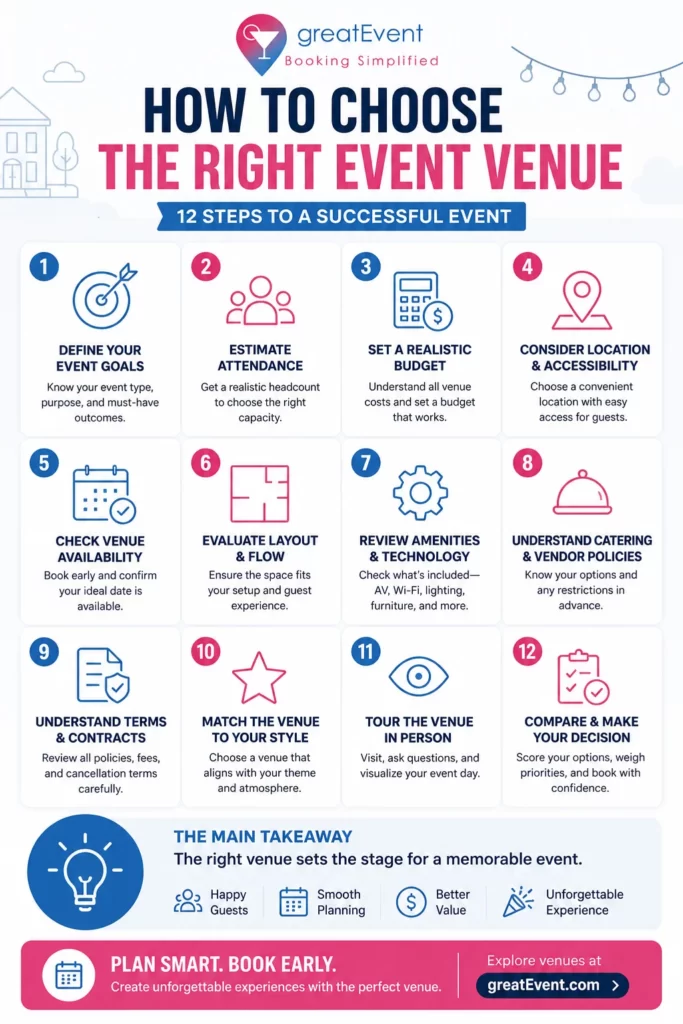
Why the Venue Matters More Than Most Planning Decisions
A venue is the physical foundation of your event. It affects how guests arrive, where they sit, how they move through the space, what vendors can install, and how much time is required for setup and cleanup.
A beautiful room can still be the wrong choice if it has limited parking, poor acoustics, an inconvenient layout, insufficient capacity, or restrictive vendor policies.
The venue should support the entire event experience rather than simply look impressive in photographs.
Pro Tip: Don’t ask only, “Do I like this venue?” Ask, “Can this venue successfully support the event I’m planning?”
The venue decision can also affect how much outside planning help you need. If you’re considering professional assistance, understanding how much event planners charge can help you determine whether planning support belongs in your overall event budget.
Step 1: Define the Purpose of Your Event
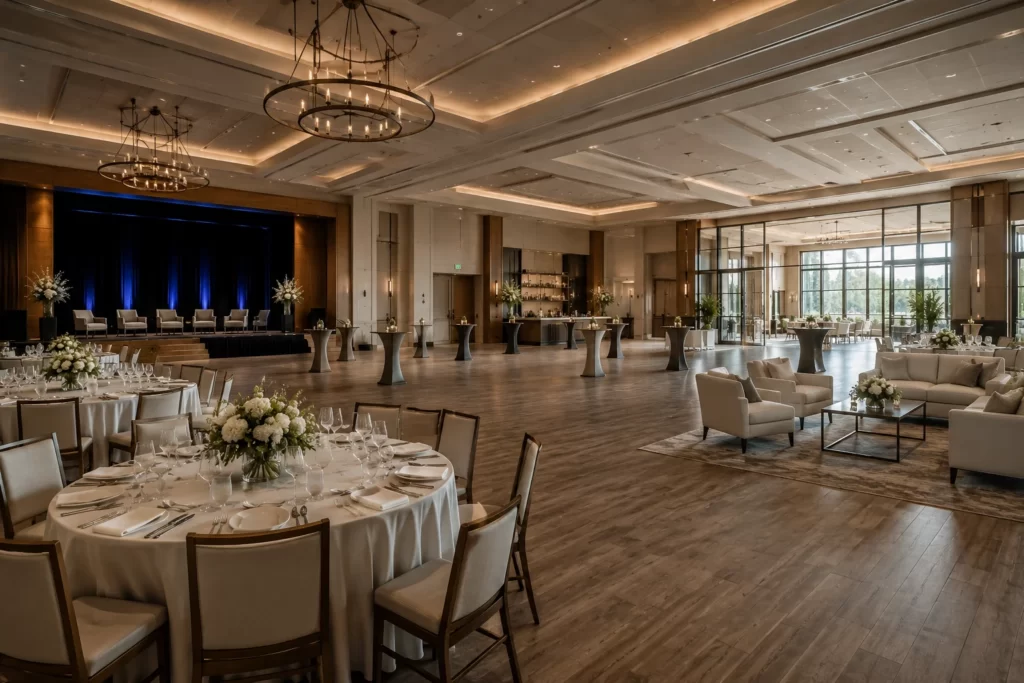
Before searching for venues, write one sentence explaining what your event needs to accomplish.
For example:
- Corporate meeting: privacy, reliable technology, comfortable seating, and productive discussion
- Wedding: guest flow, catering, photography opportunities, entertainment, and atmosphere
- Fundraiser: registration, stage space, sponsor visibility, dining, and networking
- Conference: presentations, breakout rooms, registration, technology, and attendee movement
- Birthday party: atmosphere, food, entertainment, parking, and comfortable gathering space
Ask yourself:
- Who is attending?
- What should guests do, learn, celebrate, or experience?
- Is the event formal, casual, educational, social, or promotional?
- Will guests need to eat or stay overnight?
- Will people need to network or move between rooms?
- What would make the event successful?
A clear purpose prevents one of the most common venue-selection mistakes: choosing a space because it looks attractive before confirming that it actually works for the event.
If you’re planning a birthday celebration, your venue requirements may change depending on whether you’re hosting a small dinner, children’s party, milestone celebration, or larger private event. Understanding how much birthday party planners charge can also help you decide how much planning support fits your budget.
Step 2: Estimate Attendance and Choose the Right Capacity
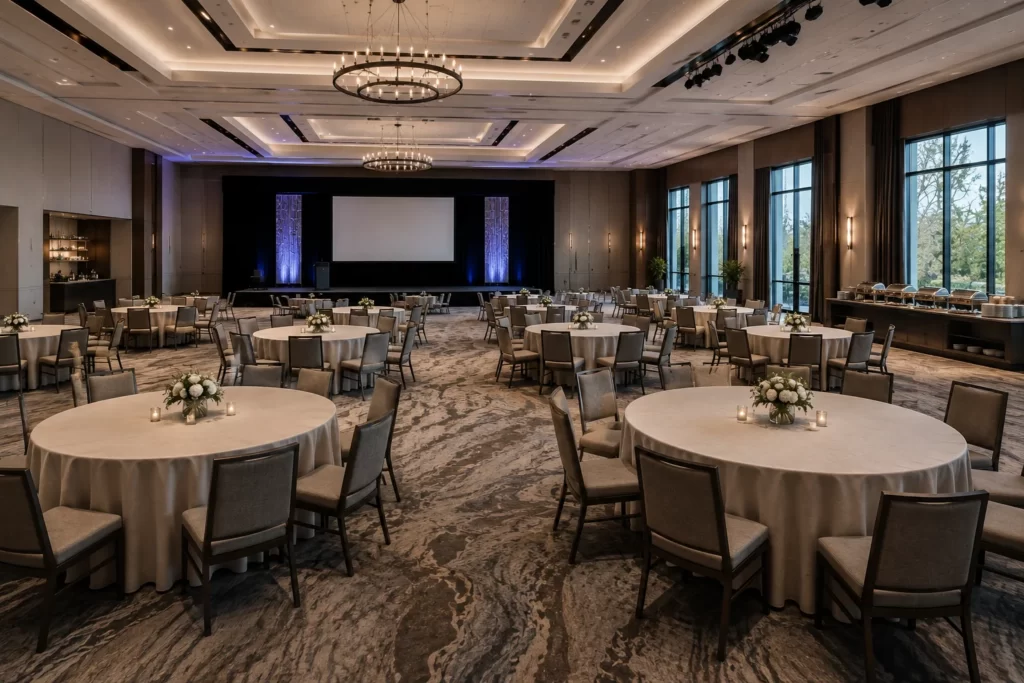
Guest count is one of the first filters you should use when choosing an event venue.
Don’t count only invited guests. Depending on the event, you may also need space for:
- Speakers
- Staff
- Vendors
- Exhibitors
- Registration tables
- Catering stations
- Staging
- Audiovisual equipment
- Dance floors
- Sponsor displays
- Storage
- Guest circulation
Maximum Occupancy Isn’t Comfortable Capacity
A venue that holds 300 people may not comfortably accommodate 300 guests if you also need banquet tables, a dance floor, stage, buffet, or entertainment.
Always ask for capacity by layout.
| Setup | Questions to Ask |
|---|---|
| Theater | Can everyone see and hear the presentation? |
| Classroom | Is there enough space for tables, chairs, laptops, and movement? |
| Boardroom | Does the table comfortably support the number of participants? |
| Banquet | Can dining tables, service areas, staging, and entertainment fit? |
| Reception | Is there enough room for food stations, bars, and networking? |
| Exhibition | Can booths, aisles, registration, storage, and emergency routes fit? |
The most useful question isn’t:
“How many people fit?”
It’s:
“How many people fit comfortably with everything this event requires?”
For smaller celebrations, capacity can be particularly important because an oversized venue may make a party feel empty. If you’re planning a Washington, DC celebration, small party venues in DC can be worth considering when you need a space that feels appropriately sized for your guest list.
Step 3: Set a Realistic Venue Budget
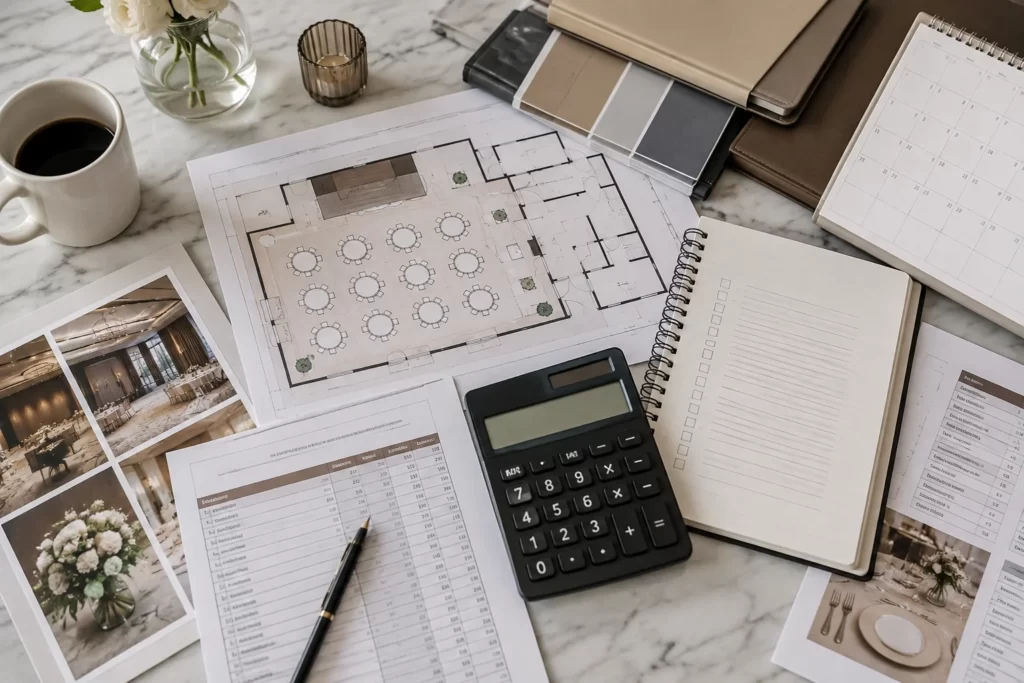
Set your venue budget before you fall in love with a space.
The advertised rental price may not represent your actual event cost. Ask whether the quote includes:
- Tables and chairs
- Setup and cleanup
- Staffing
- Security
- Wi-Fi
- Audiovisual equipment
- Parking
- Service charges
- Taxes
- Overtime
- Furniture
- Staging
Then create a complete event-cost estimate.
| Cost | What to Check |
|---|---|
| Venue rental | What is the base price? |
| Catering | Is catering required through the venue? |
| Staffing | Are setup, service, and cleanup included? |
| Technology | Are equipment and technicians extra? |
| Vendors | Are preferred vendors required? |
| Parking | Is parking included? |
| Accommodation | Will guests need hotel rooms? |
| Insurance | Is event insurance required? |
| Overtime | What happens if the event runs late? |
| Taxes & fees | What additional charges apply? |
Don’t automatically choose the venue with the lowest rental price.
A slightly more expensive venue may provide better value if it includes essential equipment, allows your preferred vendors, or reduces transportation and accommodation costs.
Before comparing quotes, review event space costs and party venue pricing so you understand the different expenses that can affect the final venue bill.
If you’re planning a wedding, it is also useful to compare your venue budget with the average wedding cost in 2026 so the venue doesn’t consume a disproportionate share of your total budget.
Step 4: Compare Location and Accessibility
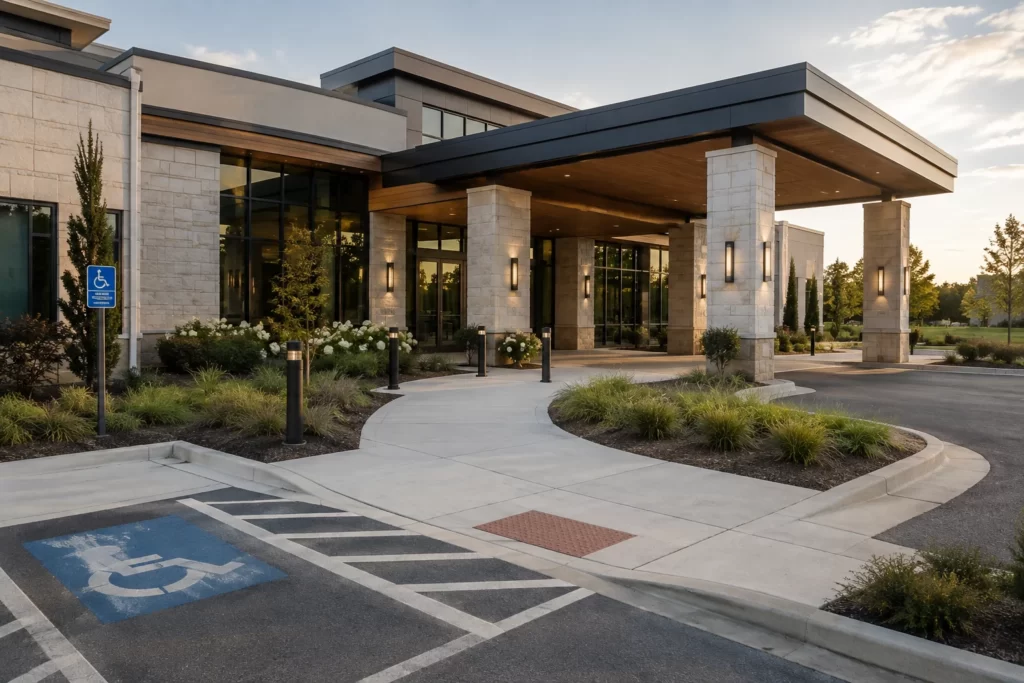
Location can influence attendance, transportation costs, parking, and guest satisfaction.
Consider:
- Where most guests are traveling from
- Major highways
- Airports
- Public transportation
- Parking
- Rideshare access
- Nearby hotels
- Traffic
- Distance between hotels and the venue
For events in Maryland and Washington, DC, don’t assume that one location will work equally well for every audience.
A destination-style venue may work well for a multi-day event where guests need hotels and nearby activities. A centrally located venue may be better for a short corporate meeting.
For planners researching wedding venues in Maryland, location should be evaluated alongside guest travel, accommodation, parking, and the event schedule.
If you’re planning in New York, comparing wedding venues in New York can help you create a location-specific shortlist before comparing individual spaces.
Accessibility Matters
Ask about:
- Step-free entrances
- Accessible restrooms
- Elevators
- Accessible seating
- Parking
- Signage
- Lighting
- Hearing support
- Routes between event spaces
Accessibility should be considered during your initial venue search rather than treated as a last-minute requirement.
Step 5: Consider the Event Calendar and Date
Before committing to a venue, understand what else is happening around your preferred event date.
Dates can affect traffic, hotel availability, venue demand, and guest travel.
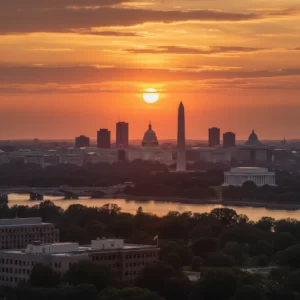
For Washington, DC events, reviewing events in Washington, DC in 2026 can help you identify major events that could affect transportation, hotel availability, or the overall guest experience.
Then confirm the venue’s actual availability.
Ask about:
- Event date
- Arrival time
- Setup window
- Event hours
- Breakdown period
- Vendor access
- Consecutive bookings
- Hotel room availability, if needed
Also ask what “available” actually means.
The room might be available while required staffing, catering, technology, or guest rooms are not.
If your date is flexible, ask about weekday, off-season, and alternative-date options.
Step 6: Evaluate the Layout and Guest Experience
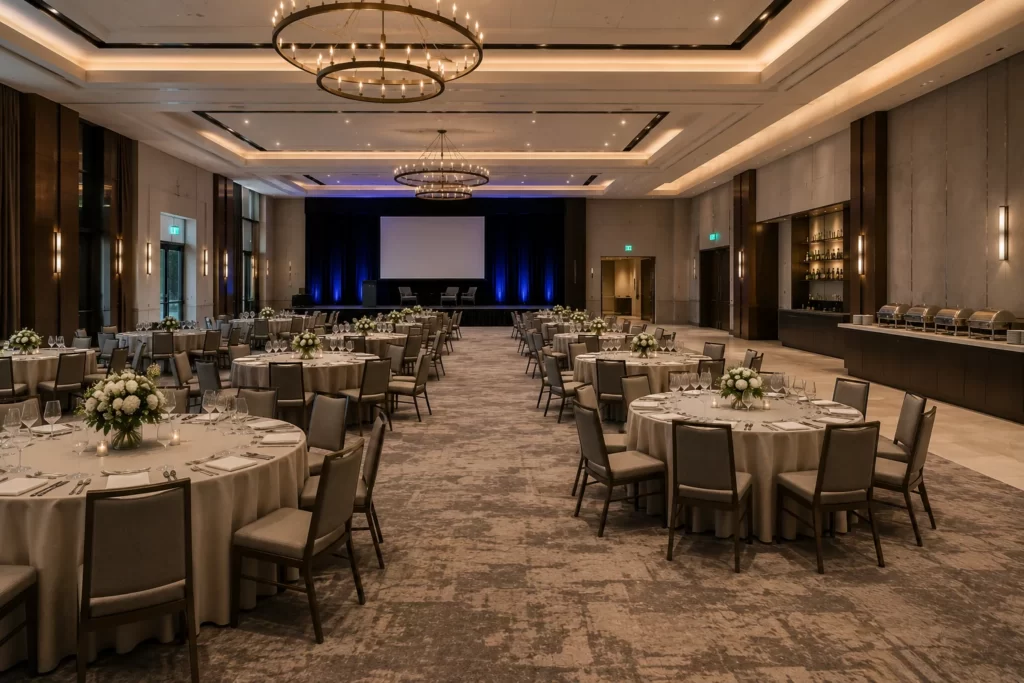
Don’t evaluate a venue based only on photographs.
Request a floor plan and imagine the entire guest journey:
Arrival → Parking → Registration → Seating → Food → Program → Networking → Entertainment → Departure
Ask:
- Where will guests register?
- Where will coats, bags, gifts, and equipment go?
- Can the buffet operate without blocking traffic?
- Where should the bar be located?
- Is there enough space for networking?
- Can staff move without interrupting the event?
- Are emergency routes clear?
- Can guests easily find restrooms?
Pay close attention to:
Acoustics
A room with excessive echo can make speeches, presentations, and conversations difficult.
Lighting
Consider natural light, presentation visibility, stage lighting, evening atmosphere, and photography.
Temperature
Ask how temperature is controlled and whether different areas may become uncomfortable.
Sightlines
Guests should be able to see speakers, screens, stages, and entertainment.
Guest Flow
Crowded entrances, narrow aisles, poorly positioned bars, or confusing room transitions can negatively affect the experience.
For outdoor celebrations, the physical environment requires even more consideration. A guide to outdoor event venue space for 100 guests can help you evaluate weather, seating, shade, guest circulation, and backup plans.
If possible, visit the venue at the same time of day as your event. Traffic, noise, natural light, and parking conditions can change significantly throughout the day.
Step 7: Review Amenities, Technology, and Vendor Policies
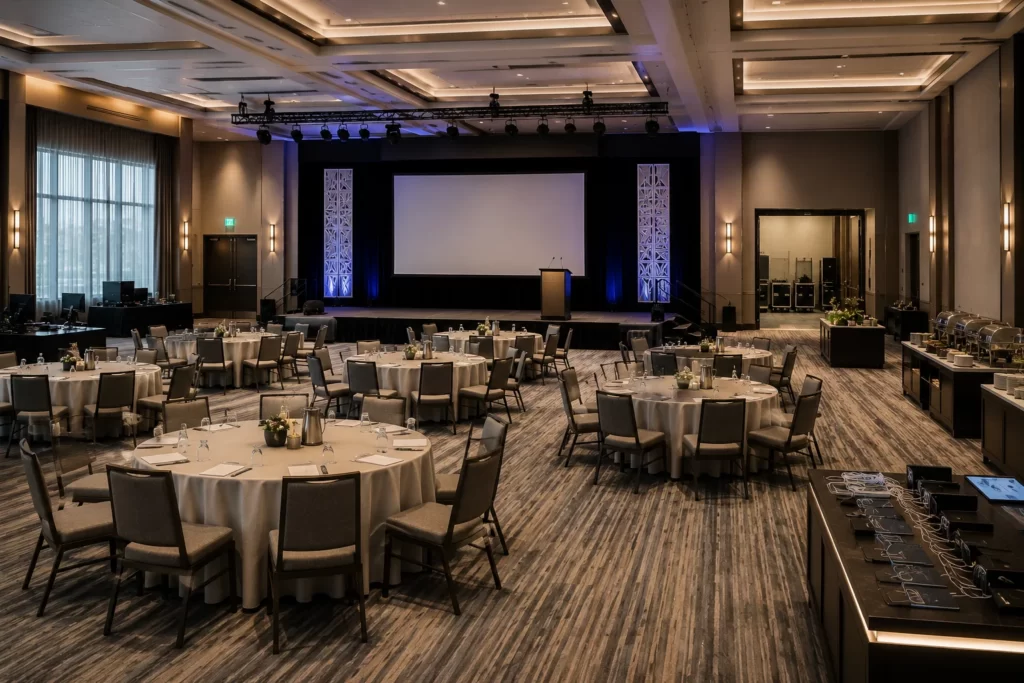
Make a list of everything your event cannot operate without.
Depending on your event, this may include:
- Reliable Wi-Fi
- Microphones
- Projectors
- Screens
- Staging
- Charging stations
- Kitchen facilities
- Coat check
- Registration furniture
- Green rooms
- Loading access
- Storage
- Electrical power
Then determine who supplies each item.
One venue may provide furniture but require an external audiovisual provider. Another may include technology but charge separately for technicians.
Ask About Vendor Policies
Find out whether you can use:
- Outside caterers
- Florists
- Photographers
- DJs
- Decorators
- Entertainment companies
- Production teams
If the venue requires preferred vendors, request the vendor list and pricing before signing.
If outside vendors are permitted, ask about insurance, delivery, setup, storage, and cleanup requirements.
Step 8: Consider Catering, Accommodation, and Planning Support
Food is an important part of the guest experience.
Ask:
- Does the venue provide in-house catering?
- Are outside caterers allowed?
- Are dietary requirements supported?
- Are tastings available?
- Are food and beverage minimums required?
- Are service charges included?
- What are the bar rules?
- When must menus be finalized?
- What are the cancellation terms?
For weddings, conferences, reunions, sports travel, and other multi-day gatherings, consider accommodation at the same time as the venue.
Look at:
- Hotel room blocks
- Group rates
- Room types
- Release dates
- Breakfast
- Parking
- Transportation
- Distance between the hotel and venue
If you’re unsure whether you need a planner or coordinator, understanding event planners vs. coordinators can help you determine what type of professional support makes sense.
For corporate events, planning costs can differ considerably from weddings or private celebrations. If you’re organizing a business gathering, research how much it costs to hire a corporate event planner before adding professional planning services to your budget.
Step 9: Match the Venue to Your Event Style
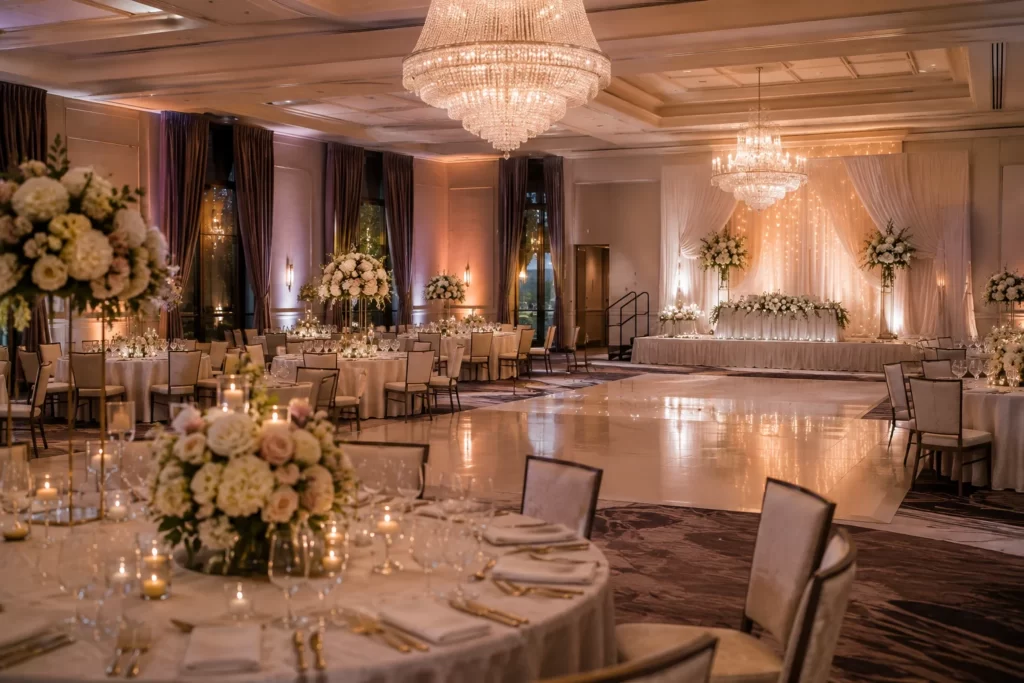
Once the practical requirements are clear, consider whether the venue fits the experience you want to create.
A venue may be technically suitable but still feel wrong for the event.
Weddings
Prioritize:
- Atmosphere
- Guest flow
- Catering
- Photography opportunities
- Entertainment
- Accommodation
- Parking
For couples looking for something beyond traditional ballrooms, exploring unique wedding venues in Washington, DC can provide inspiration for distinctive settings.
For smaller celebrations, micro-wedding venues in Washington, DC may be a better fit when the guest list is intentionally limited.
Corporate Meetings
Focus on:
- Privacy
- Technology
- Wi-Fi
- Acoustics
- Seating comfort
- Location
- Parking
- Professional atmosphere
Private Parties
Consider:
- Atmosphere
- Food and beverage
- Entertainment
- Parking
- Noise restrictions
- Setup flexibility
- Guest capacity
Special Celebrations
The venue should also work with the timing and style of related events. If you’re coordinating a pre-wedding celebration, reviewing when to host bachelor and bachelorette parties can help you think through dates, travel, and venue availability.
Step 10: Look Beyond Standard Venue Options
Sometimes the best venue is not the first type of space that comes to mind.
Depending on your event, you may consider:
- Hotels
- Restaurants
- Private clubs
- Historic properties
- Outdoor spaces
- Galleries
- Country clubs
- Boutique properties
- Unique private venues
The right choice depends on the event purpose, guest expectations, budget, and logistics.
However, unique does not automatically mean suitable. Always return to your practical requirements before making the final decision.
You can also explore hidden gem event venues in Washington, DC when you want alternatives beyond the city’s most obvious event spaces.
Step 11: Compare Local Venue Options
Once you understand your requirements, use location-specific searches to build your shortlist.
For Washington, DC events, start by comparing event venues in Washington, DC based on guest count, location, layout, parking, accessibility, and event format.
For couples specifically looking for a wedding venue in the area, wedding venues in Washington, DC can provide a more focused starting point.
For Texas weddings, compare wedding venues in San Antonio according to guest travel requirements, capacity, venue style, and overall budget.
The important thing is to use location as a filter rather than the only deciding factor.
Step 12: Consider the Full Wedding Planning Timeline
If the venue is for a wedding, selecting the space is only one part of the planning process.
Once you know the date and venue, you’ll need to coordinate:
- Guest list
- Vendors
- Catering
- Photography
- Entertainment
- Invitations
- Decor
- Transportation
- Timeline
- Final guest count
A step-by-step wedding planning checklist can help keep these tasks organized after the venue has been selected.
For engagement celebrations, financial responsibilities can vary by family and circumstance. Understanding who pays for an engagement party can help when you’re building the broader celebration budget.
Step 13: Read the Contract Before You Commit
Before signing, review the venue contract carefully.
Pay attention to:
- Rental period
- Payment schedule
- Deposit
- Cancellation policy
- Rescheduling terms
- Damage responsibilities
- Insurance requirements
- Overtime rates
- Vendor restrictions
- Setup responsibilities
- Cleanup responsibilities
- Force-majeure provisions
- Final guest-count deadline
Ask what happens if:
- Your guest count changes
- The event runs late
- You need to change the date
- The venue becomes unavailable
- A required service cannot be delivered
Never rely on a verbal promise that isn’t included in the written agreement.
For a substantial financial commitment, consider having the agreement reviewed by an appropriate professional.
Step 14: Score Your Shortlist
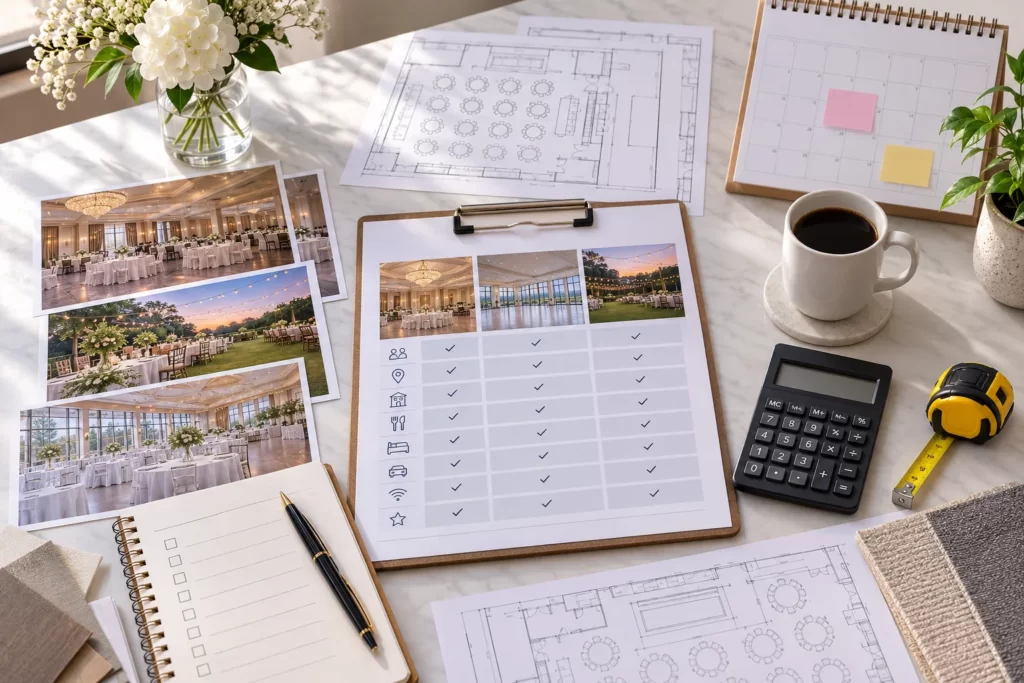
Once you’ve narrowed your search to three to five realistic venues, score them using the same criteria.
| Criterion | Question | Score |
|---|---|---|
| Location | Is it convenient for most guests? | 1–5 |
| Capacity | Does the required layout fit comfortably? | 1–5 |
| Cost | Is the estimated total within budget? | 1–5 |
| Availability | Is the date and time confirmed? | 1–5 |
| Accessibility | Can guests comfortably use the venue? | 1–5 |
| Layout | Does the space support the program? | 1–5 |
| Amenities | Does it provide required equipment? | 1–5 |
| Vendors | Are vendor policies workable? | 1–5 |
| Accommodation | Are nearby hotel options suitable? | 1–5 |
| Contract | Are the terms clear? | 1–5 |
Give greater weight to the factors that matter most for your event.
For example:
- Corporate conference: technology, accessibility, location, layout
- Wedding: atmosphere, catering, guest flow, accommodation
- Fundraiser: capacity, stage, registration, networking
- Private party: atmosphere, food, entertainment, parking
A scorecard doesn’t replace judgment. It helps prevent one attractive feature from hiding several serious drawbacks.
Common Event Venue Mistakes to Avoid
Booking Before Finalizing Attendance
Your guest count affects capacity, catering, layout, and cost.
Comparing Only Rental Prices
Always compare the estimated total event cost, including mandatory services and additional fees.
Assuming Maximum Occupancy Is Comfortable
Ask for capacity according to your exact event layout.
Ignoring Vendor Restrictions
Preferred-vendor requirements can affect both your budget and planning flexibility.
Forgetting Setup and Breakdown Time
Your event may last five hours while the venue needs several additional hours for setup and cleanup.
Ignoring Accessibility
Accessibility should be evaluated before booking.
Choosing Based Only on Photos
Photos rarely show acoustics, loading access, guest flow, staffing, or noise.
Having Only One Venue Option
A shortlist gives you alternatives if the date, guest count, or budget changes.
Event Venue Checklist
Before booking, confirm:
- Event purpose and format
- Expected attendance
- Capacity for the exact layout
- Event date and availability
- Setup and breakdown time
- Total venue cost
- Additional fees
- Parking
- Accessibility
- Technology and equipment
- Catering policy
- Vendor policy
- Accommodation options
- Deposit requirements
- Cancellation policy
- Rescheduling terms
- Overtime rates
- Final guest-count deadline
- Important terms confirmed in writing
Separate Must-Haves From Nice-to-Haves
A simple three-level system can make your venue decision easier.
Must-Haves
The venue cannot be selected without them.
Examples:
- Correct capacity
- Available date
- Accessibility
- Required technology
- Budget compatibility
Strong Preferences
Important but potentially negotiable.
Examples:
- Nearby hotel
- Outdoor space
- Preferred caterer
- Natural light
- Flexible setup
Nice-to-Haves
Useful extras that should not determine the decision.
Examples:
- Decorative features
- Scenic views
- Premium furniture
- Additional lounge space
This approach helps you avoid choosing a venue because of one attractive feature while overlooking an important operational problem.
What to Ask During a Venue Tour
Bring the same question list to every venue so you can compare your options fairly.
Operations
- When can vendors arrive?
- When must the event end?
- How long is cleanup?
- Who handles setup?
Technology
- What equipment is included?
- Is Wi-Fi available throughout the venue?
- Are technicians required?
Food & Beverage
- Is outside catering permitted?
- Are food and beverage minimums required?
- Are dietary restrictions supported?
Vendors
- Are outside vendors allowed?
- Is there a preferred-vendor list?
- What insurance is required?
Guest Experience
- How does parking work?
- Are restrooms easily accessible?
- Is signage available?
- Are quiet areas available?
Contract
- What deposit is required?
- What happens if the event is canceled?
- What are the overtime charges?
- When is the final guest count due?
Final Thoughts
Choosing an event venue becomes much easier when you treat it as a planning decision rather than a popularity contest.
Start with your event purpose, guest count, budget, location, and date. Then compare capacity, layout, accessibility, parking, technology, catering, vendors, accommodation, availability, and contract terms.
Most importantly, evaluate every venue using the same criteria.
The right venue should make the rest of your event easier. It should support the guest experience, fit your practical requirements, and give you enough flexibility to manage the details that matter.
If you’re planning a wedding, corporate event, birthday party, fundraiser, conference, or private celebration, use your requirements to create a shortlist before making a booking.
A good venue isn’t simply one that looks impressive.
It’s the one that works.
Frequently Asked Questions
What is the most important factor when choosing an event venue? ▾
The most important factor is whether the venue can support your event’s purpose and guest experience within your budget. Capacity, location, layout, accessibility, and availability are usually the first practical filters.
How far in advance should you book an event venue? ▾
Lead time depends on the event type, season, destination, guest count, and venue demand. Weddings, conferences, conventions, and multi-day events generally require more planning time than smaller gatherings. Start searching once you know the approximate date and attendance.
How do I choose an event venue in Maryland? ▾
Start with guest count, event format, budget, preferred date, and travel requirements. Then compare Maryland venues by capacity, layout, accessibility, parking, accommodation, vendor policies, and total cost.
What questions should I ask a venue before booking? ▾
Ask about capacity by layout, availability, included equipment, catering, vendor policies, setup and breakdown, accessibility, parking, insurance, deposits, cancellation, overtime, and final guest-count deadlines. Request important pricing and commitments in writing.
Are fall and spring good seasons for booking an event venue? ▾
Spring and fall can be popular periods for weddings, corporate gatherings, and social events, so availability may be more competitive in some markets. If your date is flexible, ask venues about alternative dates and off-peak options.
Compare vendors for your next event
Search caterers, photographers, florists, planners, and rentals — then send one request to several vendors at once.