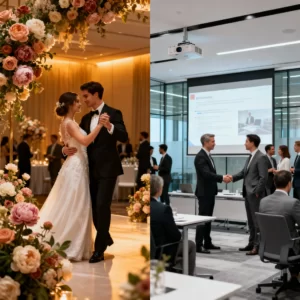
Finding the right wedding vendors is one of the most important parts of planning a wedding. Your caterer affects meal timing and the overall guest experience, your photographer captures the moments you’ll want to revisit for years, your DJ or band sets the tone for the reception, and your florist and rental team help pull the venue design together.
That’s why finding Reliable Wedding Vendors in Maryland is about far more than picking the lowest quote or the vendor with the biggest social-media following.
Weddings in Maryland happen in all kinds of settings — hotels, ballrooms, historic properties, farms, waterfront spaces, and other event locations. Each of these settings comes with its own requirements around parking, loading, setup, weather, sound, food service, and vendor access.
Before you start reaching out to vendors, take time to map out your planning priorities and timeline. A detailed wedding planning checklist can help you organize the big decisions and figure out which vendors need to be booked first.
At the end of the day, the goal isn’t just to find talented professionals. You want vendors who actually fit your wedding date, venue, guest count, budget, style, schedule, and expectations.
Why Vendor Selection Deserves a Real Process
A wedding vendor isn’t just a service provider — they become part of the guest experience and the wedding-day schedule itself.
The caterer drives meal timing and how dietary needs get handled. The photographer needs enough access, lighting, and time to capture the wedding properly. The DJ or band controls the sound, announcements, music, and overall reception energy. The florist and rental team shape the setup, ceremony transitions, reception design, and breakdown. And a planner or coordinator often ties all of these moving parts together.
Here’s the thing: a vendor can be genuinely talented and still be a poor fit for your wedding. They might never have worked at your venue, might not be available for your full schedule, might specialize in a completely different style, or might not offer the communication and backup support you need on the day.
Pro Tip: The most reliable vendor isn’t automatically the cheapest or the most popular. Look for relevant experience, clear communication, transparent pricing, and a realistic plan for delivering the service.
Step 1: Create Your Wedding Vendor Checklist
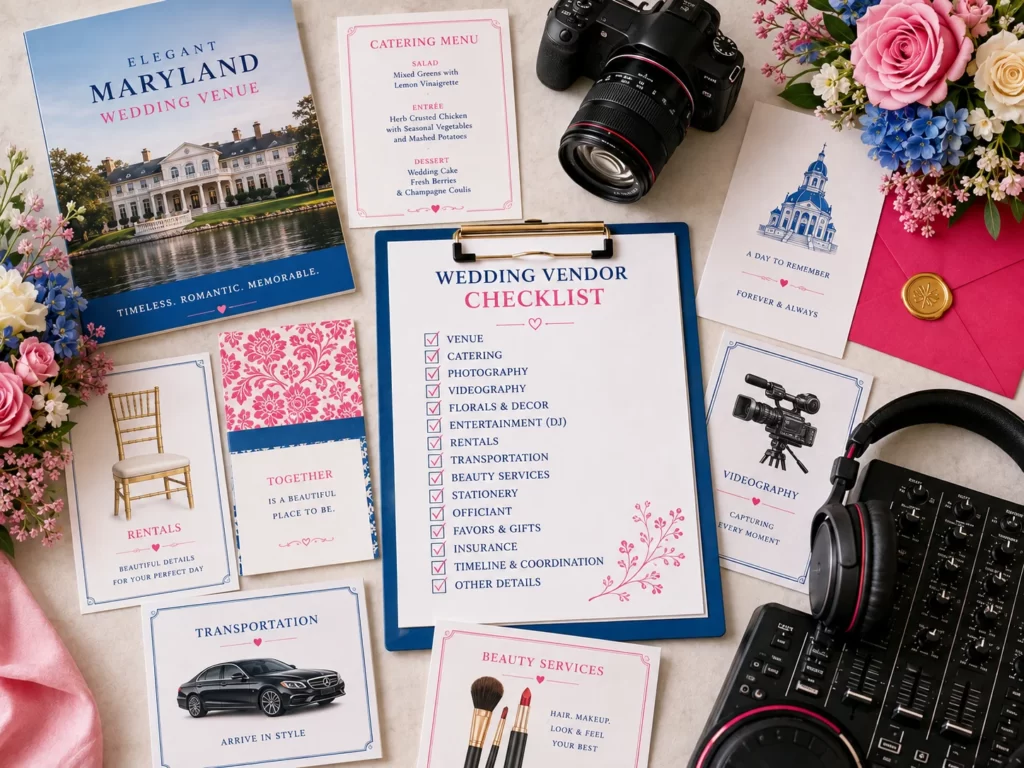
Before you start searching for Maryland wedding vendors, figure out which services you actually need.
Couples often begin by looking for a photographer or caterer, only to realize later that they also need rentals, transportation, lighting, bar service, entertainment, stationery, hair and makeup, planning support, or a weather backup plan.
Start with a simple checklist like this one:
| Vendor Category | Questions to Answer |
| Venue | Does it provide catering, tables, chairs, staff, or a preferred-vendor list? |
| Planner or Coordinator | Do you need full planning, partial planning, design, or day-of coordination? |
| Caterer | What meal style, dietary needs, bar service, and guest count are expected? |
| Photographer | What moments, coverage hours, style, albums, and turnaround time matter? |
| Videographer | Do you want highlights, ceremony coverage, speeches, or documentary edits? |
| DJ or Band | What music, announcements, dance-floor atmosphere, and equipment are required? |
| Florist and Designer | What ceremony pieces, centerpieces, personal flowers, and installations are needed? |
| Rentals | Are linens, chairs, tabletop items, lighting, tents, staging, or lounge furniture required? |
| Hair and Makeup | How many people need services, and when must everyone be ready? |
| Transportation | Do guests, vendors, or the wedding party need transportation? |
One more thing before signing anything: your venue may already provide some services or restrict outside vendors. Confirm the venue’s rules before committing to an outside professional.
Step 2: Set a Budget by Vendor Category
A total wedding budget is helpful, but vendors need category-level limits.
Decide how much you can realistically allocate to:
- Food and catering
- Photography
- Videography
- Entertainment
- Flowers
- Rentals
- Planning
- Beauty
- Transportation
- Other services
And keep a reserve for taxes, service charges, overtime, travel, setup, cleanup, and unexpected changes — because something always comes up.
If you’re still establishing your overall wedding budget, reviewing average wedding costs in 2026 can give you broader context for what to expect.
Here’s a practical rule: don’t compare a complete proposal with another vendor’s advertised starting price. Always ask whether taxes, service charges, travel, setup, breakdown, overtime, and other fees are included.
| Cost Question | Why It Matters |
| Is the quote a package or starting price? | Starting prices may not reflect your guest count or service level. |
| Are taxes and service charges included? | The final total may be higher than the headline price. |
| Is travel included? | Some vendors charge mileage, lodging, or travel time. |
| Are setup and breakdown included? | Labor may be charged separately. |
| Is overtime available? | Weddings can run later than planned. |
| What is the payment schedule? | Helps you plan deposits and installment dates. |
| What happens if the guest count changes? | Food, rentals, staffing, and timing may need revision. |
Step 3: Search for Vendors Who Work in Maryland
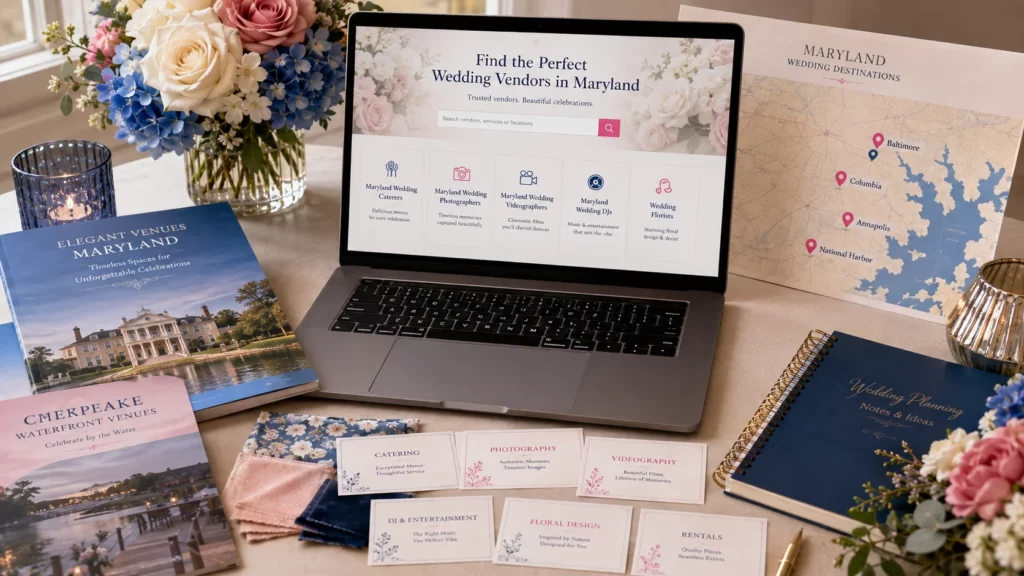
Start with the wedding venue and event location, then search for vendors who regularly serve that area.
A vendor based outside Maryland can still be an excellent choice — but you should understand their travel fees, setup timing, lodging needs, and how familiar they are with your venue.
Use specific searches such as:
- Maryland wedding caterers
- Maryland wedding photographers
- Maryland wedding videographers
- Maryland wedding DJs
- Wedding florists in Annapolis
- Wedding planners near Baltimore
- Maryland wedding rental companies
And a word of caution: don’t select a vendor just because their website mentions “Maryland.” Confirm they have recent work relevant to your venue, guest count, style, and date.
Maryland weddings may take place in hotels, ballrooms, historic properties, farms, waterfront spaces, and locations around Baltimore, Annapolis, BWI, Columbia, National Harbor, and Washington, DC. Ask whether the vendor has handled the setup, travel, weather, and access requirements of your type of location.
If you’re considering the Washington, DC area as part of your wedding plans, looking at events in Washington, DC in 2026 can provide additional regional planning inspiration.
Step 4: Review Portfolios for Relevant Experience
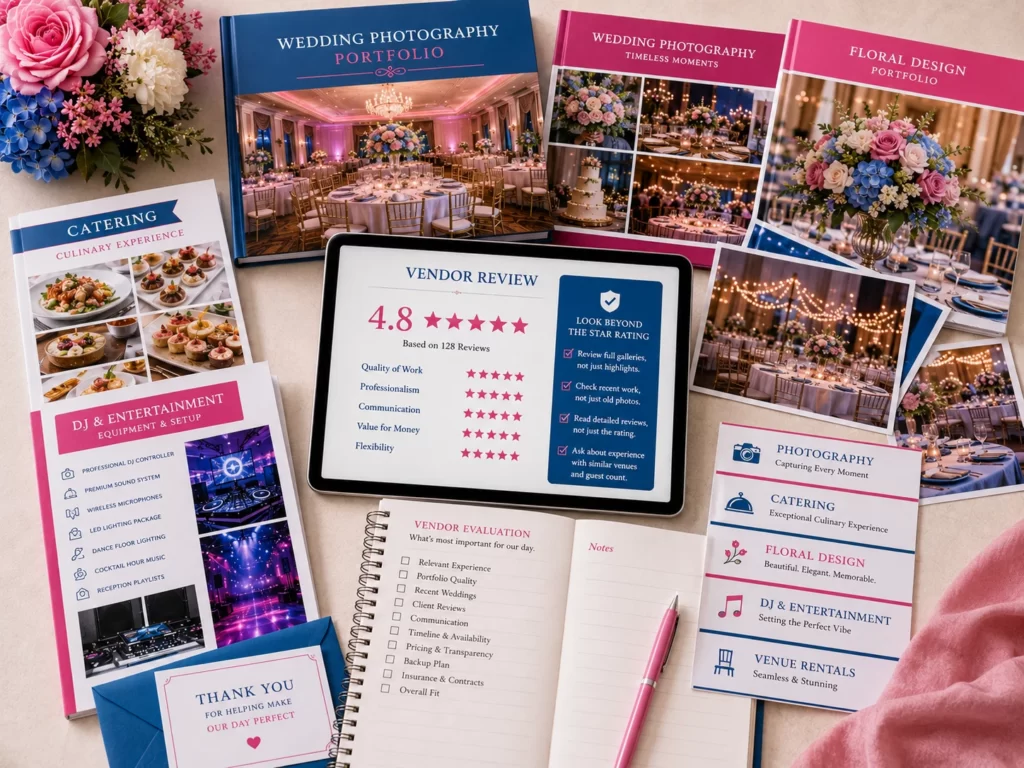
A portfolio tells you more than whether you like a vendor’s style.
Look for work that resembles your own wedding in terms of:
- Size
- Venue type
- Season
- Lighting
- Cultural requirements
- Religious requirements
- Formality
- Design style
- Overall guest experience
Photographers and Videographers
Review complete galleries or full wedding films whenever possible, rather than relying only on social-media highlights. For photographers, look for consistency across an entire wedding. For videographers, pay attention to audio quality, editing, storytelling, and coverage of important moments.
Florists and Designers
Look at complete ceremony and reception installations, not just bouquets or individual arrangements.
Caterers
Request menus, presentation examples, staffing information, and details about service for your expected guest count.
DJs and Bands
Ask about event flow, announcements, sound limits, equipment, load-in, soundcheck, and backup equipment.
Relevant experience doesn’t mean the vendor has to replicate another wedding. It means they’ve demonstrated the ability to solve similar practical problems.
For couples considering an unusual setting, browsing unique wedding venues in Washington, DC can provide inspiration while also highlighting why venue type matters when evaluating vendor experience.
Step 5: Read Reviews Carefully and Request References
Reviews help you spot patterns in communication, punctuality, professionalism, service, and final results.
Don’t focus only on the star rating. Look for comments about:
- Communication
- Punctuality
- Professionalism
- Pricing transparency
- Responsiveness
- Flexibility
- Final results
- How they handled unexpected changes
Then ask yourself some pointed questions:
- Did the vendor arrive on time?
- Were the costs clearly explained?
- Did the vendor respond when plans changed?
- Did the finished work match what was promised?
- Were unexpected charges disclosed?
For a major investment, ask whether the vendor can provide references from recent clients or venues. Just remember — a reference is one input, not a substitute for reviewing the vendor’s portfolio, proposal, contract, and other evidence.
Step 6: Ask Every Vendor the Same Core Questions
Consistent questions make vendor comparison dramatically easier.
Give every vendor the same basic information about your date, venue, guest count, schedule, style, and budget, and ask the same core questions:
| Question | Why Ask It? |
| Are you available for the full wedding date and required hours? | Prevents partial or rushed coverage. |
| Have you worked at this venue or a similar Maryland venue? | Reveals relevant logistical experience. |
| What exactly is included in your proposal? | Helps compare services fairly. |
| What additional costs could apply? | Surfaces travel, overtime, setup, or service fees. |
| How many weddings do you serve on the same date? | Clarifies whether your event receives dedicated attention. |
| Who will be present on the wedding day? | Confirms who will actually deliver the service. |
| What happens if you become unavailable? | Identifies the backup plan. |
| Do you carry appropriate insurance? | Some venues require proof of coverage. |
| What is your payment and cancellation policy? | Makes financial responsibilities clear. |
| When and how do we communicate during planning? | Sets expectations for communication. |
Keeping the questions consistent makes it easier to compare proposals fairly and understand what each professional does best.
Step 7: Confirm Availability Before Falling in Love With a Vendor
You may find a photographer whose work is perfect for your style or a band that seems ideal — but none of that matters if the vendor isn’t available.
Check availability early, especially for photographers, planners, popular bands, and other vendors who may book only one wedding per day.
Ask whether the vendor can temporarily hold your date while you review the proposal and contract. A hold should come with a clear expiration date, and it shouldn’t be treated as a confirmed booking until the required deposit and signed agreement are complete.
Also confirm all the hours you need. A photographer may need to start before the ceremony. A caterer and rental team may require early access for setup. A hair-and-makeup team may need several hours before guests arrive. A DJ or band may require load-in, soundcheck, and breakdown time.
Step 8: Check Insurance, Licensing, and Venue Requirements
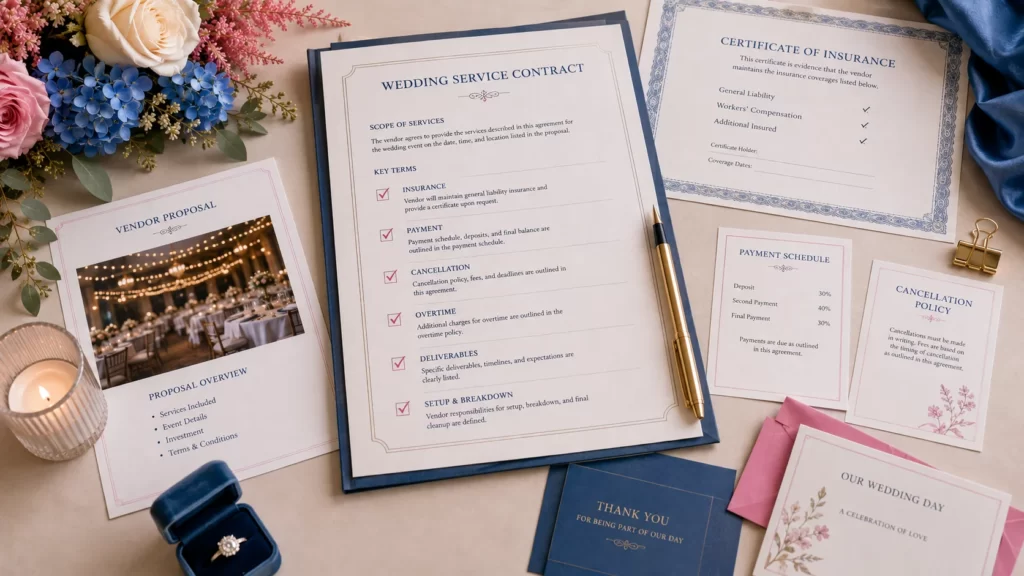
Ask each vendor what documentation they can provide.
Depending on the service and venue, requirements may include:
- Liability insurance
- Certificates of insurance
- Additional insured documentation
- Food-service documentation
- Alcohol-related requirements
- Permits
- Fire or tent requirements
- Loading documentation
Your venue should be the primary source for its specific requirements. Ask about certificates of insurance, additional insured language, fire or tent rules, alcohol service, food handling, loading, parking, and setup access.
Keep copies of all approved documents in your wedding planning folder.
Important: Requirements vary by venue and service. If a contract, insurance requirement, permit, or financial obligation is unclear, consult an appropriately qualified professional.
Step 9: Review the Vendor Contract Line by Line
A professional proposal is not necessarily the complete contract.
Review every detail, including:
- Service date
- Hours
- Location
- Deliverables
- Package details
- Staffing
- Setup and breakdown
- Travel
- Meals
- Equipment
- Replacement policy
- Payment schedule
- Cancellation
- Rescheduling
- Postponement
- Force-majeure language
- Overtime
- Image rights
- Final-count deadlines
Ask for clarification on anything vague. For example, “full-service catering” could exclude rentals, staffing, bar service, or cleanup. “Photography coverage” could mean very different hours and deliverables depending on the vendor.
If you’re deciding between planning support and day-of coordination, comparing event planners vs. coordinators can help clarify which responsibilities should be included in your agreement.
Step 10: Check Venue Compatibility
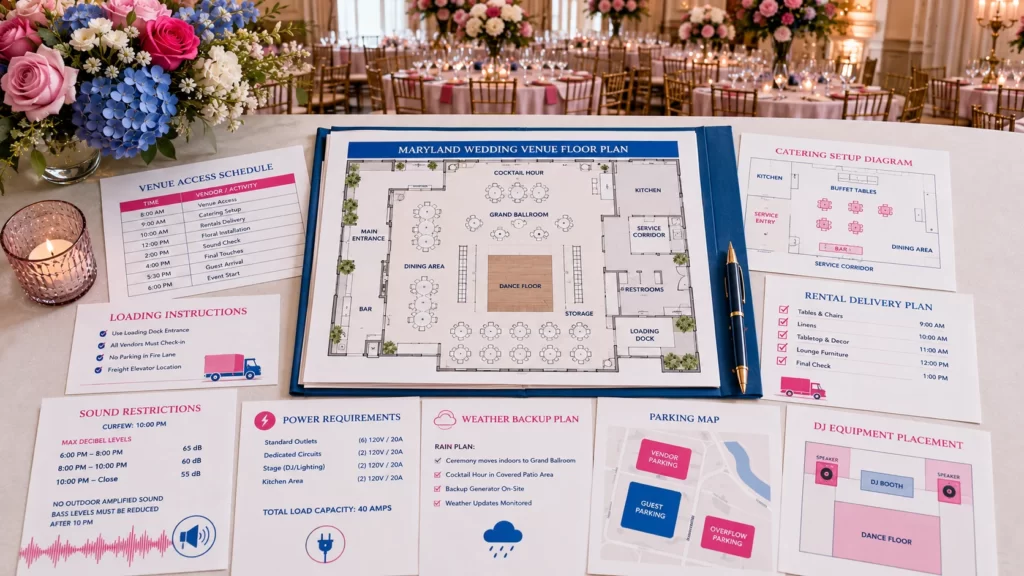
A vendor who excels at one venue may not be the best fit for another.
Before booking, share the following with each vendor:
- Venue address
- Floor plan
- Access times
- Preferred-vendor rules
- Loading instructions
- Sound restrictions
- Power limitations
- Weather plan
- Parking information
Then ask the vendor whether the venue can support the proposed setup.
Confirm where the caterer will prep food, where rentals will be delivered, where the DJ or band will load equipment, where the florist can store arrangements, and how vendors will move through guest areas.
A vendor needs to fit the venue and the schedule — not just the wedding’s visual style.
For couples planning smaller celebrations, exploring micro weddings in Washington, DC can provide useful context on how guest count can affect venue and vendor requirements.
Step 11: Plan for Vendor Backup and Communication
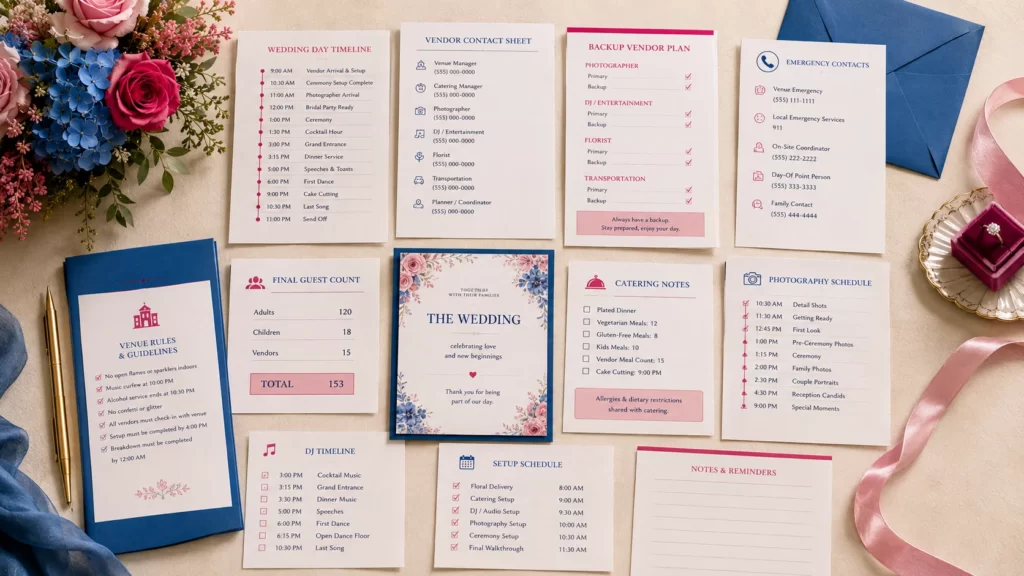
Ask every vendor what happens if they become ill, have a vehicle problem, experience equipment failure, or simply cannot deliver the service on the wedding day.
A solid backup plan should explain who steps in, what happens to your deposit, and how the vendor communicates the change.
Create One Shared Planning Folder
Keep these documents together:
- Proposals
- Contracts
- Invoices
- Proof of payment
- Insurance certificates
- Venue rules
- Floor plans
- Timelines
- Vendor contact details
- Final guest count
- Dietary requirements
Use a final timeline that shows vendor arrival, setup, meal breaks, photography coverage, entertainment, speeches, cleanup, and departure.
A vendor team becomes far more reliable when everyone knows exactly who owns each task.
Common Red Flags When Choosing Wedding Vendors
Be cautious when a vendor:
- Refuses to provide a written proposal
- Avoids direct questions about pricing
- Pressures you to pay immediately
- Cannot explain who will deliver the service
- Has unclear cancellation terms
- Makes promises that are absent from the agreement
- Has no realistic backup plan
- Repeatedly communicates poorly
- Cannot explain additional charges
That said, one imperfect review doesn’t automatically make a vendor unreliable. Look for patterns and give the vendor a chance to clarify.
At the same time, remember that a polished website doesn’t replace references, a detailed contract, insurance documentation, and responsive communication.
Maryland Wedding Vendor Comparison Scorecard
Use the same criteria for every serious vendor:
| Criterion | Vendor A | Vendor B | Vendor C |
| Style Fit | /5 | /5 | /5 |
| Relevant Experience | /5 | /5 | /5 |
| Availability | /5 | /5 | /5 |
| Venue Compatibility | /5 | /5 | /5 |
| Proposal Completeness | /5 | /5 | /5 |
| Communication | /5 | /5 | /5 |
| Pricing Transparency | /5 | /5 | /5 |
| Insurance/Documentation | /5 | /5 | /5 |
| Backup Plan | /5 | /5 | /5 |
| Contract Clarity | /5 | /5 | /5 |
| Total | /50 | /50 | /50 |
Score every vendor on the same criteria, then give extra weight to the services that matter most for your wedding. For example, catering may be the top priority for a large reception, while photography style may matter more for a smaller celebration.
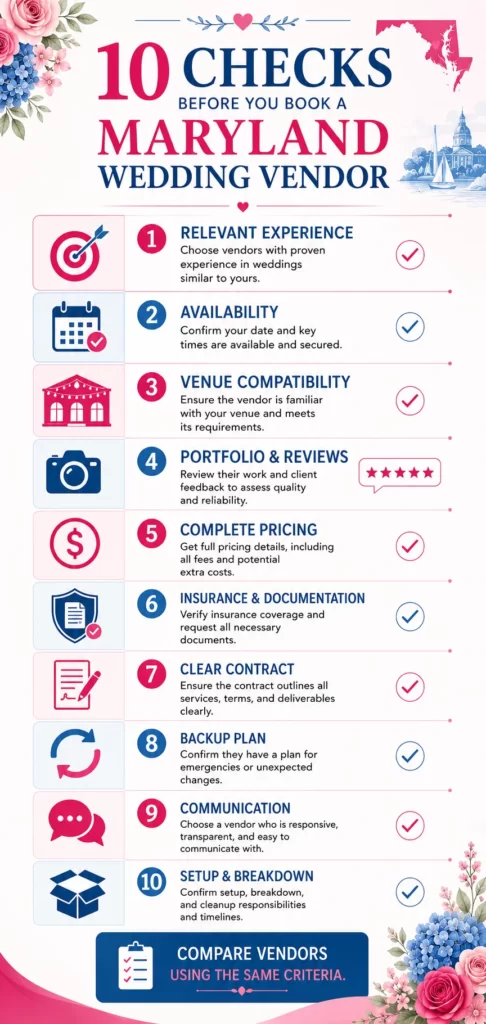
Understanding Different Event Planning Needs
Not every event requires the same level of professional support.
A wedding planner may be involved throughout the entire planning process, while a coordinator may focus more heavily on execution and the wedding-day timeline.
Your needs may depend on:
- Guest count
- Number of vendors
- Venue complexity
- DIY responsibilities
- Schedule complexity
- Guest logistics
- Personal availability
If you’re also planning a corporate gathering around the same time, looking at corporate event planner costs can provide useful context when evaluating professional planning services for a different type of event.
Wedding Vendor Planning Timeline
9–12+ Months Before
Prioritize:
- Venue
- Planner or coordinator
- Photographer
- Caterer
- Entertainment
6–9 Months Before
Consider booking:
- Videographer
- Florist
- Rentals
- Beauty services
- Transportation
3–6 Months Before
Finalize:
- Menus
- Decor
- Music details
- Timeline requirements
- Guest transportation
- Vendor documentation
Final 1–2 Months
Confirm:
- Final guest count
- Vendor arrival times
- Venue access
- Setup responsibilities
- Payment deadlines
- Insurance and documentation
- Emergency contacts
- Backup plans
Keep in mind that the exact order can vary based on your date, venue, priorities, and vendor availability.
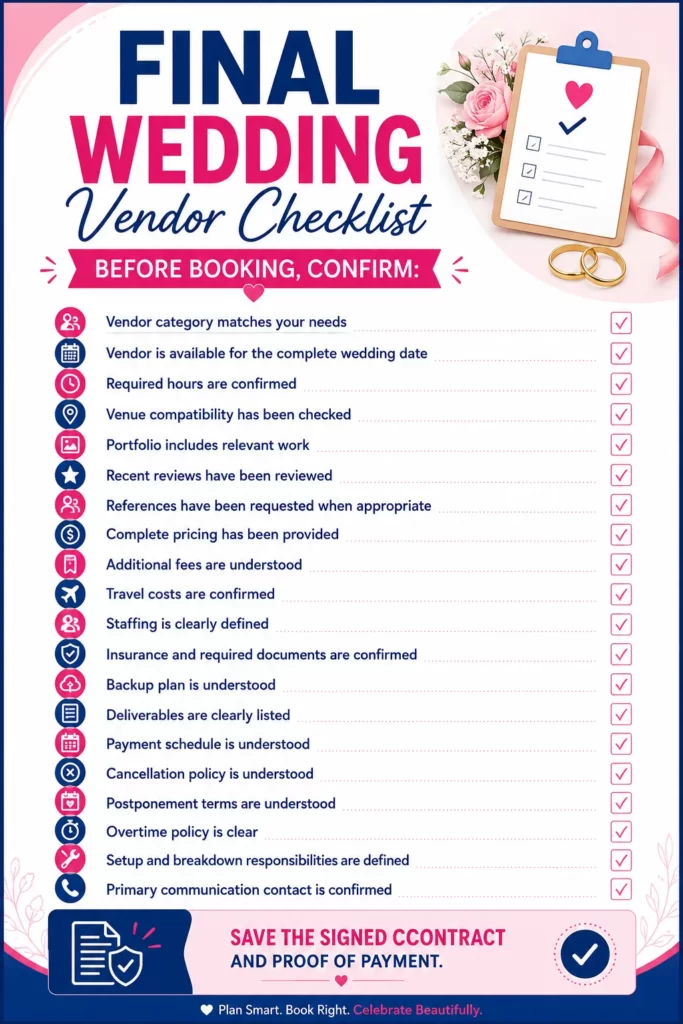
Before the wedding, send each vendor the final venue rules, timeline, guest count, meal requirements, access instructions, and contact list.
Final Thoughts
Finding reliable wedding vendors in Maryland becomes much easier when you treat vendor selection as a structured comparison rather than a popularity contest.
Define what you need, establish a category-level budget, research relevant experience, review recent work and reviews, ask consistent questions, confirm availability, check venue compatibility, review contracts, and plan for unexpected problems.
The right vendor should do more than produce beautiful work. They should also communicate clearly, understand the venue, respect the agreed scope, and have a realistic plan for delivering the service.
Start by researching the venue and services that fit your wedding, then build a vendor team around your location, guest experience, schedule, and budget.
Frequently Asked Questions
How do I find wedding vendors in Maryland? ▾
Start with your venue’s preferred-vendor list, local vendor directories, referrals from planners and recently married couples, and online searches for specific services. Then compare portfolios, reviews, availability, pricing, contracts, insurance, and venue compatibility before booking.
What wedding vendors should I book first? ▾
The order depends on your date, venue, budget, and priorities. Couples often begin with the venue, planner or coordinator, photographer, caterer, and entertainment, followed by florals, rentals, beauty, transportation, and other services.
What should I ask a Maryland wedding vendor before booking? ▾
Ask about availability, relevant experience, included services, additional costs, travel, staffing, insurance, backup plans, payment schedules, cancellation policies, deliverables, setup, communication, and contract terms.
Do wedding vendors need insurance in Maryland? ▾
Some venues require vendor liability insurance or other documentation, but requirements vary by venue and service. Ask your wedding venue what it requires and confirm that the vendor can provide the appropriate documents.
When should I book wedding vendors for a Maryland wedding? ▾
Start researching vendors as soon as your date and venue are established. Popular dates and vendors can require earlier planning, particularly for photographers, planners, entertainment, and professionals who may accept only one wedding per date.
Compare vendors for your next event
Search caterers, photographers, florists, planners, and rentals — then send one request to several vendors at once.