Quick answer: The hotel management tips that pay off most with group and event business are operational. Answer every inquiry quickly and completely, keep your meeting-space data accurate, make banquet event orders easy to approve, report room block pickup openly, and hand each group from sales to a services manager in a live call with the planner. After the event, close the bill quickly and record what the group actually used. A hotel that makes the planner’s job easier gives them a reason to come back, and most of that comes down to process.
Example scenario (fictional): A general manager at a 220-room full-service hotel outside Columbus has a good transient base and three meeting rooms that sit empty most weekdays. The sales team answers group inquiries when it can get to them. The CSM learns about most groups a few weeks before arrival. Banquets often get the final counts late. Each group goes fine on the day, but few of them come back.
This guide is for general managers, directors of sales, and venue managers who already run a property and want more group and event business from it. It assumes you already know how to manage a hotel and covers the parts of hotel management that planners notice: how fast you answer, how accurate your space data is, how catering and room blocks are handled, how sales hands a group to operations, and how you close a group so it comes back. Several sections link to our planner guides, so you can see the same steps from the other side of the table.
In this guide:
- Hotel management tips at a glance
- Who manages group business in a hotel
- Run hotel operations from one schedule
- Winning and running group and event business
- Close every group so it comes back
- Hospitality tips for the team that meets the group
- Copyable group inquiry response checklist
- FAQ
Hotel management tips at a glance
| Tip | Why it matters for group business | Where to start |
|---|---|---|
| Run the day from one function schedule | Every department works from the same version of what is happening | A short department-head stand-up each morning |
| Staff and order from written guarantees | Labor and food costs follow real counts, not hopes | Guarantee dates in every contract and BEO |
| Write down the procedures that touch groups | Holds, changes, and charges are handled the same way every time | A one-page procedure for each, with an owner |
| Answer inquiries and RFPs fast and completely | Planners shortlist the hotels that answer first and clearly | A response standard and a template |
| Keep meeting-space data accurate | Wrong capacities lose bookings or cause problems on site | One master sheet for every room and set |
| Make catering and BEOs easy to approve | Fewer late changes and fewer billing disputes | Menus with clear pricing and BEO deadlines |
| Report room block pickup openly | Planners can act before the cutoff date, not after it | Pickup reports on a set schedule |
| Hand off from sales to the CSM in a live call | Promises made in sales reach operations | A joint call and a written recap |
| Close each group with a post-con and a history | Accurate records make the next proposal easier | A standard post-con agenda |
Who manages group business in a hotel
The hotel management staff who touch a group vary by property, but the roles are similar across full-service hotels. The U.S. Bureau of Labor Statistics describes lodging managers by type. General managers “oversee all lodging operations at a facility.” Convention service managers “coordinate the activities of various departments, to accommodate meetings, conventions, and special events.” Revenue managers monitor room sales and reservations, project occupancy, and decide “which rooms to discount and when to offer special rates.” Front-desk managers coordinate reservations and room assignments, and most also adjust bills.
On the planner side, the Events Industry Council’s APEX glossary calls the conference services manager the “primary contact person assigned to an event in a hotel or convention centre”. Planners take that literally. Once the contract is signed, they expect one person who knows their program and can get answers from every department.
At a smaller or select-service property, one person may do several of these jobs. That’s fine, as long as the planner knows who owns each step. If you want a planner-facing view of these roles, our guide to the hospitality industry for event planners has a role-by-role table you can share with new sales staff.
Run hotel operations from one schedule
Group business tests your hotel operating rhythm more than transient business does. A meeting with a lunch, two breaks, and a dinner touches sales, catering, banquets, the kitchen, housekeeping, engineering, and the front desk in a single day. The hotel management process that holds up under that load is simple: one function schedule, written orders, and a short daily meeting.
Hold a short stand-up with department heads
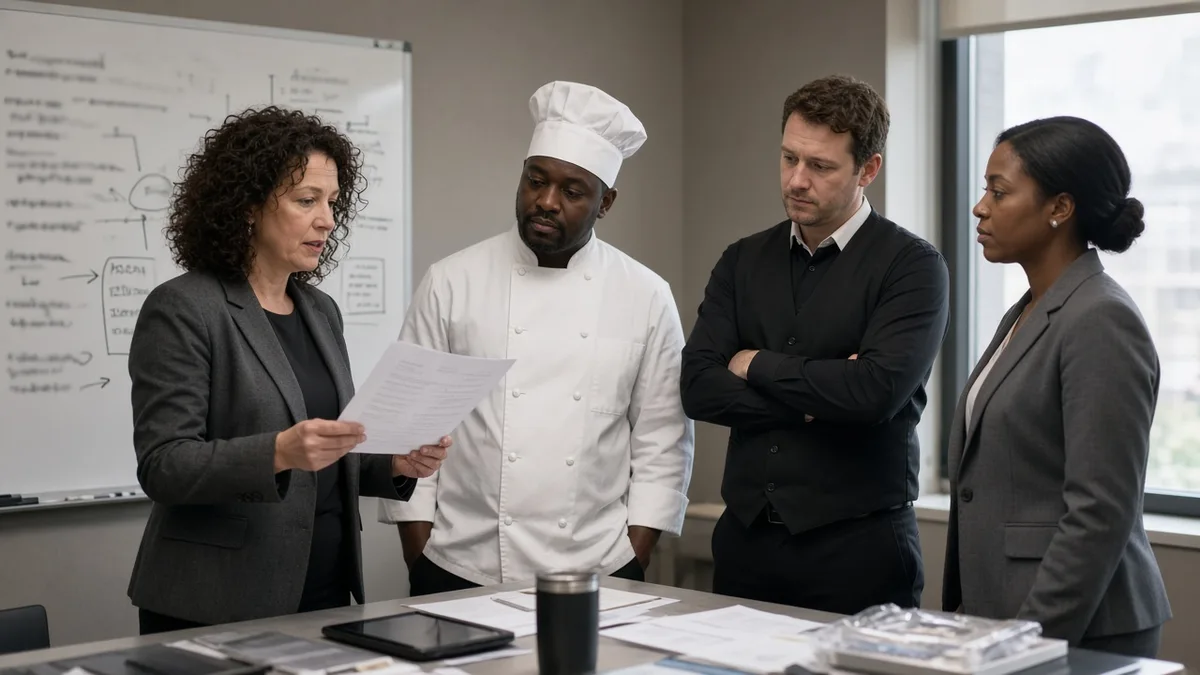
Start each day with a stand-up that covers in-house groups, arrivals, departures, and anything that changed overnight. Keep it short and hold it at the same time and place every day. Walk through the day’s functions in time order, confirm the counts against guarantees, and flag any BEO revised since yesterday. Department heads should leave knowing what is different from what they printed.
Staff and order from written guarantees
Your kitchen and banquet schedules should follow the guarantees in signed BEOs, not the estimate in the first inquiry. Put the guarantee deadline in the contract and on every BEO, and tell the planner what happens if a count goes up or down after that date. When guarantees come in late, the planner should hear about it from the CSM before it becomes a staffing or billing problem.
Write down the procedures that touch groups
Most hotels have standard operating procedures for rooms and housekeeping. Fewer have them for the hotel management tasks that matter most to planners. Write a one-page procedure for each of the following, name an owner, and train new staff on it.
| Procedure | Owner (typical) | What it prevents |
|---|---|---|
| Answering a group inquiry or RFP | Director of sales | Slow, incomplete, or inconsistent replies |
| Placing and releasing space holds | Sales manager | Double-booked rooms and holds that never expire |
| Sales-to-CSM handoff | Director of sales and CSM | Promises that never reach operations |
| BEO changes after signing | CSM or catering manager | Orders that differ between departments |
| Charges to the master account | CSM and accounting | Charges the planner never approved |
| Room block pickup reporting | Sales or revenue manager | Surprises at the cutoff date |
| Post-con meeting and group history | CSM and sales manager | Lost lessons and weak rebooking proposals |
Winning and running group and event business
Most group business moves through six stages on the hotel side, from the first inquiry to the next booking. The sections after the infographic take the hotel’s part one step at a time.
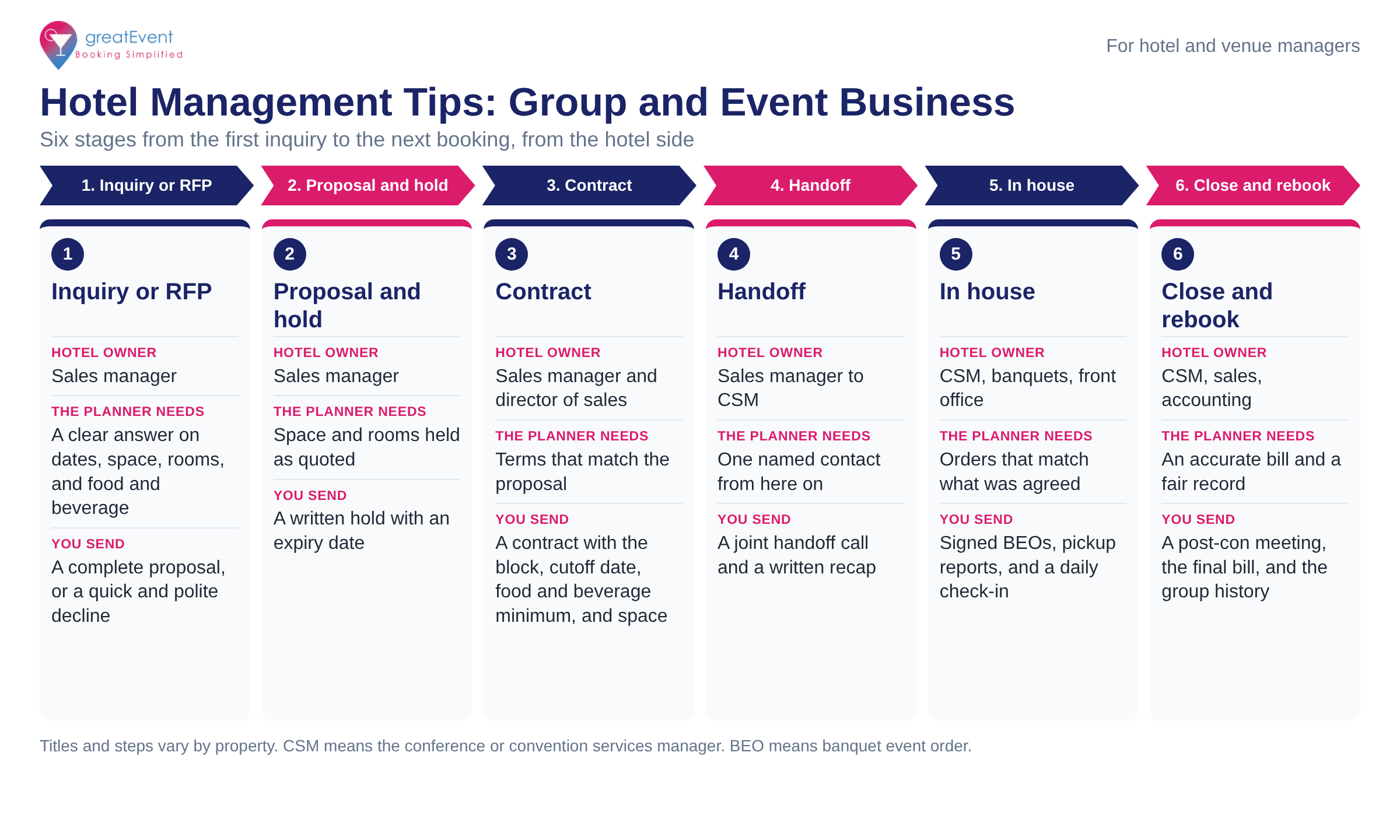
Text version of the infographic:
- 1. Inquiry or RFP. Hotel owner: Sales manager. The planner needs: A clear answer on dates, space, rooms, and food and beverage. You send: A complete proposal, or a quick and polite decline.
- 2. Proposal and hold. Hotel owner: Sales manager. The planner needs: Space and rooms held as quoted. You send: A written hold with an expiry date.
- 3. Contract. Hotel owner: Sales manager and director of sales. The planner needs: Terms that match the proposal. You send: A contract with the block, cutoff date, food and beverage minimum, and space.
- 4. Handoff. Hotel owner: Sales manager to CSM. The planner needs: One named contact from here on. You send: A joint handoff call and a written recap.
- 5. In house. Hotel owner: CSM, banquets, front office. The planner needs: Orders that match what was agreed. You send: Signed BEOs, pickup reports, and a daily check-in.
- 6. Close and rebook. Hotel owner: CSM, sales, accounting. The planner needs: An accurate bill and a fair record. You send: A post-con meeting, the final bill, and the group history.
Answer inquiries and RFPs fast and completely
Planners often send the same request to several hotels at once and shortlist the ones that answer first and clearly. Set a response standard for your team, such as a same-day acknowledgment and a full proposal within an agreed number of business days, and track whether you meet it. A full response answers the questions the planner asked, in the order they asked them. Our planner guide on what a hotel RFP should include for group bookings shows what planners put in their requests, so your template can match it.
A complete proposal usually covers:
- Whether you can do the requested dates, and the nearest alternatives if you can’t.
- The meeting rooms you would assign, with capacities for the sets requested.
- The group rate, the room block by night, the cutoff date, and the attrition terms.
- The food and beverage minimum or meeting room rental, and how the two relate.
- Any concessions you are offering, in writing.
- How long you will hold the space and rooms, and the name of the person who will answer questions.
If you can’t host the group, say so quickly. A fast, polite decline with a reason (“we have a citywide that week”) is better for the relationship than silence, and it leaves the door open for the planner’s next request.
Keep meeting-space data accurate
Planners check meeting-space data early, and it is easy to get wrong. Keep one master sheet for every room and make every listing, brochure, and proposal pull from it.
| Field | What to include | Why planners ask |
|---|---|---|
| Capacity by set | Theater, classroom, rounds, reception, and U-shape, with the set used for each number | A capacity without a set is a guess |
| Dimensions and ceiling height | Length, width, and the lowest ceiling point | Staging, screens, and exhibit booths depend on them |
| Divisions | Which walls move and the capacity of each section | Breakouts often use parts of a ballroom |
| Access | Load-in route, freight elevator, nearest restrooms, and step-free access | Vendors and attendees with disabilities need it |
| Availability | Dates the room is held, contracted, or open | Planners want to know what they can book |
| Floor plans | A current, dated diagram for each room | Planners use it to build room sets |
Planners will check much of this on a site visit. Our hotel site inspection checklist for corporate meetings shows what they look at, so you can prepare the answers before they arrive.
Make catering and BEOs easy to approve
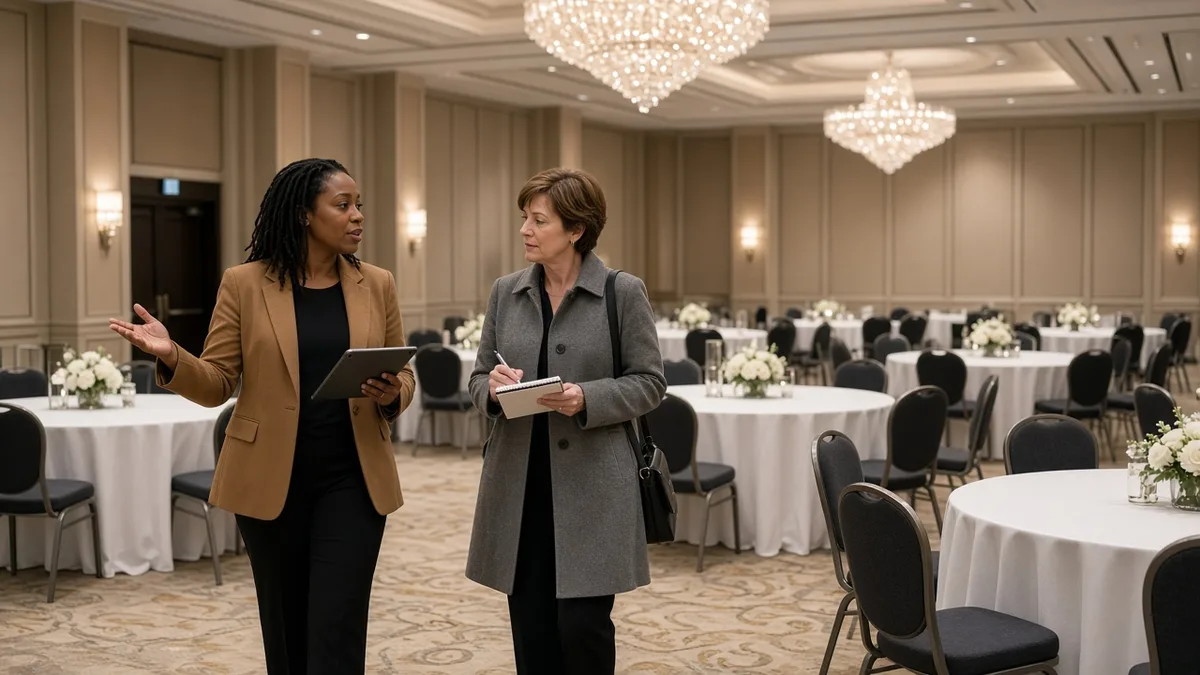
APEX defines a banquet event order as “a form most often used by hotels to provide details to personnel concerned with a specific food and beverage function or event room set-up”. For planners, the BEO is also the document they sign and later check against the bill. Make it easy to read and easy to approve:
- Send menus with clear prices and say what the service charge and tax apply to.
- Show the guarantee deadline and the rule for counts above or below the guarantee on every BEO.
- Put a version date on each BEO and send revisions as new versions, not as edits to an old file.
- Show how each function counts toward the food and beverage minimum, if there is one.
- List dietary counts on the BEO so banquets and the kitchen see the same numbers.
Our planner guides on banquet event orders and on the food and beverage minimum versus meeting room rental explain how planners read these documents.
Report room blocks, pickup, and the cutoff date openly
APEX defines a room block as the “total number of sleeping rooms that are utilised and attributable to one event”, pickup as the “number of facility guest rooms actually used out of a room block”, and the cutoff date as the “designated date when a hotel will release any unsold sleeping rooms in a group block”. Every one of those terms ends up in the contract, and the planner needs to see how they are tracking before the cutoff date, not after it.
- Agree on a pickup report schedule at contract signing and send it without being asked.
- Report pickup by night, not just as a total, so the planner can see weak nights.
- Flag a slow block early and offer options, such as a review date or a smaller block on weak nights, if your terms allow it.
- Make the booking link or code easy for attendees to find and use, and test it before it goes out.
- After the event, share the final pickup so the planner can compare it with the contract.
Planners read these reports closely because attrition clauses carry money. Our guides on managing room blocks for a conference and room block attrition shortfalls show what they watch for.
Hand off from sales to the CSM in a live call
Promises can get lost in the handoff from sales to operations. The sales manager knows what was promised, and the CSM knows what the hotel can deliver. Bring them together with the planner on one call soon after the contract is signed. On that call:
- The sales manager walks through the contract, including the block, cutoff, attrition, minimum, space, and concessions.
- The sales manager names anything discussed but not written down, and the CSM confirms it in writing or says it isn’t possible.
- The CSM sets the dates for the event resume, menus, rooming list, and guarantees.
- Both sides name a main contact and a backup.
Then send a written recap to everyone on the call. If a promise isn’t in the contract or the recap, plan as if the planner expects it anyway, and settle it now. Our planner guide to hotel event planning covers this handoff and the pre-con meeting from the planner’s side.
What planners expect from the hotel team
| Planner expectation | What your team can do |
|---|---|
| One contact who knows the program | Name the CSM at the handoff call and give the planner a named backup |
| Changes confirmed in writing | Answer every change with a revised BEO or a written confirmation |
| No surprise charges | Review master account postings with the planner each day of the event |
| Concessions honored as written | Load contract concessions into the group’s billing setup before arrival |
| Honest pickup and attendance numbers | Share pickup by night and the final in-house count |
| A clean final bill | Send it by the date agreed at the post-con, with backup for every charge |
Concessions are a frequent source of disputes on the final bill. Our planner guide on hotel contract concessions shows how planners check them line by line.
Close every group so it comes back
APEX describes the post-con meeting as a meeting at the primary facility “just after it has ended”, attended by the event organizer, the host organization, and the facility’s department heads. Hold one for every group of meaningful size, even if it’s a short meeting in the CSM’s office. Cover what went well by department, what didn’t, the final pickup and food and beverage spend against the contract, any open charges, and the date the final bill will go out.
Then record the group’s history: rooms picked up by night, the function list, actual spend, issues, and what the planner said they would change. That record is what your sales team uses to price and pitch the next event. Read guest and planner comments by segment, too. Group feedback is often about the meeting rooms, the food service, and the bill, which transient reviews may not show.
Hospitality tips for the team that meets the group
Attendees spend more time with your front desk, banquet servers, and housekeepers than with sales or the CSM, and planners hear what attendees say. A few hotel hospitality tips for front-line staff when a group is in house:
- Front desk. Know the group’s name, its arrival pattern, and its VIP list. Know where the registration desk is and what time the first session starts.
- Banquet staff. Know who the planner’s on-site lead is, and send any request that changes an order to the captain or the CSM.
- Housekeeping and engineering. Know which meeting rooms turn over between functions, and when.
- Everyone. Know how to reach the CSM or the manager on duty quickly when an attendee or the planner needs something.
These hospitality industry best practices work only when the function schedule from the morning stand-up reaches the people working the floor.
Copyable group inquiry response checklist
Copy this into your own template and adjust it for your property. Everything in square brackets is a placeholder.
GROUP INQUIRY RESPONSE CHECKLIST
Group: [Organization]        Planner: [Name, company]
Dates requested: [Dates]     Received: [Date, time]
Owner: [Sales manager]       Response sent: [Date, time]

1. Acknowledge
   - Confirm receipt and name the person who will respond
   - Ask any questions needed to quote

2. Dates and space
   - Requested dates: available / not available
   - Alternatives offered: [Dates]
   - Rooms assigned, with capacity for each requested set

3. Guest rooms
   - Block by night: [Nights and rooms]
   - Group rate and what it includes
   - Cutoff date, attrition terms, pickup report schedule

4. Food and beverage
   - Minimum or meeting room rental, and how they relate
   - Menus attached, with service charge and tax noted
   - Guarantee deadline

5. Terms
   - Concessions offered, in writing
   - Deposit schedule and billing setup
   - Hold expiry date

6. Next steps
   - Site visit offer, with available times
   - Contact for questions, with direct phone and email
List your venue or hotel on greatEvent
greatEvent connects planners, venues, and service providers. Hotels, conference centers, banquet halls, and unique spaces can enroll their business at no cost and open an additional online marketing and booking channel. On the sign-up page, choose the venue or hotel option to list your inventory and receive booking-ready leads.
Frequently asked questions
What are the most useful hotel management tips for group business?
▾
Answer inquiries quickly and completely, keep meeting-space data accurate, make BEOs easy to approve, report room block pickup openly, and hand each group from sales to the CSM in a live call.
Who manages a group after the contract is signed?
▾
At most full-service hotels, a conference or convention services manager (CSM) becomes the planner’s main contact and coordinates the departments that serve the group.
How fast should a hotel answer an RFP?
▾
Set your own standard, such as a same-day acknowledgment and a full proposal within an agreed number of business days, and track whether your team meets it.
What should a hotel send planners about room blocks?
▾
Pickup reports by night on an agreed schedule before the cutoff date, early warning when a block is slow, and the final pickup after the event.
What is a post-con meeting?
▾
It is a short meeting at the hotel just after the event ends, where the hotel and the planner review what worked, compare actual numbers with the contract, and agree on the final bill.
Research and sources
Sources were checked on November 3, 2026. The opening scenario is fictional. Response standards, procedures, and checklists are practical guidance for full-service hotels, not industry averages or study results. Titles and procedures vary by property.
- U.S. Bureau of Labor Statistics, Occupational Outlook Handbook: Lodging Managers, bls.gov.
- Events Industry Council, APEX glossary: conference services manager (CSM), banquet event order (BEO), room block, pick-up, cut-off date, and post-con meeting, insights.eventscouncil.org.
Compare vendors for your next event
Search caterers, photographers, florists, planners, and rentals — then send one request to several vendors at once.